
The Painted Ceiling Panels
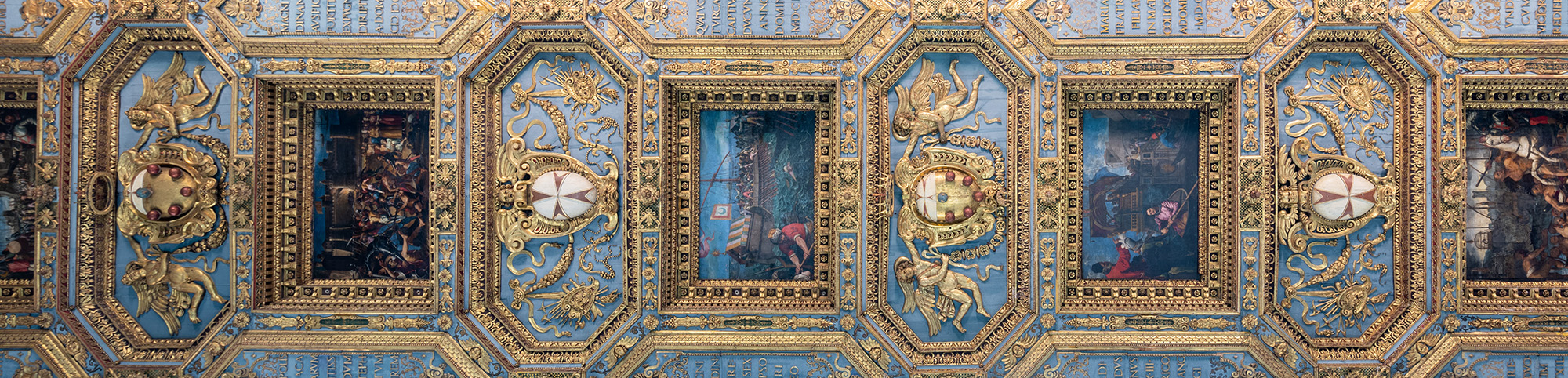
‘In the ceiling entirely adorned with gold, there are six paintings depicting various exploits carried out by the knights of this Order, by land and by sea, as indicated in the inscriptions placed beside them’ [Nella soffitta tutta messa a oro vi sono sei quadri, ove vengono rappresentate diverse imprese state fatte dai cavalieri di quest’Ordine, per mare e per terra, come si legge nell’iscrizioni collocate accanto alli medesimi]. With these words, written in the mid-eighteenth century, Pandolfo Titi described the six painted panels of the Stories of the Order of Saint Stephen, arranged in sequence within the sumptuous seventeenth-century carved and gilded wooden ceiling that crowns the central space of Santo Stefano dei Cavalieri.
The installation of the panels, coordinated by Giorgio Vasari the Younger and Ridolfo Sirigatti, was the result of a prolonged process that began in 1604 and concluded a decade later, under Cosimo II de’ Medici. The decorative programme of the ceiling, designed by Alessandro Pieroni (although Charles de Brosses, writing in 1739, attributed it in its entirety to Bronzino), was intended to celebrate the reign of Ferdinando I through the greatest naval triumphs of the galleys of the Order of Saint Stephen. However, apart from Admiral Inghirami’s celebrated campaign in the Aegean in 1602, no decisive victories at sea were achieved under Ferdinando’s rule. The theme was therefore extended chronologically to include the deeds of earlier grand dukes, and the commission was entrusted to Ludovico Cardi, known as Cigoli, who declined to undertake the project alone, forcing the two supervisors to enlist additional artists.
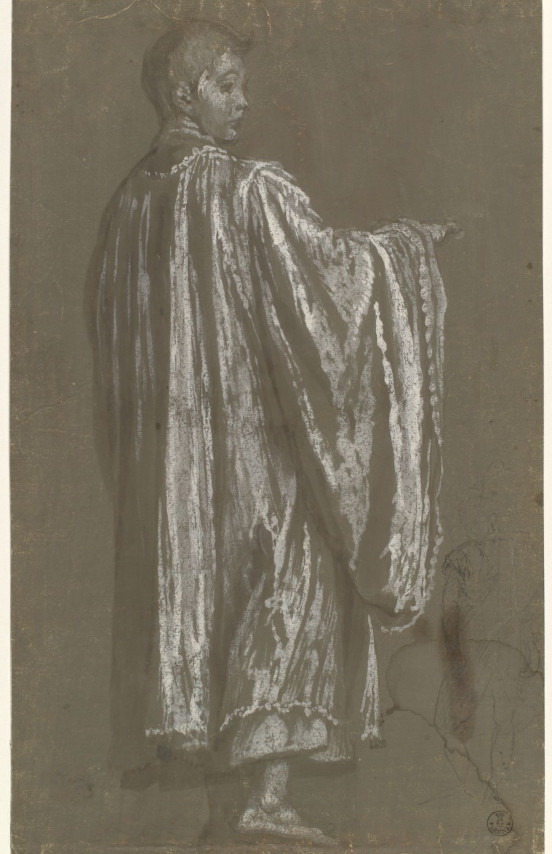
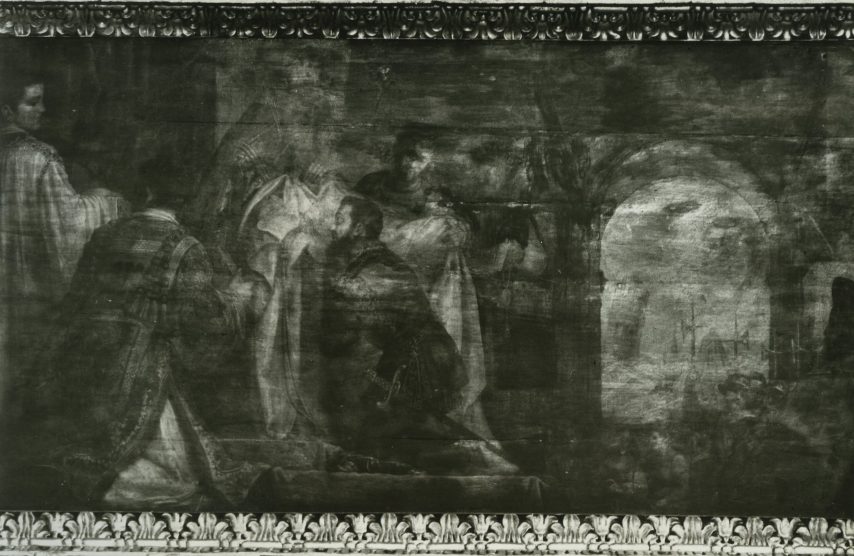
Proceeding from the high altar towards the entrance, the first painting is indeed by Cigoli. It depicts Duke Cosimo de’ Medici Receiving the Investiture as Grand Master of the Order. It is flanked, to left and right, by two inscriptions in capital letters within octagonal cartouches: ‘COSMVS MAGNVS DVX I D[IVI] STEPH[ANI] EQVITVM RELIG[IONE] INSTITVTA’ and ‘MAGNI MAGISTRI CAPIT INSIGNIA ANNO DOMINI MDLXI’ (to be read as 1562), which clarify its subject. Cosimo is shown kneeling before Monsignor Giorgio Cornaro, papal nuncio to Tuscany, accompanied by clerics (one of whom is known from a preparatory drawing now in the Uffizi, inv. 8970F), in the act of kissing the eight-pointed cross of the Benedictine Rule, adopted as the symbol of the Order of Saint Stephen. To his right, Giovanni Castiglione, provost of the canons, holds the papal bull confirming the official approval of the Order and Cosimo’s appointment as its first Grand Master. Also present at the ceremony are Eleonora of Toledo, Cosimo’s consort, and a group of onlookers—some bearing arms—while a fanciful view of Pisa appears in the background. This is followed by The Return of the Fleet after the Battle of Lepanto, signed by Jacopo Ligozzi, flanked by the inscriptions ‘TRIREMES DVODECIM IN AVXIL. SACRI FOEDERIS MITTIT’ on the left and ‘VNDEM CVM VICTORIA REDIERE ANNO DOMINI MDLXXI on the right’.
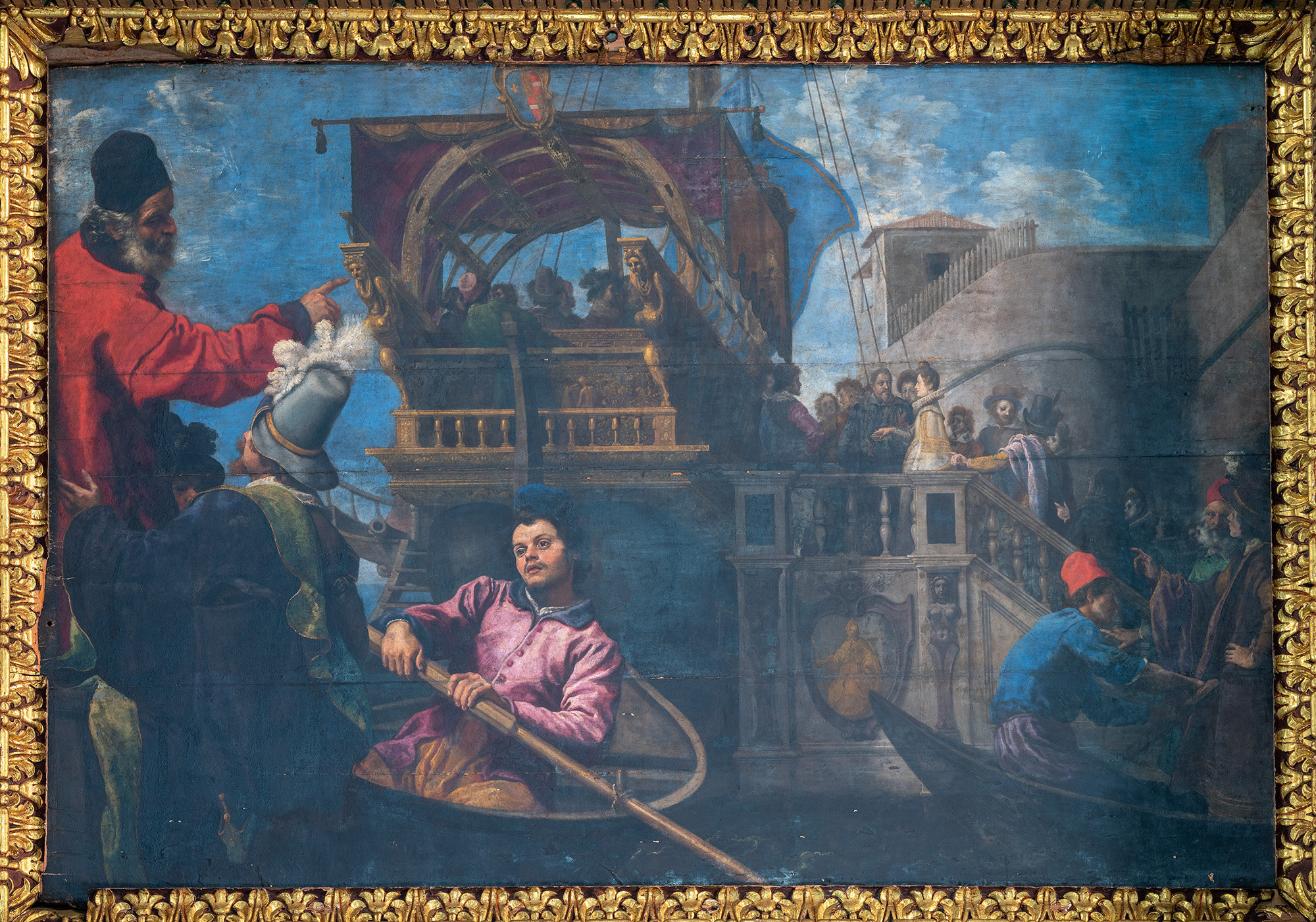
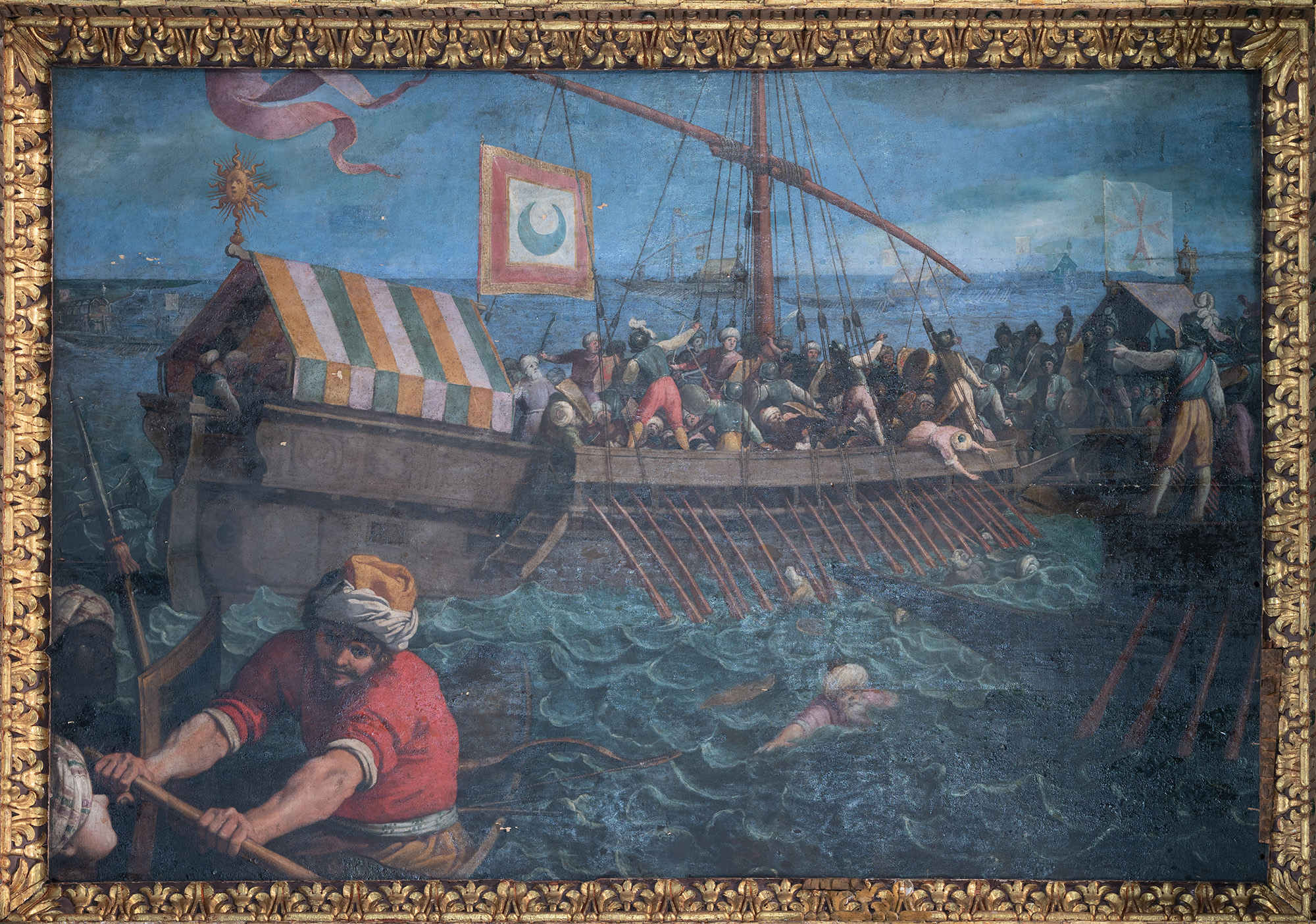
The third painted panel, by Cristofano Allori, depicts Maria de’ Medici Sailing from Livorno to Marseille. It is flanked by the inscriptions ‘FERDINANDVS MAGNVS DVX III HENRICO III FRANC. REGI’ and ‘MARIAM FRATRIS FILIAM IN MATR. COLLOCAT A DOMINI MDC’. The scene portrays the moment when Maria, married by proxy to Henry IV of France, embarked to join her consort, escorted by the galleys of the Order of Saint Stephen. It is the only episode in the cycle not directly connected to military history, though it still reflects the ceremonial role of the Medici fleet in significant court events. The fourth panel is Naval Victory in the Aegean Sea by Jacopo da Empoli, accompanied by the inscription ‘MAGNI FERDIN. TRIREMES SEX AB IPSO MARI EGEO’ on the right, and ‘QVATVOR TVRCAR. CAPTIVAS DVCVNT A. DOMINI MDCII’ on the left. At the centre is the flagship of the Turkish fleet, from which one of the enemy battle standards—still on display in the church—was seized during the campaign. These first four panels were completed between the autumn of 1604 and the spring of 1605, with each artist receiving a fee of 150 scudi.
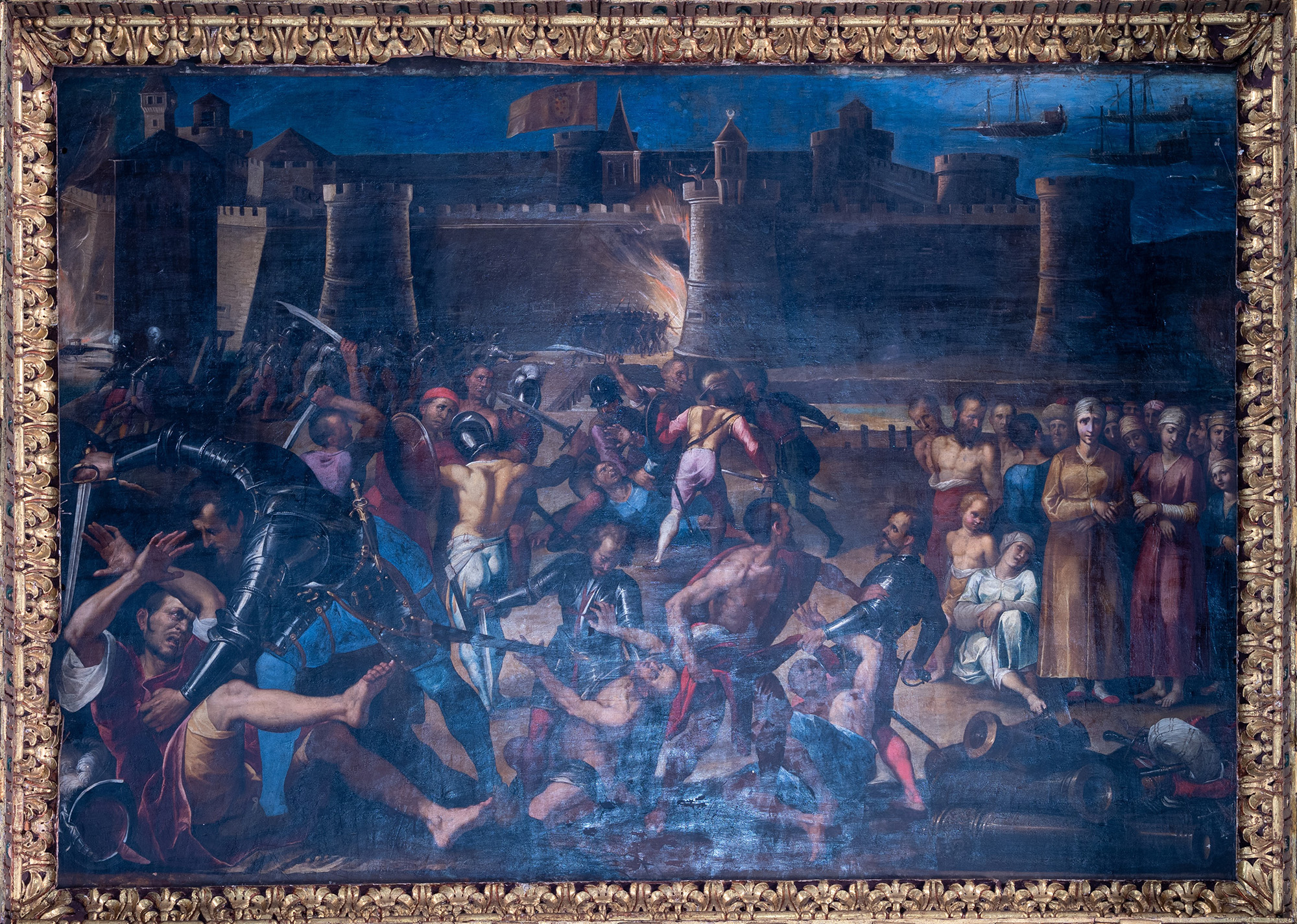
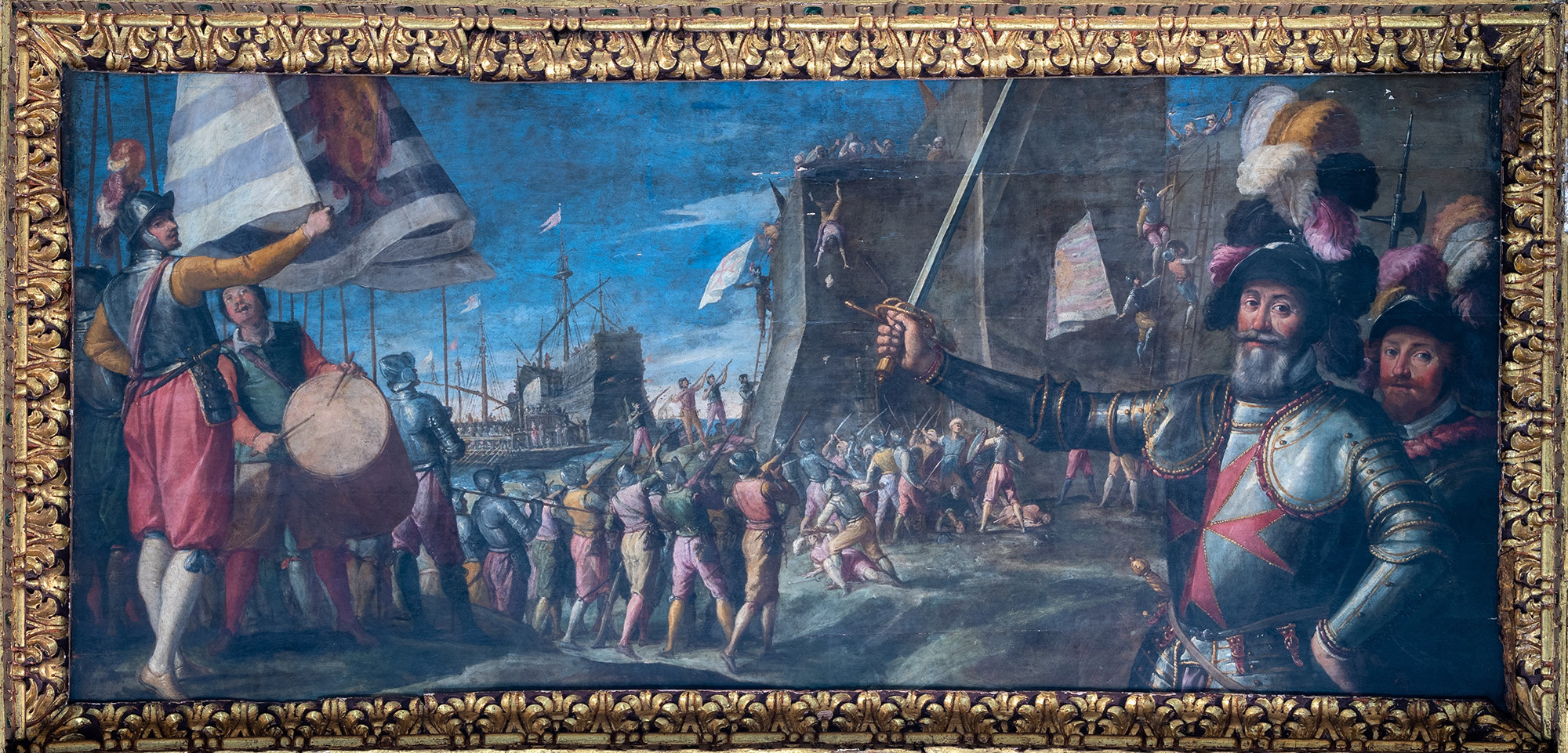
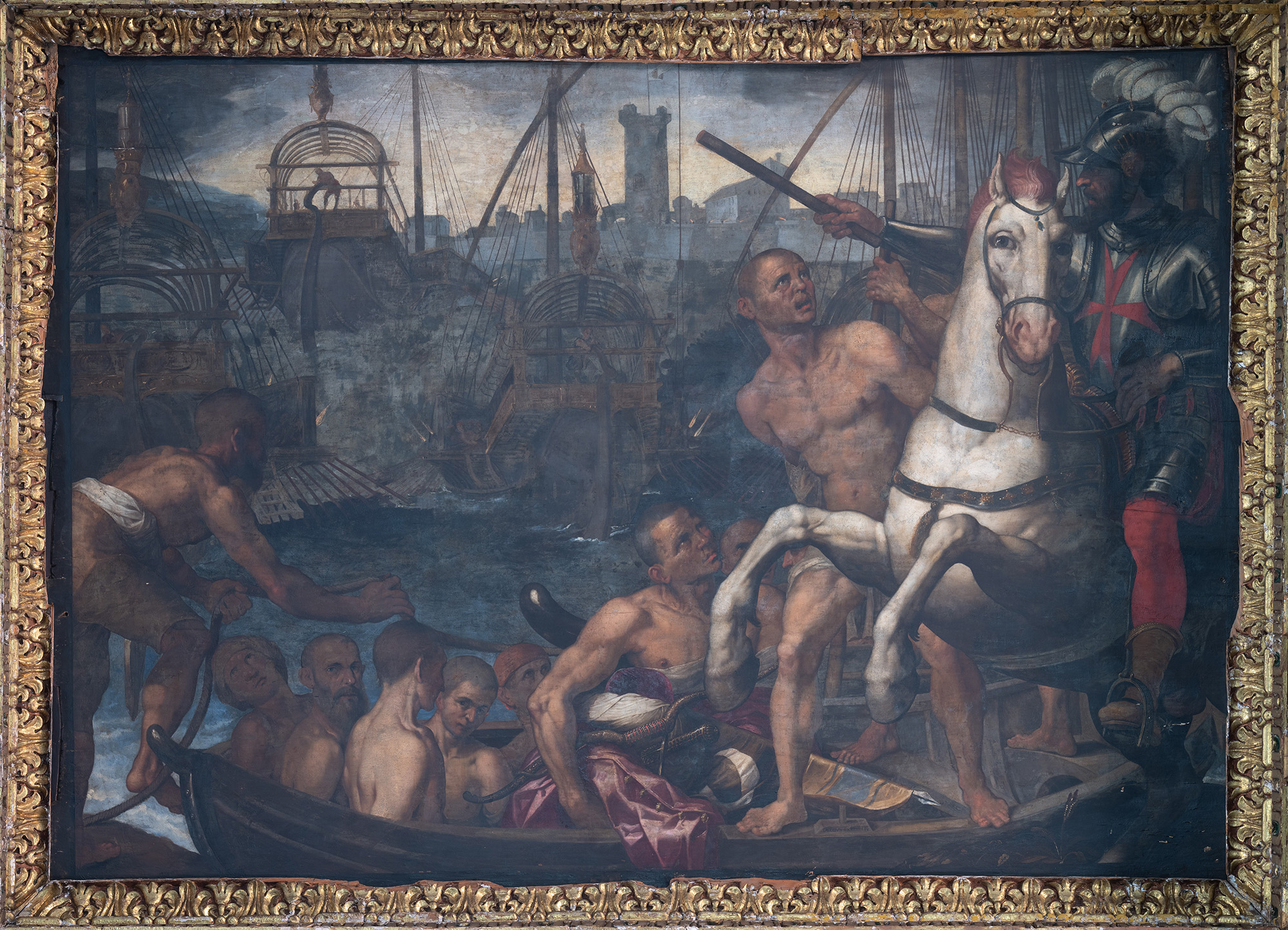
In March 1607, the fifth panel—painted and signed by Jacopo Ligozzi—was completed. It depicts The Conquest of the City of Preveza (or Nicopolis), a battle fought in 1605 in which the Order of Saint Stephen triumphed over the Turkish forces, capturing their stronghold at the tip of Epirus. The significance of this event, which led to a revision of the original iconographic programme, is underscored by the inscriptions ‘NICOPOLIS ACTICA TVRCARVM MVNITISS. OPPIDVM A.D. STEPH. EQVITVM V TRIREM’ and ‘MAGNI FERDINANDI AVSPICIIS FORTITER EXPVGNAT DIRIPTQ. A. DOMINI MDCV’. After the capture of Bona, in Algeria, a sixth and final commemorative panel was commissioned later that same year to mark the event. Initially declined by Domenico Passignano, the commission was subsequently assigned to Jacopo da Empoli and installed on the ceiling in 1614, during the reign of Cosimo II de’ Medici. The inscriptions flanking the scene read PRINCIPIS AVSPICIIS FERDINANDO PATRE ANNVENTE’ and ‘BOMNA OLIM HIPPO RENGIUS EXPVGNATVR A. D. MDCVII’. The final two panels, unlike the preceding ones, were completed in haste due to time constraints. Each artist was paid 200 scudi. As with the rest of the cycle, the paintings were completed in Florence and shipped to Pisa by river for final installation.
Media gallery
Newsletter
Stay in Touch
Sign up for the Piazza dei Cavalieri newsletter
to receive updates on project progress and news.