
Santo Stefano dei Cavalieri
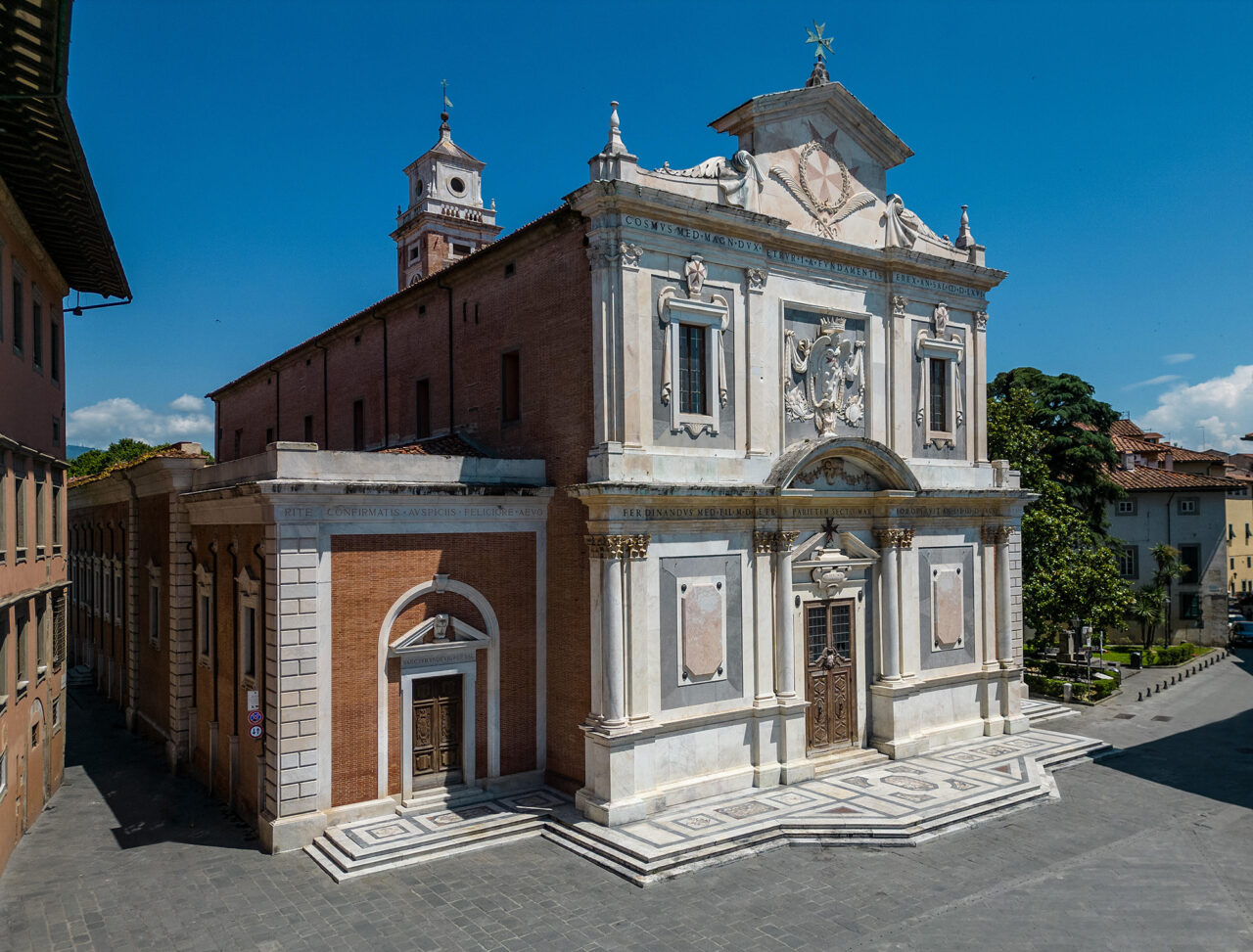
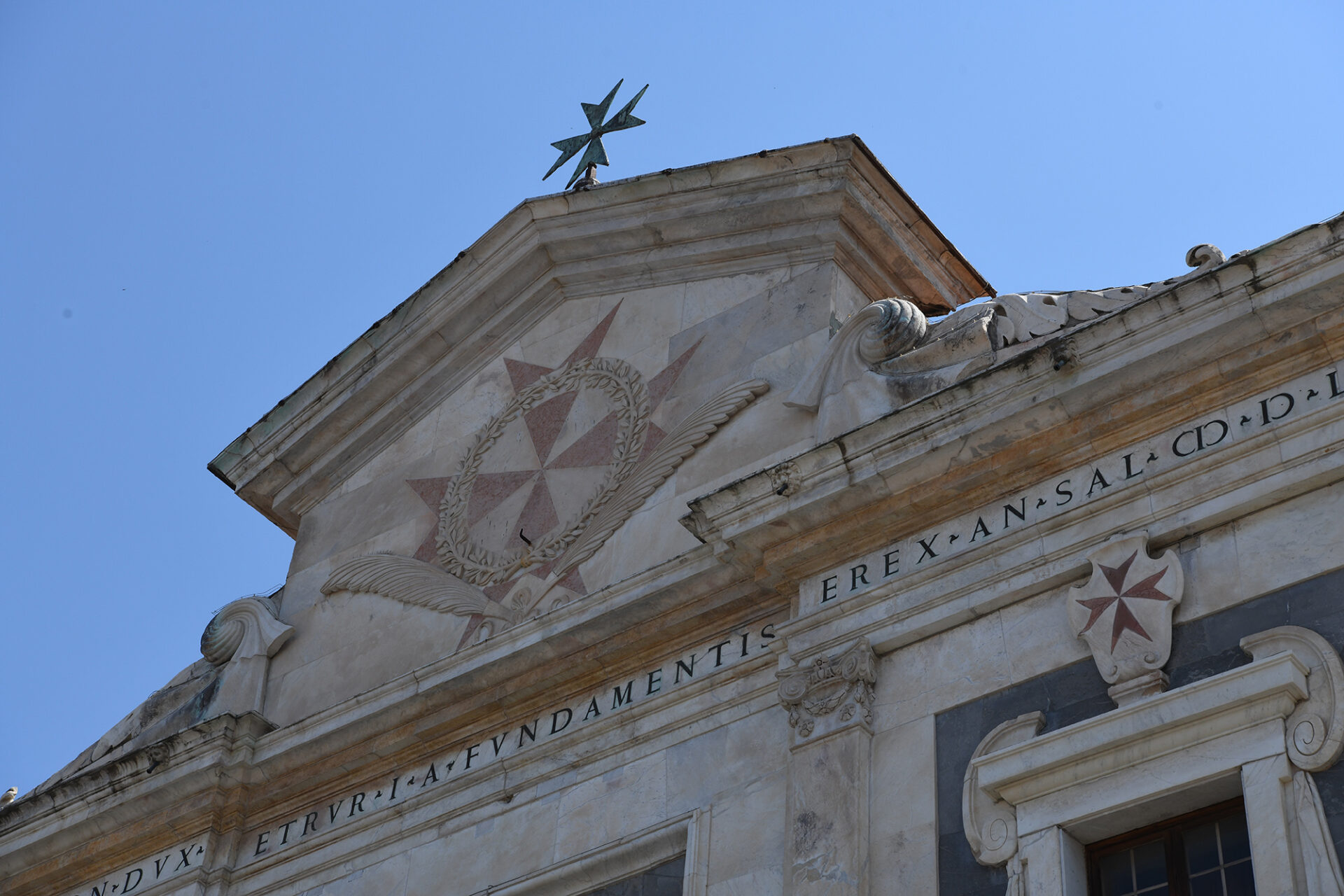
The Church of Santo Stefano dei Cavalieri was built anew from 1563 onwards in Piazza dei Cavalieri, on the site previously occupied by the medieval church of San Sebastiano alle Fabbriche maggiori. Its construction was commissioned by Cosimo de’ Medici, then Duke of Florence, to provide a suitable church for the newly founded religious-military Order which bore the same dedication as the building itself: Saint Stephen, the third-century pope and martyr.
Giorgio Vasari’s original project for the church – for which he also designed the bell tower (completed in 1572) and a series of interior furnishings (most now lost) – envisaged a single nave plan. At Vasari’s death in 1574, the façade remained unrealised; the project was subsequently entrusted to Don Giovanni de’ Medici, whose design drew partial inspiration from Vasari’s initial concept.
Over the following centuries, the church underwent several modifications. In the late seventeenth century, two lateral wings were added to serve as storerooms and vestries for the Stephanian knights; these were physically joined to the main body of the church only in the nineteenth century. On both occasions, elaborate scale models were produced, proposing further enlargements, proposals that were ultimately not fully implemented.
The interior today presents decorations and furnishings from multiple periods.
Still belonging to the original phase are the two monumental altarpieces: Bronzino’s Nativity and Vasari’s own Stoning of St Stephen the Protomartyr.
Flanking the apse are two splendid organs – a late-sixteenth-century instrument on the right and an eighteenth-century one on the left – which bear witness to the central importance of music in the rites and liturgy of the Stephanian knights from the Order’s very foundation.
Along the walls hang naval standards and lanterns captured during the knights’ maritime campaigns and gradually installed in the church from the late sixteenth century onward.
The five monochrome canvases depicting episodes from the Life of St Stephen date from 1588 and were originally commissioned to accompany the Ferdinando I de’ Medici’s ceremonial entry into Pisa.
The elegant wooden ceiling, executed in the early seventeenth century to house the six panels illustrating episodes from the history of the Order, is of slightly later date.
Only at the beginning of the eighteenth century, after numerous earlier proposals, was the rich high altar erected, showing St Stephen in Glory above the bronze cathedra; it remains in situ.
The Baroque carved wooden fragments placed along the nave walls — depicting brutal, discriminatory representations of ensalved Ottoman and African men and women — do not belong to the church’s original furnishings; they were introduced only from the second half of the nineteenth century.
Media gallery
Newsletter
Stay in Touch
Sign up for the Piazza dei Cavalieri newsletter
to receive updates on project progress and news.