
Flags and Banners
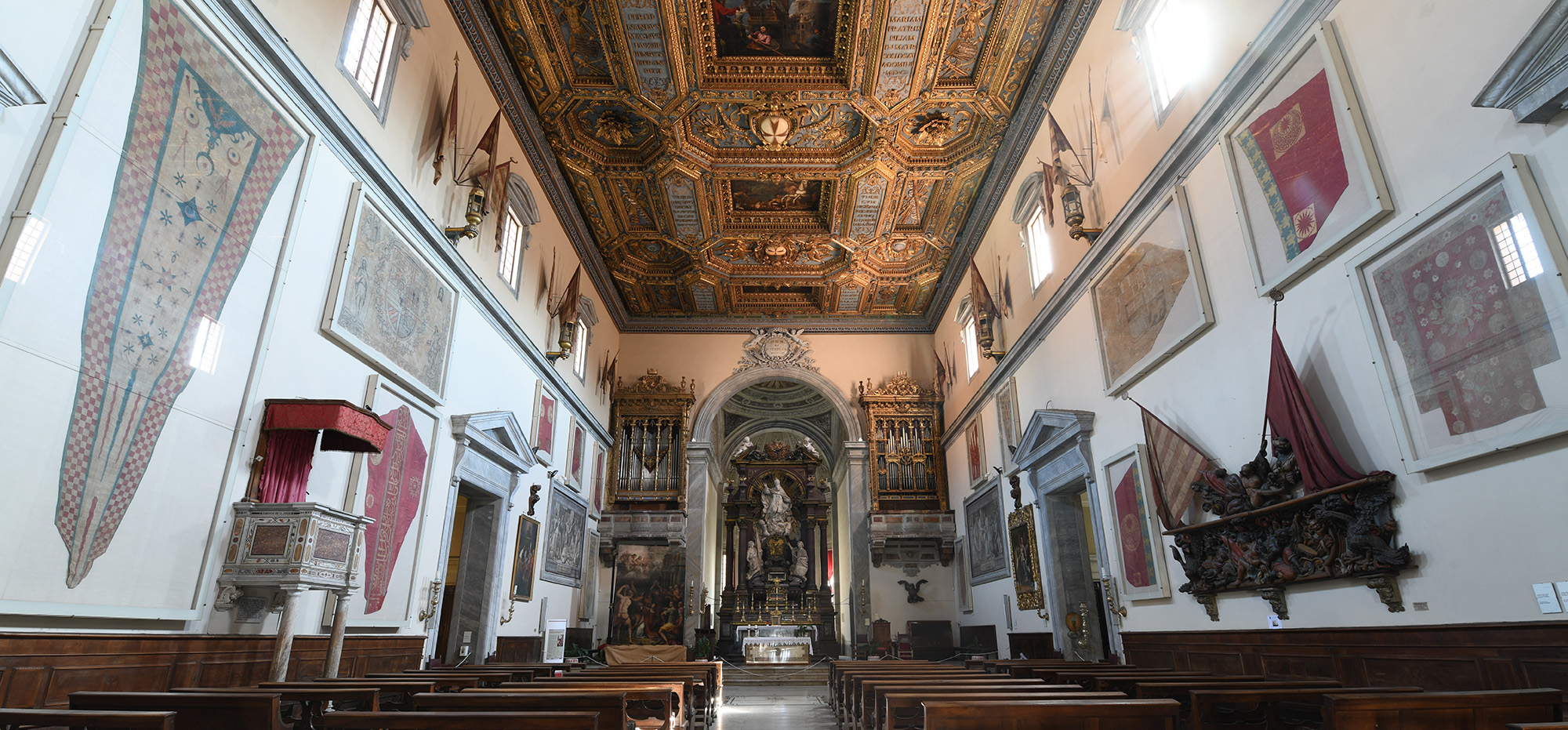
As the place of worship for a religious-military institution, the church of Santo Stefano dei Cavalieri has always held a role that is both symbolic and intrinsically political—linked to the celebration of the Medici family, founders of the eponymous Order, and the enduring commemoration of the Knights’ defence of the Christian faith. For these reasons, the interior of the church was from the outset—and remains today—defined by a sober, at times even austere, character, free from ornate flourishes and superfluous decoration. Its focus is instead on a few key elements: the wooden ceiling with its painted panels exalting the Order of Saint Stephen and its maritime victories, undoubtedly the most elaborate and richly decorated part of the church; and the series of five monochrome canvases depicting Stories of Saint Stephen, Pope and Martyr arranged along the long walls and the counter-façade (1588). Equally significant are the flags and standards captured in battles against the Turks—referenced in the ceiling paintings and physically displayed in the nave—together with fragments of the Order’s galleys, naval lanterns (also seized from enemy ships between the sixteenth and eighteenth centuries), flags of the Medici navy (recognisable by their large format and alternating narrow red and ecru bands, as seen in the example mounted on a pole and displayed on the right-hand wall above the wooden fragment), and those of the Stephanian knighthood (now no longer on display). On the left wall, there is also a framed standard of unknown provenance, showing in its four corners the Madonna and Child (with the head severed by a cut in the fabric), the Veronica, Saint Michael the Archangel, and Saint John the Baptist, and in the centre, the coat of arms of the Kingdom of Spain.
The significance of these objects—vividly recalled in 1751 by Pandolfo Titi as ‘taken in former times from the Barbary corsairs, enemies of the Christian name, and used as hangings on the interior walls (of Santo Stefano) [presi ne i tempi passati alli babereschi, nemici del nome Cristiano, che servono di parati alle interne pareti (di Santo Stefano)]—is also evident in letters from the Medici grand dukes and travel accounts by visitors such as esempio John Evelyn, John Raymond and François Maximilien Misson, who often described or referred to them directly. These items were also showcased during the elaborate ceremonies staged by the Knights on the first Sunday after Easter (Domenica in albis) and were entered into dedicated inventories upon their delivery to the Order, with notes on format, colours, and any inscribed sections—often interpreted by linguistic experts. Known as the Libri delle prede, delle bandiere e degli schiavi, these registers are now lost, except for the third, which was transcribed in the early twentieth century by Giuseppe Gino Guarnieri at the Archivio di Stato di Pisa. That copy, however, was later destroyed during the Second World War while on loan in Naples for an exhibition.
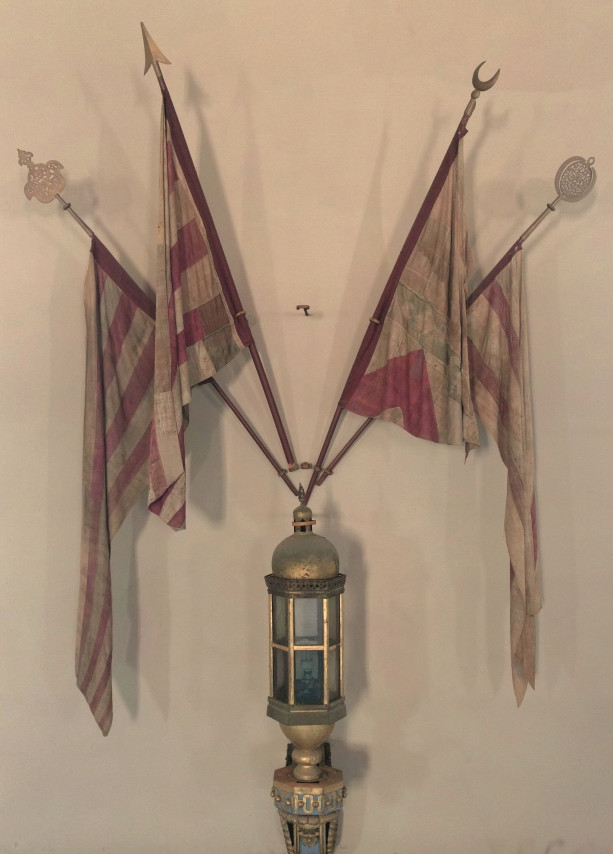
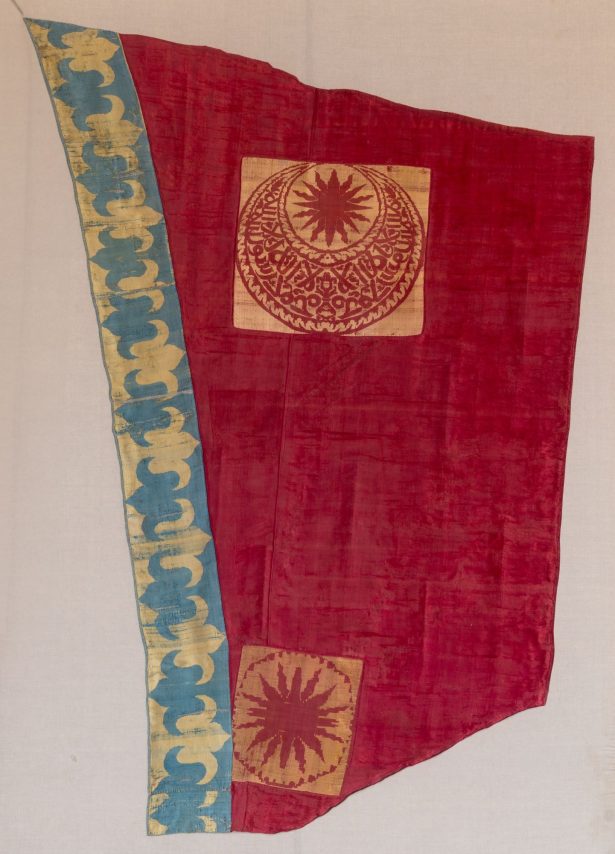
The number of flags in the church has varied over time and now stands at just over sixty. A document from 1892 recorded ‘approximately one hundred and forty, of which ten and some fragments are located in the sacristy of the said church, displaying variety in form, fabric, colour, and artistic significance’ [centoquaranta circa, di cui dieci ed alcuni frammenti si trovano nella sacristia della detta chiesa e presentano fra loro varietà per forma, tessuto, colore ed importanza artistica]. By that time, however, many banners had already lost their original appearance due to repeated conservation efforts, becoming ‘shameful patches made with fabrics of any quality, none resembling the original in substance or colour’ [vergognosi rattoppi fatti con tessuti di qualsiasi qualità, nessuno dei quali si assomiglia nemmeno all’originale né per sostanza né per colore].
Despite this, the collection remains of primary importance—a significant material witness not only to the history of the Order, but also to that of the Mediterranean and the Islamic world. It comprises three typological groups. The largest consists of banners made of cotton and linen in red and écru or light blue, representing, respectively, Stephanian and Turkish manufacture. A second group, containing works of larger dimensions, consists of flags woven in silk taffeta with heavily altered decorations and inscriptions inlaid with polychrome silks on a pale background. These are the most deteriorated items, likely due to heavy intervention, including repainting. One example, supported by a later lining and in poorer condition than the rest—perhaps because it was less restored owing to its value—is traditionally believed to have been seized in 1571 from the ship of the Ottoman admiral Ali Pasha during the Battle of Lepanto. The third group, more varied in form and distorted by restoration, consists chiefly of red silk standards with yellow woven designs on one side, depicting moons, suns, and swords.
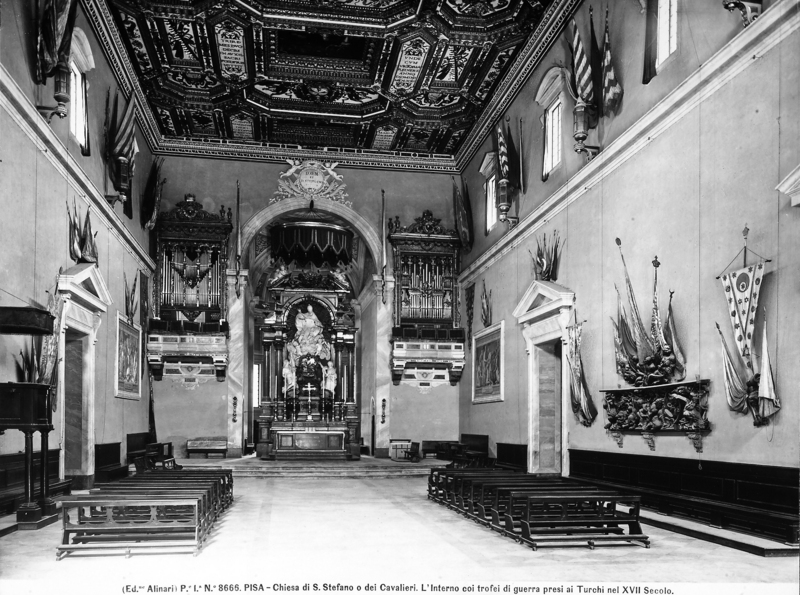
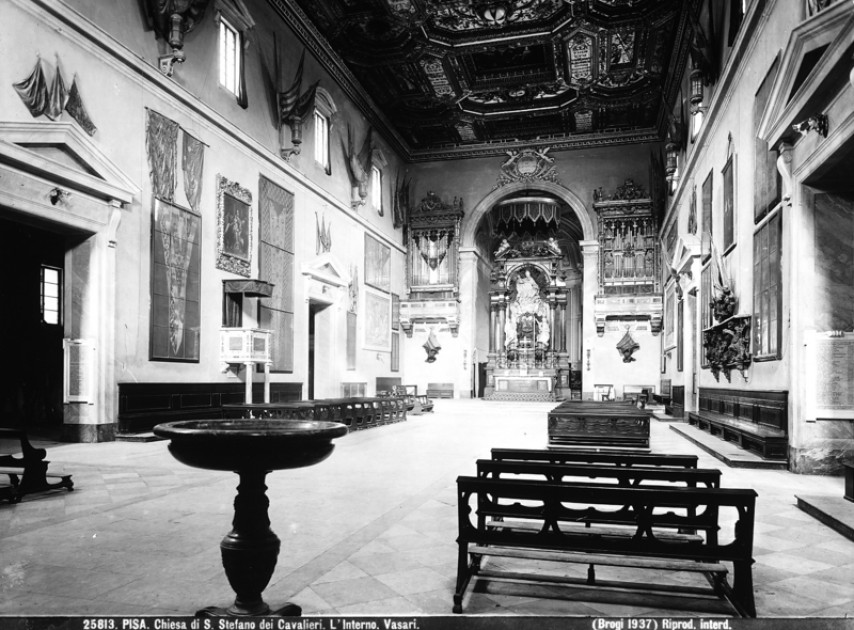
During the nineteenth century, Santo Stefano dei Cavalieri—broadly regarded as a symbol of Pisan glory—became the focus of various transformation projects, including an unfulfilled plan by the architect Pasquale Poccianti to turn it into a kind of museum of relics, with the late seventeenth-century side aisles designated to house and preserve the Order’s trophies. A series of restoration efforts was also undertaken on the flags, involving washing, restitching (in 1851, Mrs Butler Handcock, an Irishwoman, took part in the work and was commemorated with a plaque still visible in the church). Some flags were repainted by Santi Neri.
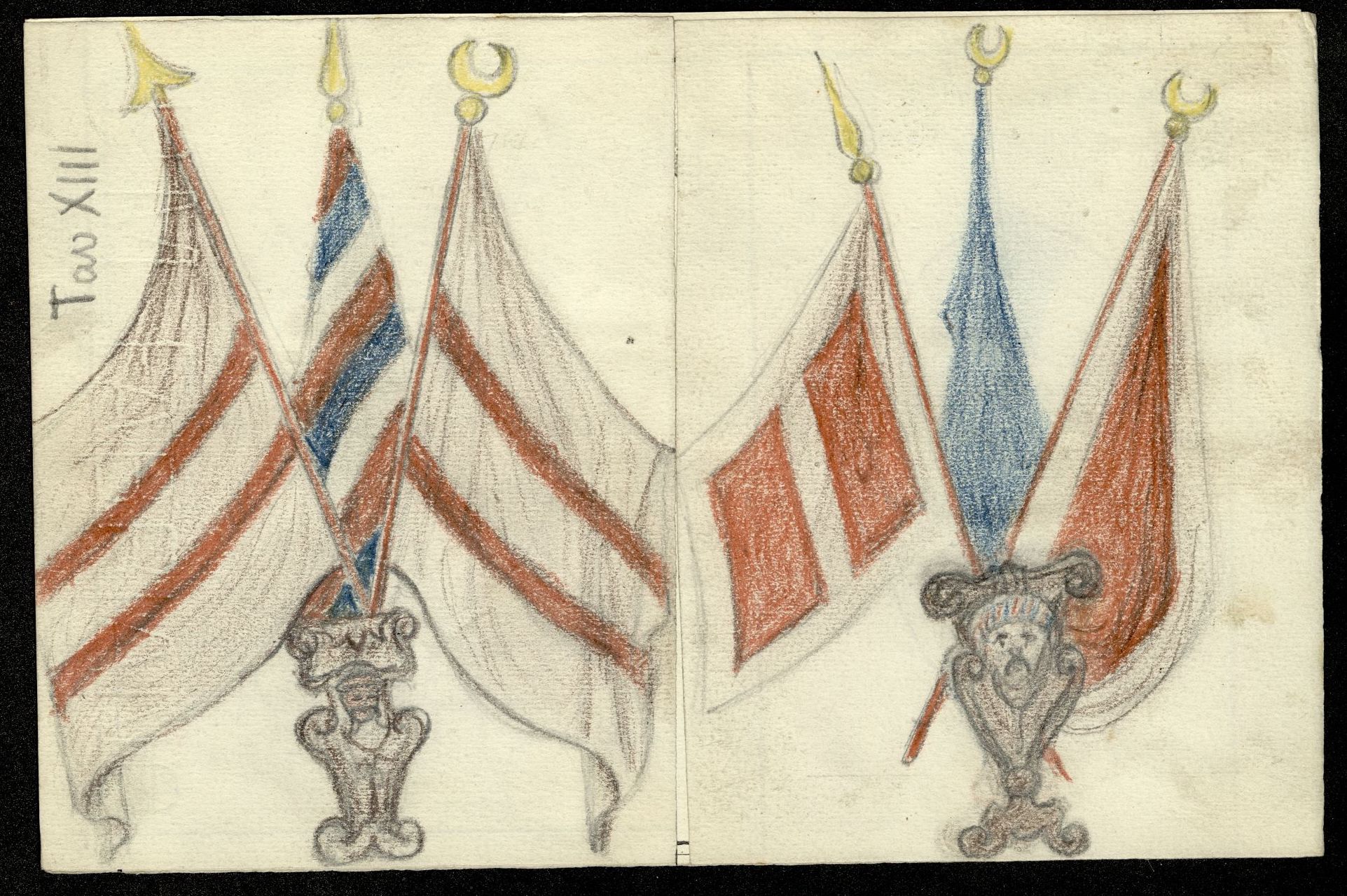
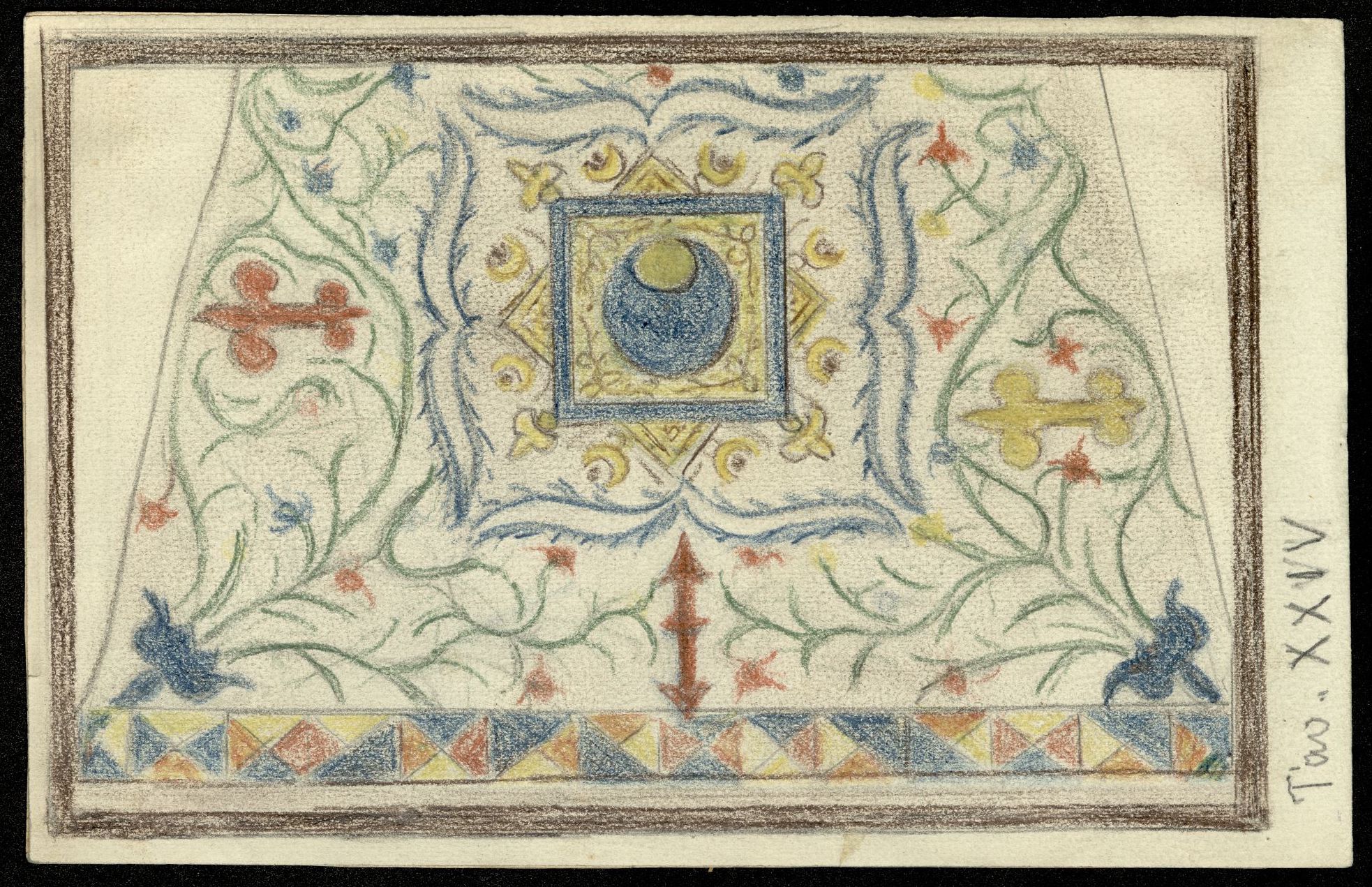
The unfinished nineteenth-century musealisation project regained momentum in the twentieth century, with the support of Igino Benvenuto Supino. Twenty flags—selected for their historical significance and visual impact—were deemed most significant and placed in dedicated frames. The variety and arrangement of banners, lanterns, and fragments of galleys displayed on the church walls at the time are documented in a valuable 1933 album of drawings by Alfredo Giusiani, who reproduced each item in coloured pastel, accompanied by brief descriptions.
New restorations were carried out after the Second World War. More recently, a conservation campaign funded by the then Cassa di Risparmio di Pisa took place between the 1980s and 1990s. This was followed in 2000 by the reinstallation of the pieces in the church, promoted by the Fondazione Pisa as part of a new display scheme.
Inscription on the verso of the sheet:
‘Trofeo di tre piccole bandiere situate sopra l’altorilievo di una parte della galera toscana la quale si trova a sinistra entrando in chiesa’ / ‘Altro trofeo di tre bandiere poste anch’esse sopra l’altorilievo con emblemi guerreschi, a destra’.
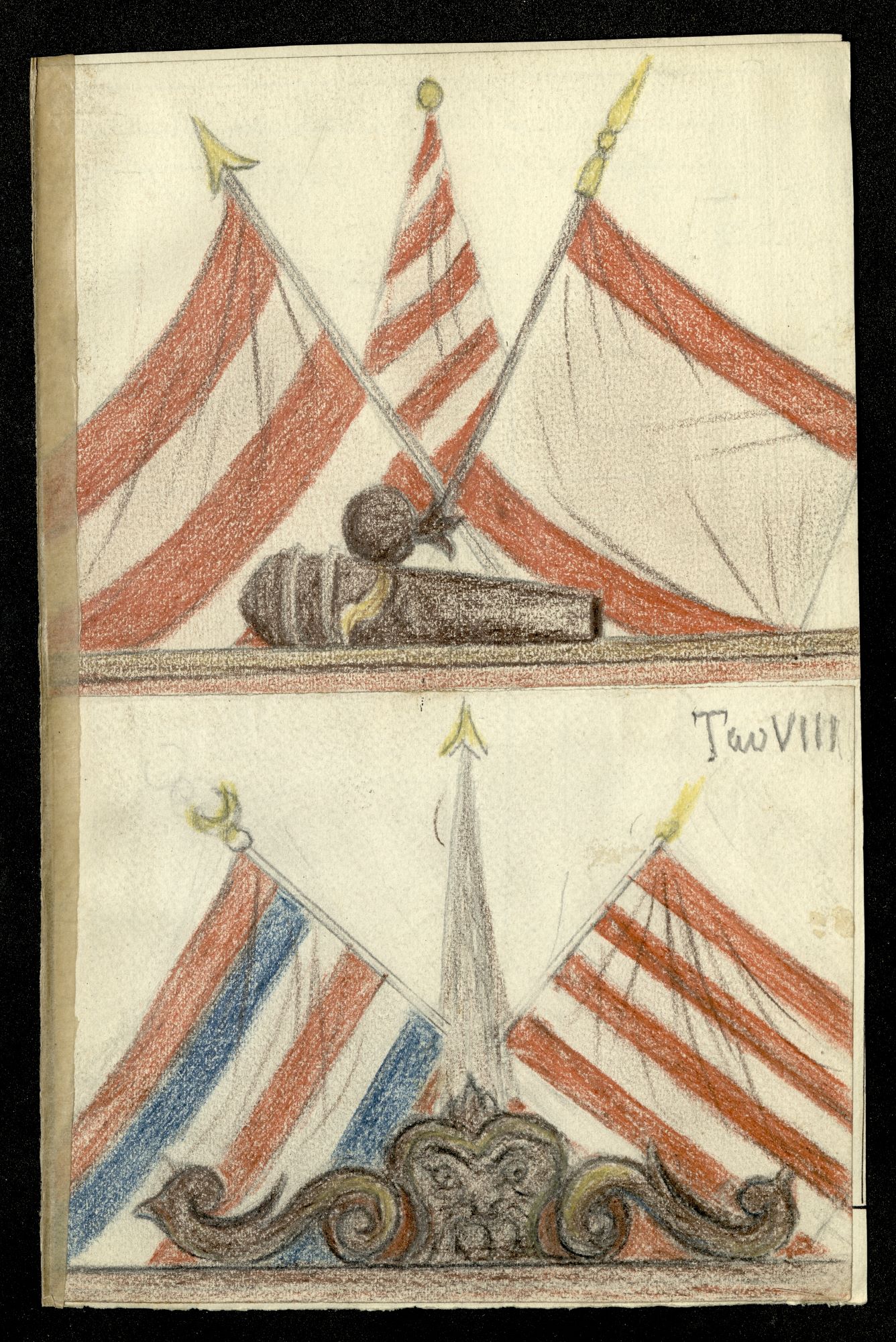
Inscription on the verso of the sheet, and on the two following:
‘Questi fanali barbareschi che stavano sopra il tendale delle galere turche conquistati in varie epoche di questi ne abbiamo notizie certe di quando vennero in possesso cioè: 1_Fanale predato il 23 Dicembre 1599 sulla Capitana di Maometto Bei dall’Ammiraglio Marcantonio Calefati Nob. pisano. / 1_Fanale conquistato il 25 Maggio 1602 dal Cav. Iacopo Inghirami Nob. Volterrano sopra la Galera Capitana d’Alessandria (I). / 1_Fanale preso nel marzo 1619 dal Gen Barbolani di Montauto sopra la Capitana d’Algeria. / 2_Fanali trovati dalle due Galere sulla fortezza di Agrimar il 16 giugno 1613 di due Galere Capitane di Basso Com. da Dilaner Bei / 1_Fanale e sei bandiere prese dall’ammiraglio Lodovico da Verrazzano nel combattimento presso San Giorgio d’Albero il 18 ottobre 1634 sopra la Galera Padrona o Vascello da guerra. / 1_Fanale e 15 bandiere predate dal cav. Lodovico da Verrazzano, sopra la Capitana di Scio sotto dì 16 giugno 1635. / 1_Fanale e tre bandiere e 22 cannoni del vascello algerino catturato dal Cav. Francesco Minucci il 7 giugno 1716 nel canale di Piombino dalle nostre galere che si recavano in Levante in soccorso dell’armata veneta. / Annotazione: (I)_Fanale è di rame dorato di altezza di braccia 3 1/2 con suo pernio e padella dentro. [R. Arch. di Stato Pisa, arch. di S. Stefano, Libro 3º di prede e bandiere e schiavi]’
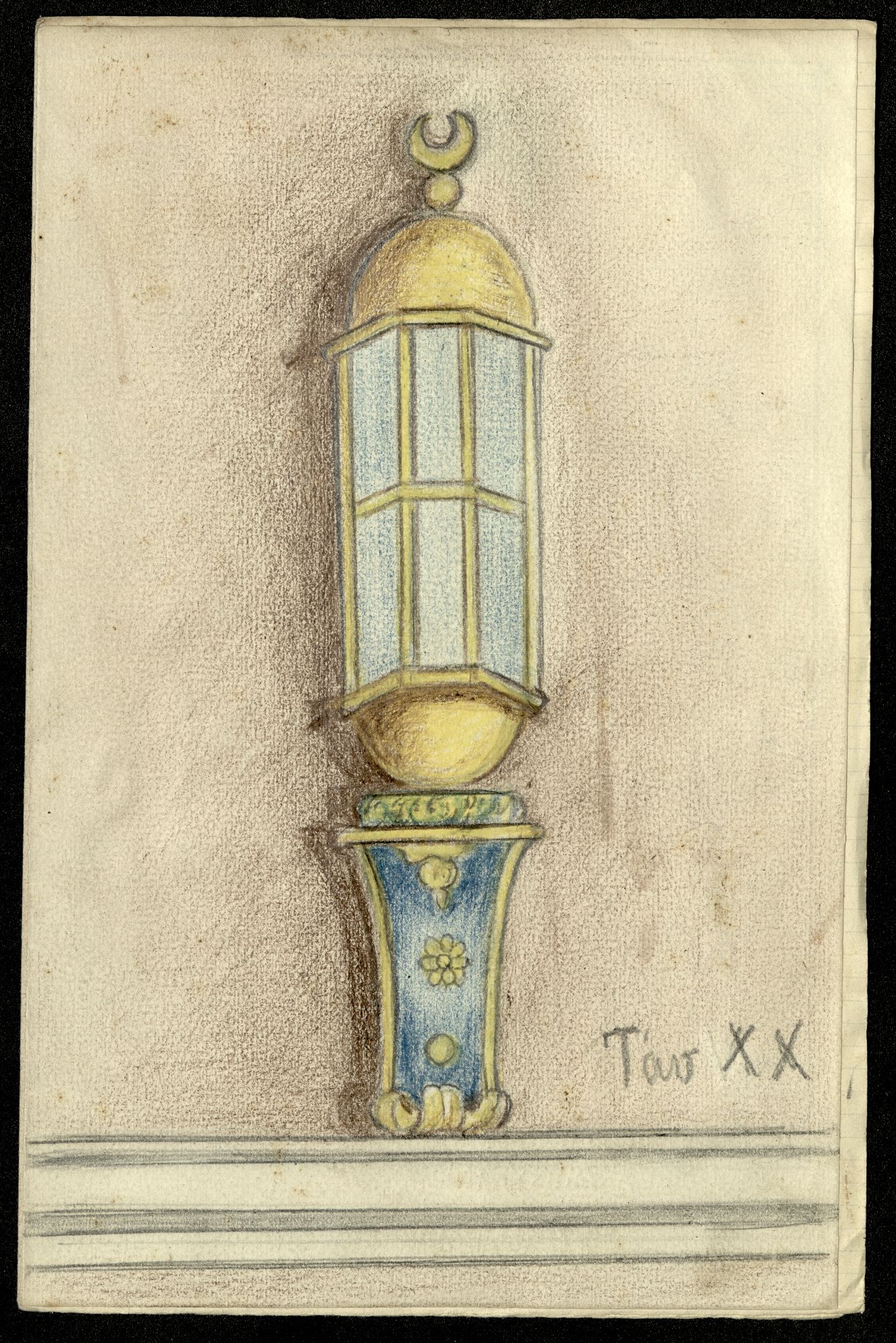
Inscription on the verso of the sheet:
‘6º Gruppo di tre bandiere che una di colore bleu scuro decorata di lune e fregietti bianchi esso [sic] si trova a sinistra presso l’organo del Della Ciaja, detta Bandiera da qualche studioso viene attribuita a quella del Profeta però nessun documento ce lo attesta’.
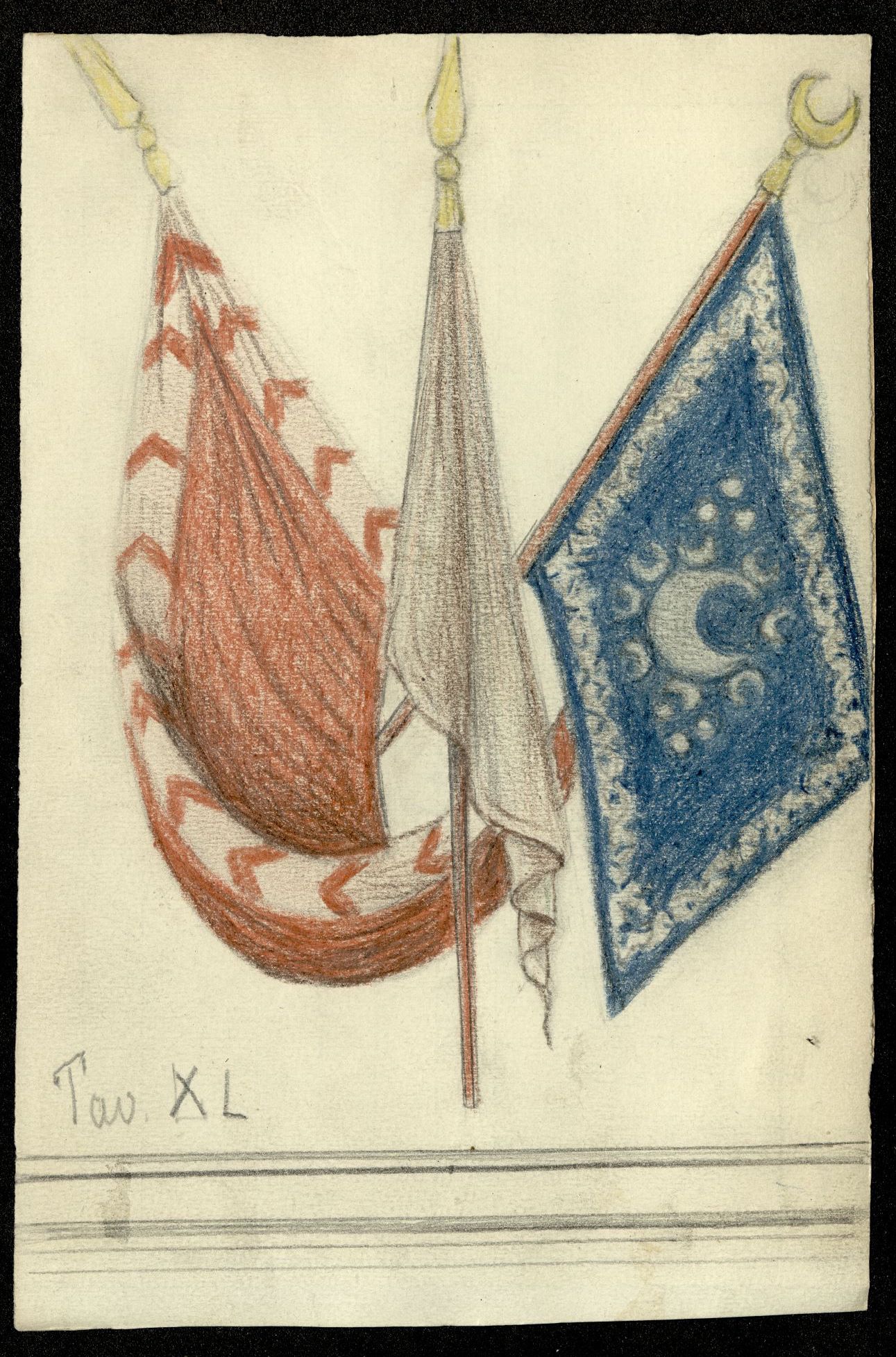
Inscription on the verso of the sheet:
‘Trofeo di tre banderuole presso la 2a porta in terra che mette alla seconda cappella della Natività del N. Signore G. C. depintura pregevole di Angelo Allori [sic] detto Bronzino’ / ‘Altro gruppo di tre Bandiere posto presso la 2a Cappella del S. Crocefisso o del SS. Sacramento’.
Inscription on the verso of the sheet:
‘Stendardo ripiegato nella cornice con cristalli opera pregievole [sic] della manifattura orientale, esso è appeso alla parete di destra entrando in chiesa, non se ne conosce l’anno e il luogo dove fu conquistato’.
Media gallery
Inscription on the verso of the sheet:
‘Trofeo di tre piccole bandiere situate sopra l’altorilievo di una parte della galera toscana la quale si trova a sinistra entrando in chiesa’ / ‘Altro trofeo di tre bandiere poste anch’esse sopra l’altorilievo con emblemi guerreschi, a destra’.
Inscription on the verso of the sheet, and on the two following:
‘Questi fanali barbareschi che stavano sopra il tendale delle galere turche conquistati in varie epoche di questi ne abbiamo notizie certe di quando vennero in possesso cioè: 1_Fanale predato il 23 Dicembre 1599 sulla Capitana di Maometto Bei dall’Ammiraglio Marcantonio Calefati Nob. pisano. / 1_Fanale conquistato il 25 Maggio 1602 dal Cav. Iacopo Inghirami Nob. Volterrano sopra la Galera Capitana d’Alessandria (I). / 1_Fanale preso nel marzo 1619 dal Gen Barbolani di Montauto sopra la Capitana d’Algeria. / 2_Fanali trovati dalle due Galere sulla fortezza di Agrimar il 16 giugno 1613 di due Galere Capitane di Basso Com. da Dilaner Bei / 1_Fanale e sei bandiere prese dall’ammiraglio Lodovico da Verrazzano nel combattimento presso San Giorgio d’Albero il 18 ottobre 1634 sopra la Galera Padrona o Vascello da guerra. / 1_Fanale e 15 bandiere predate dal cav. Lodovico da Verrazzano, sopra la Capitana di Scio sotto dì 16 giugno 1635. / 1_Fanale e tre bandiere e 22 cannoni del vascello algerino catturato dal Cav. Francesco Minucci il 7 giugno 1716 nel canale di Piombino dalle nostre galere che si recavano in Levante in soccorso dell’armata veneta. / Annotazione: (I)_Fanale è di rame dorato di altezza di braccia 3 1/2 con suo pernio e padella dentro. [R. Arch. di Stato Pisa, arch. di S. Stefano, Libro 3º di prede e bandiere e schiavi]’
Inscription on the verso of the sheet:
‘6º Gruppo di tre bandiere che una di colore bleu scuro decorata di lune e fregietti bianchi esso [sic] si trova a sinistra presso l’organo del Della Ciaja, detta Bandiera da qualche studioso viene attribuita a quella del Profeta però nessun documento ce lo attesta’.
Inscription on the verso of the sheet:
‘Trofeo di tre banderuole presso la 2a porta in terra che mette alla seconda cappella della Natività del N. Signore G. C. depintura pregevole di Angelo Allori [sic] detto Bronzino’ / ‘Altro gruppo di tre Bandiere posto presso la 2a Cappella del S. Crocefisso o del SS. Sacramento’.
Inscription on the verso of the sheet:
‘Stendardo ripiegato nella cornice con cristalli opera pregievole [sic] della manifattura orientale, esso è appeso alla parete di destra entrando in chiesa, non se ne conosce l’anno e il luogo dove fu conquistato’.
Newsletter
Stay in Touch
Sign up for the Piazza dei Cavalieri newsletter
to receive updates on project progress and news.