
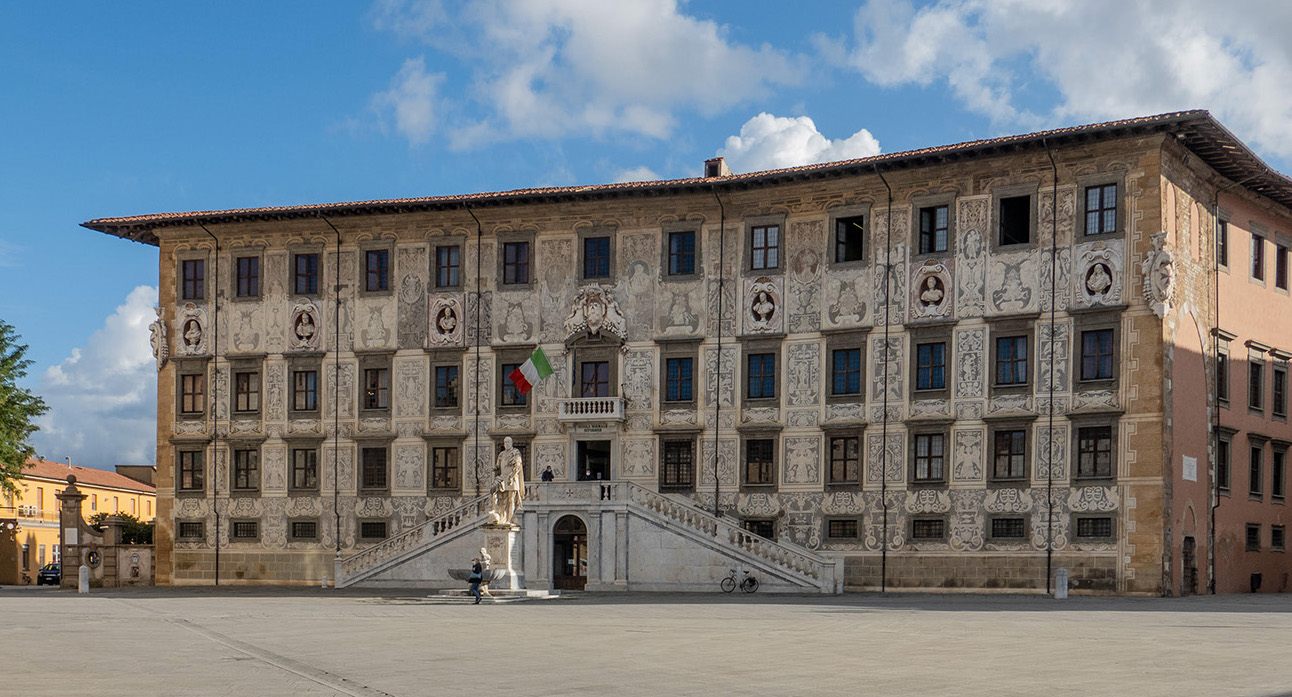
Palazzo della Carovana
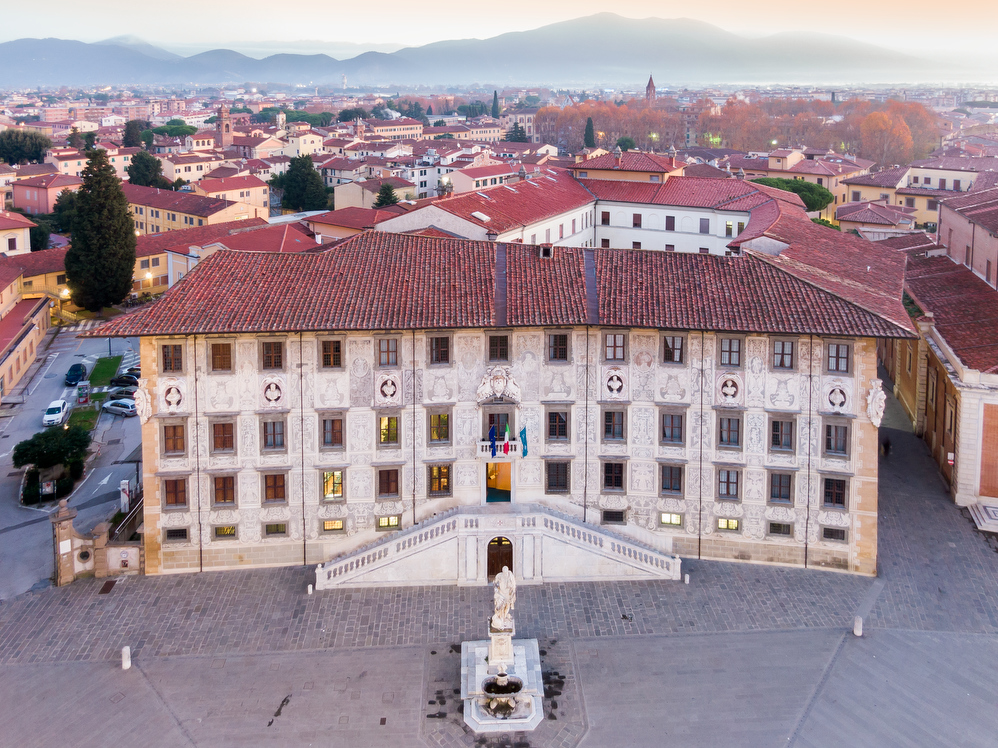
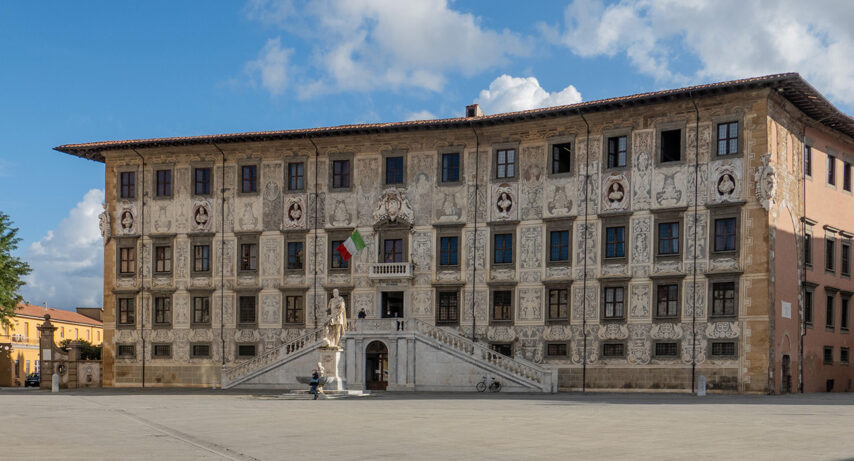
Palazzo della Carovana has been the main seat of the Scuola Normale Superiore since 1846.
Of medieval origin, as shown by the clearly visible earlier structures both inside and along its sides, the building was remodelled by Giorgio Vasari between 1562 and 1567 at the behest of Cosimo de’ Medici to accommodate members of the newly founded chivalric Order of Saint Stephen, of which the duke was founder and grand master. Its current name, attested at least from the late eighteenth century, refers to the so-called carovana: a three-year novitiate to which the Stephanian knights were subject, which also included a stay in the palace for military training, scientific education and physical preparation.
Vasari’s intervention was carried out on the remains of the earlier Palazzo degli Anziani, which had served as the seat of the eponymous magistracy of the Pisan Republic until the Florentine conquest of 1406. It later housed the collegio dei priori appointed by the new rulers, then once again the Anziani during the brief period of restored independence (1494–1509), and finally the ducal commissioner.
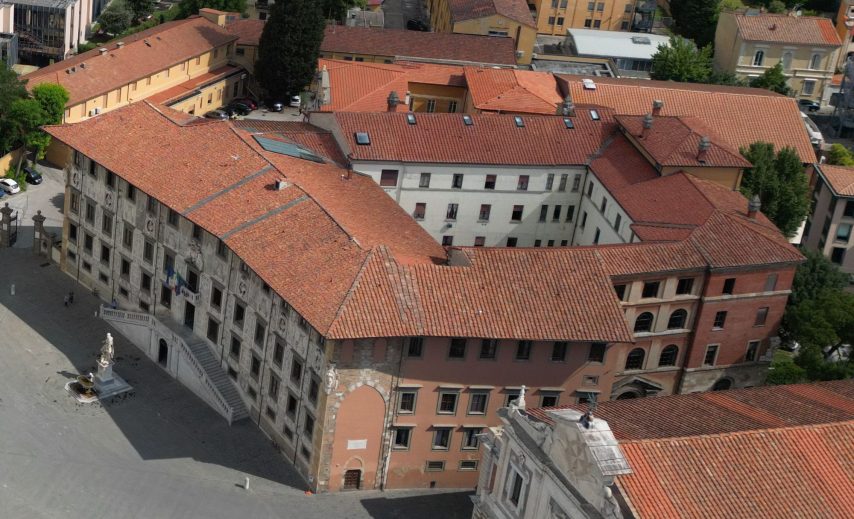
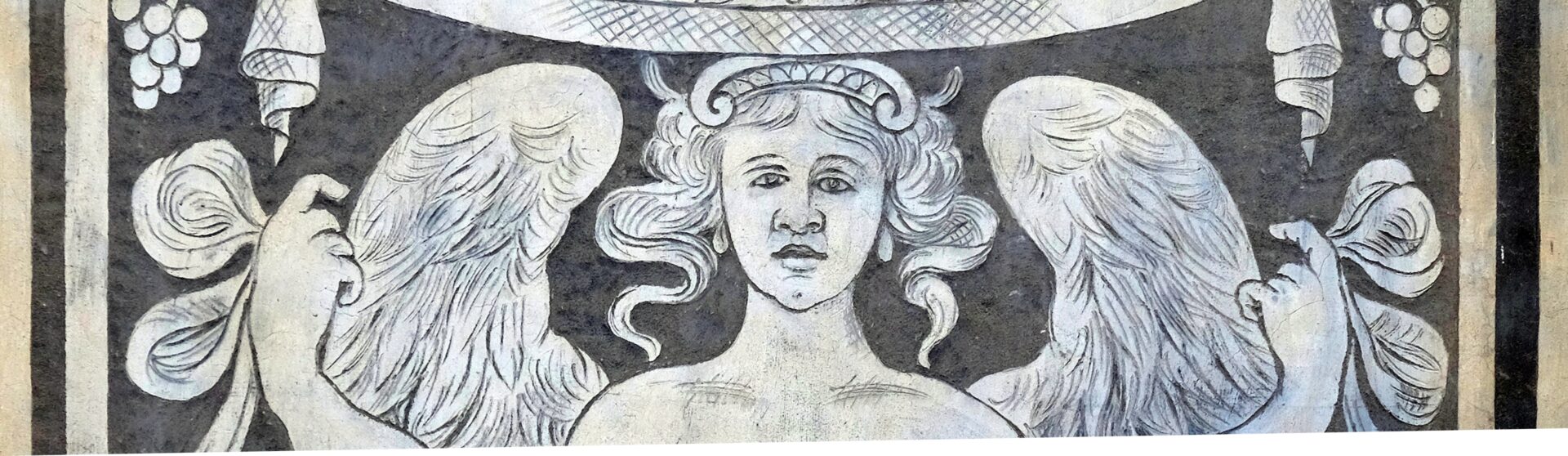
To create a new building with a ground plan inspired by conventual models, Vasari sought to make the fullest possible use of the existing medieval structures on the piazza, superimposing on them a Florentine-style façade designed to conceal their irregularities. This was enriched with a painted decoration in sgraffito executed to the artist’s own design, conceived as a complex iconographic programme celebrating the civic, military, and religious virtues of the Knights and the deeds of Cosimo as duke and grand master. The sculptural decoration of the façade consists of a central coat of arms and two corner shields, also designed by Vasari, together with a gallery of busts placed between the windows of the second and third floors—elements not originally planned and executed between 1587 and 1718. Particularly striking is the double staircase, rebuilt in marble in 1821 to replace Vasari’s original.
Between 1928 and 1930, to meet the growing needs of the Scuola Normale, the original Vasarian building was expanded through the addition of three wings around the courtyard, which had previously been bordered by service buildings. This intervention also had a significant impact on the present internal layout of the sixteenth-century main block, already enhanced in the nineteenth century by an imposing staircase and now comprising several representative rooms—the Sala Azzurra, the Sala degli Stemmi, the Sala del Gran Priore, and the Sala del Ballatoio—altered and modernised over the centuries.
Palazzo della Carovana currently houses the offices of the Scuola Normale’s Director, the offices of its academic staff, administrative departments, and lecture rooms, together with the institution’s historical archive.
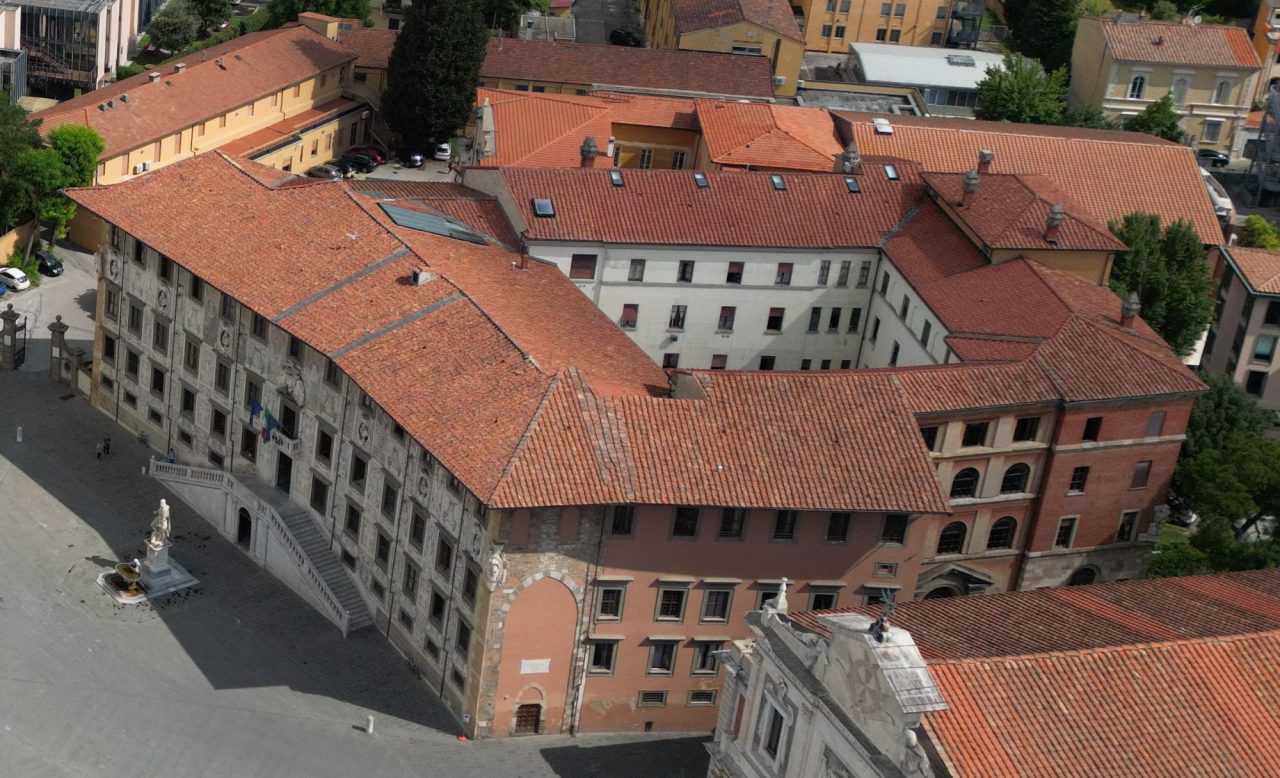
Palazzo della Carovana
Main Entry- Preesistenze medievali
- Fasi costruttive
- Functions
- Façade
- Interior
- Varisco, Quadri comunicanti – Jarred
- Aula Bianchi
- La collezione dei calchi epigrafici
- Le opere del Centro Pecci
- Sala della Mensa
- The Coats of Arms of the Knights
- Sala Azzurra
- Sala del Ballatoio
- Sale della Direzione
- Scalone
- Gastini, «… e finire è cominciare»
- Maruscelli (attr.), Figura virile
- Sala degli Stemmi
- Sala della Colonna
- Cortile
Media gallery
Newsletter
Stay in Touch
Sign up for the Piazza dei Cavalieri newsletter
to receive updates on project progress and news.