
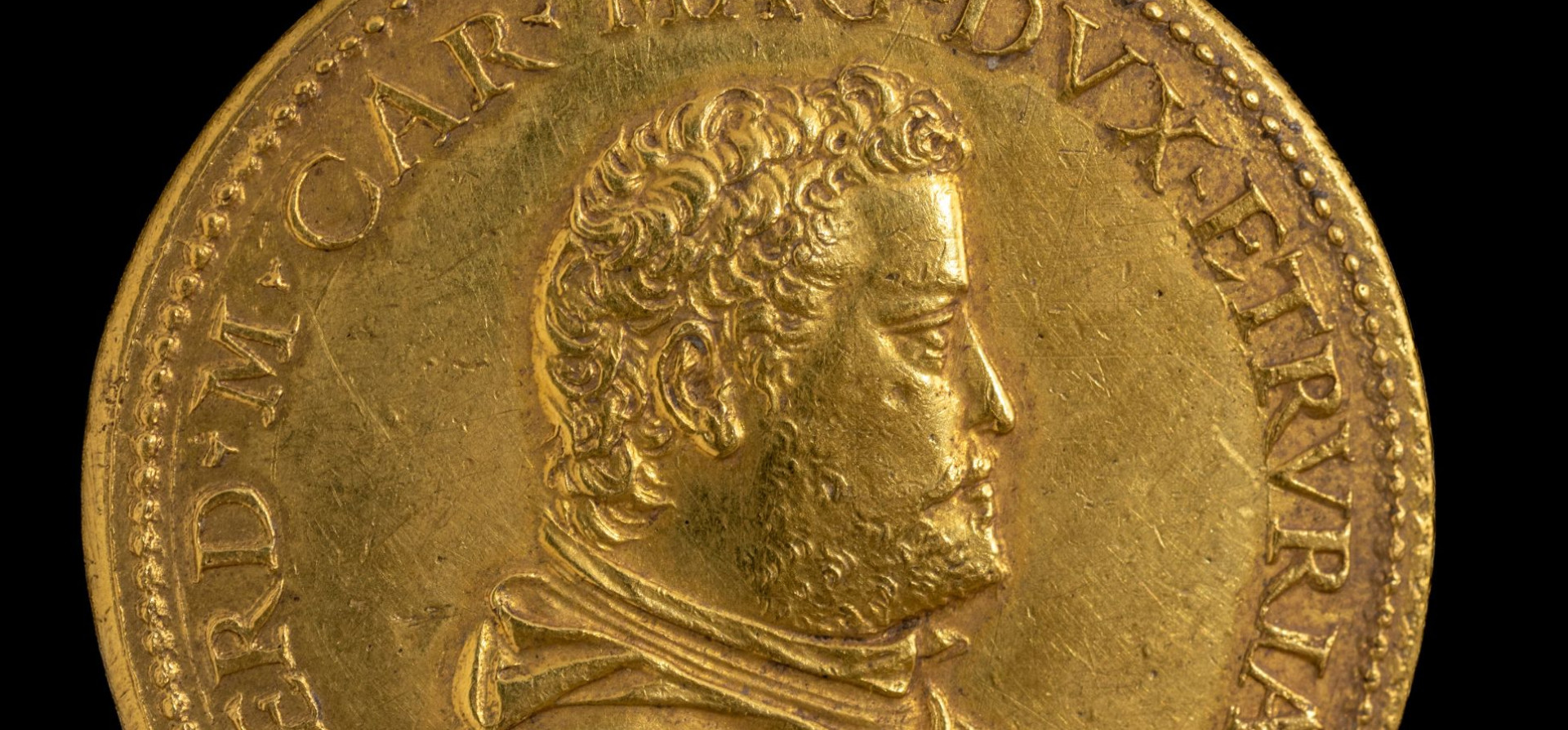
Ferdinando I de’ Medici
[1549-1609]
Grand Duke Ferdinando I de’ Medici of Tuscany was born in Florence in 1549, the fifth son of Cosimo de’ Medici—then still Duke of Florence—and Eleonora di Toledo, daughter of the Viceroy of Naples. Like his father, Ferdinando began life with few prospects of succession, as the youngest of a large number of male siblings. However, following the sudden deaths of his elder brothers Giovanni and Garzia in November 1562, he found himself second in line to the grand ducal title, after Francesco. To the dismay of his tutors—Ludovico Beccadelli, Antonio Angeli da Barga, and Pietro Usimbardi—Ferdinando showed little inclination for letters or study, drawing complaints about his lack of diligence and limited intellect. At the age of thirteen, he was appointed cardinal by Pope Pius IV, assuming the seat previously held by his brother Giovanni. Despite his father’s efforts, Ferdinando never succeeded in obtaining the archbishopric of Pisa. Within the Roman Curia, however, he distinguished himself through political acumen and administrative capability. In the 1580s, he held several important posts: he contributed to the Holy See’s urban planning, particularly in the design of aqueducts; supported anti-banditry measures; and, as prorector of the patriarchates of Antioch, Alexandria, and the Kingdom of Ethiopia, ‘undertook the organisation of an Oriental press, which was to publish, first and foremost, an edition of the Bible in Arabic’ [si fece carico di organizzare una stamperia orientale, che avrebbe dovuto in primo luogo pubblicare una versione della Bibbia in lingua araba], as noted by Elena Fasano Guarini.
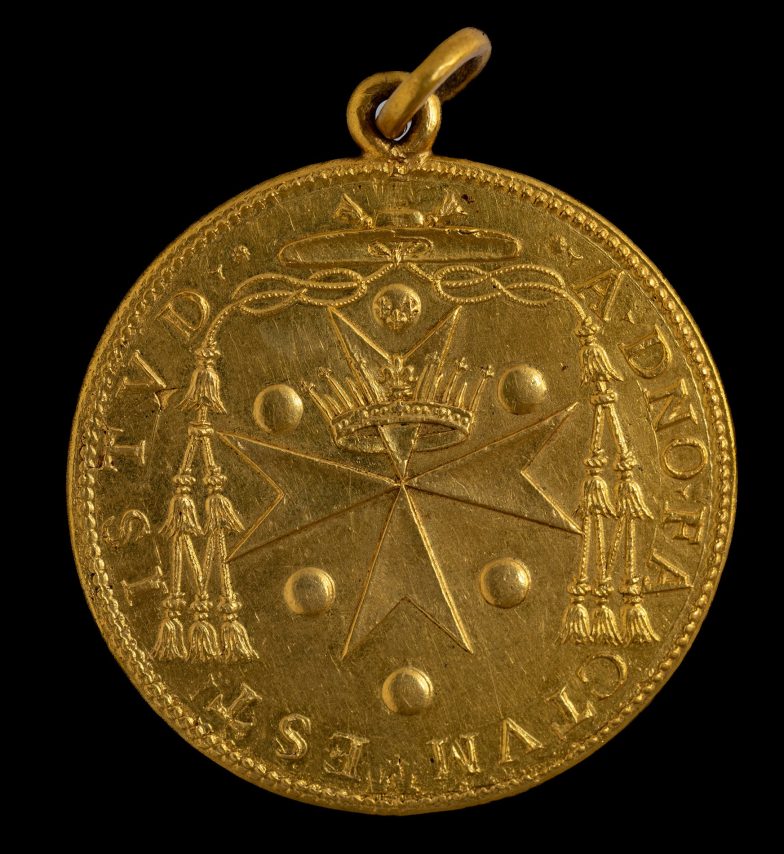
Following the death of his elder brother Francesco in 1587, Ferdinando ascended to the grand ducal title and assumed the role of Grand Master of the Order of Saint Stephen, ‘while retaining for the time being his cardinal’s hat and its associated benefices’ [pur mantenendo al momento il cappello cardinalizio e i benefici connessi] (Fasano Guarini). He would relinquish these only at the end of 1588 to marry Christine of Lorraine. Commemorative medals from his first year of rule reflect this transitional moment, with the reverse showing the grand ducal crown, the cross of Saint Stephen, and the cardinal’s hat. Ferdinando’s early reign was marked by strained relations with Spain: Philip II responded with evident mistrust—if not outright hostility—and refused to formally invest him with rule over Siena.
Grand Duke Ferdinando I de’ Medici devoted significant and sustained attention to the fortunes of Pisa. In continuity with his father’s policies, he promoted the expansion of the port of Livorno as a key logistical hub operating in close synergy with Pisa, particularly for receiving large shipments of grain imported from Germany and England. In 1591, he issued a privilege known as the ‘livornina’, which was then re-enacted with significant amendments and additions in 1593, with the aim of attracting foreign merchants to settle in the two cities through tax advantages and freedom of worship. These measures aimed both to boost the cities’ commercial importance and to counter demographic decline. Certain foreign policy choices, such as the defence of Hungary against Ottoman ambitions, were likewise motivated by the need to protect key trading outposts vital to the economic interests of Livorno and Pisa. Finally, the extensive restructuring of the regional fortification system carried out under Ferdinando underscores the strategic weight he assigned to the Livorno–Pisa corridor within Tuscany as a whole.
223 x 301 mm
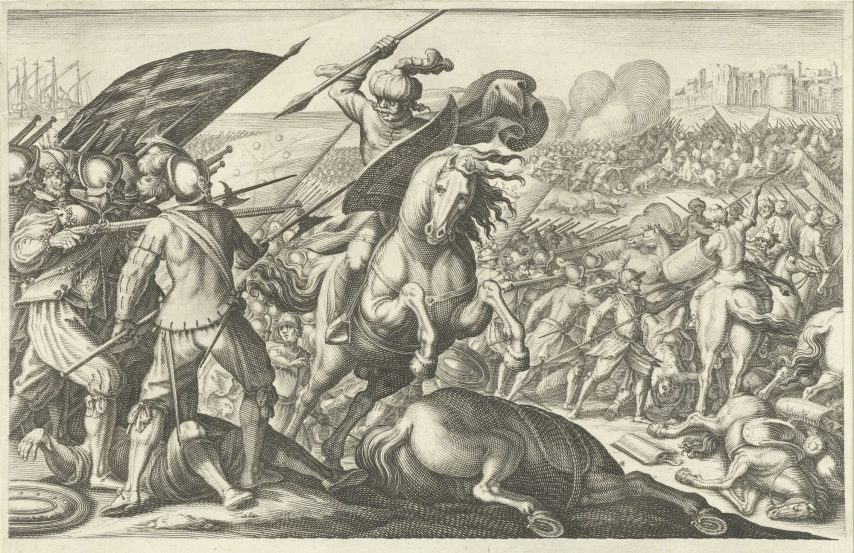
223 x 301 mm
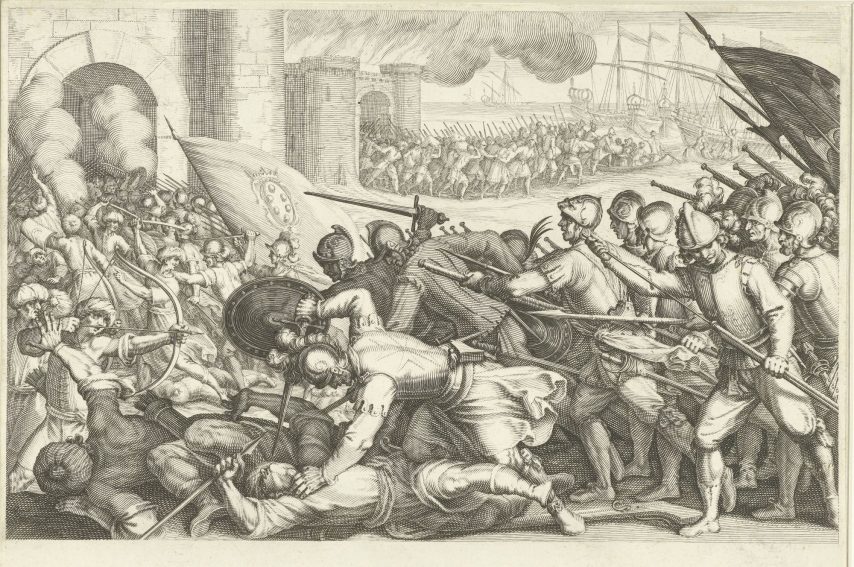
Pisa assumed particular importance in the political strategy of Grand Duke Ferdinando I de’ Medici through his efforts to strengthen the Order of Saint Stephen, especially in its anti-piracy function—a role formalised in 1590 through a revision of the Order’s statutes. Yet this campaign to revitalise the Order complicated Medici foreign policy, as the group’s aggressive naval actions strained relations with both England—particularly after the seizure of several vessels—and the Ottoman Empire, with whom Ferdinando was nonetheless seeking to establish commercial ties. Under the leadership of Iacopo Inghirami and Giulio di Montauto, the Order reached the height of its power, carrying out high-profile operations including the Battaglia di Bona (Battle of Bona) in 1607, the failed attempt to conquer Cyprus, and the dramatic assault on a Turkish caravan on 20 October 1608. To commemorate these exploits, a marble statue was erected in Livorno; in the 1620s, under Ferdinando’s successors, Pietro Tacca completed the monument with four bronze figures of chained African and Turkish men, one of whom has been identified as Morgiano. Known collectively as the Quattro mori (Four Moors), this ensemble overtly glorified the Order’s involvement in slavery. Alongside its maritime projection, Ferdinando significantly expanded the Grand Duchy’s commercial ambitions. He deepened ties with Muscovy through outposts on the Black Sea, sought connections with the East Indies, and pursued the creation of Tuscan trading bases in Africa (notably Sierra Leone) and in the New World, particularly Brazil.
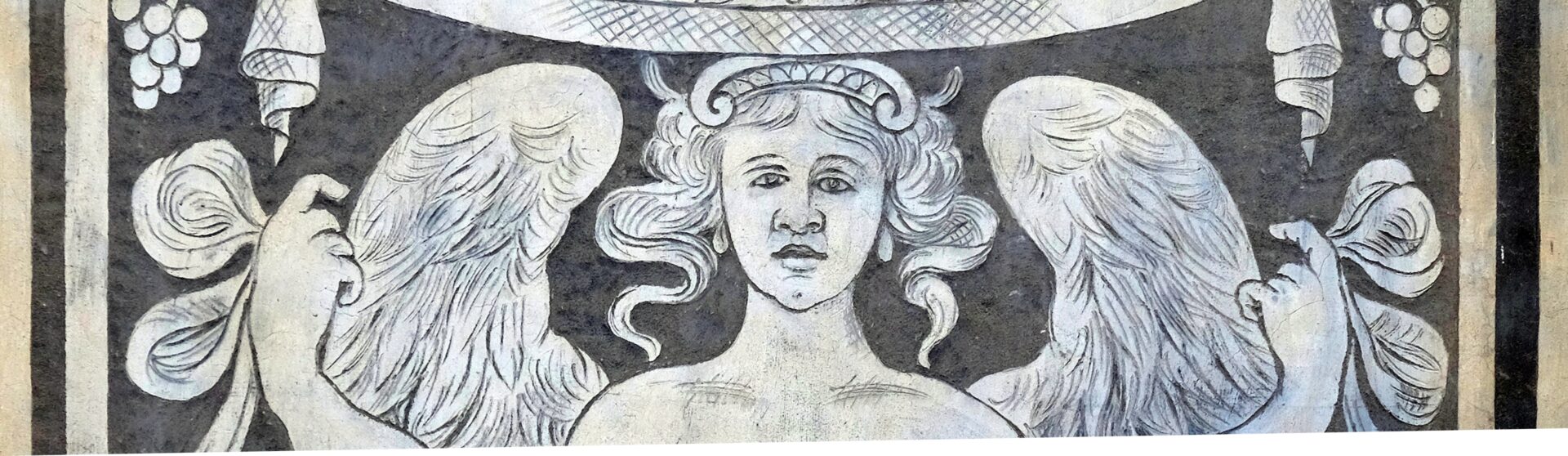
Pisa’s prominence during the reign of Ferdinando I de’ Medici stemmed in part from a significant programme of public works in terms of infrastructure and symbolic dimensions. On the infrastructural side, the Grand Duke financed the construction of the aqueduct and the Logge di Banchi. On the symbolic side, he commissioned two statues from Pietro Francavilla—one depicting Cosimo I, now standing in Piazza dei Cavalieri, and one of himself, originally on the Lungarni and later moved to Piazza Carrara—both executed by Francavilla. Ferdinando also relocated the Botanical Garden and enhanced the standing of Pisa’s university by founding the Collegio Ferdinando, intended to accommodate promising but financially disadvantaged young scholars. His attention was particularly focused on Piazza dei Cavalieri, where he initiated a broad programme of redevelopment, notably involving the future Palazzo dei Dodici —where a marble portrait of him is still preserved—and the church of Santo Stefano dei Cavalieri. He also promoted the use of the façade of Palazzo della Carovana as a monumental narrative surface for the Medici dynasty, commissioning three grand-ducal busts including his own.
What most preoccupied Grand Duke Ferdinando I de’ Medici was the surviving medieval remnants—above all, the site of Ugolino’s imprisonment, the Tower of Famine. As recorded by Cavaliere Ippolito Bocciantini in a note from 1605, the Grand Duke reportedly told him directly: ‘Remove from my sight this infamous memory of this tower, which is truly an infamous memory’ [levatemi dinanzi questa memoria infame di questa torre che è veramente una memoria infame]. The structure was fully incorporated into the newly built Palazzo dell’Orologio by 1608, erasing all trace of its Dantean associations.
The following year, in Florence, Ferdinando died.
Prominent Personalities
Main Entry- Ugolino della Gherardesca
- Anna di Świdnica
- Francesco I de’ Medici
- Carlo Antonio dal Pozzo
- Ferdinando I de’ Medici
- Morgiano
- Cosimo II de’ Medici
- Ferdinando II de’ Medici
- Cosimo III de’ Medici
- Azzolino Bernardino della Ciaia
- Gian Gastone I de’ Medici
- Leopoldo II d’Asburgo-Lorena (imperatore)
- Napoleone Bonaparte
- Elisa Bonaparte
- Leopoldo II di Toscana (granduca)
- Ulisse Dini
Media gallery
223 x 301 mm
223 x 301 mm
Struck gold with hook
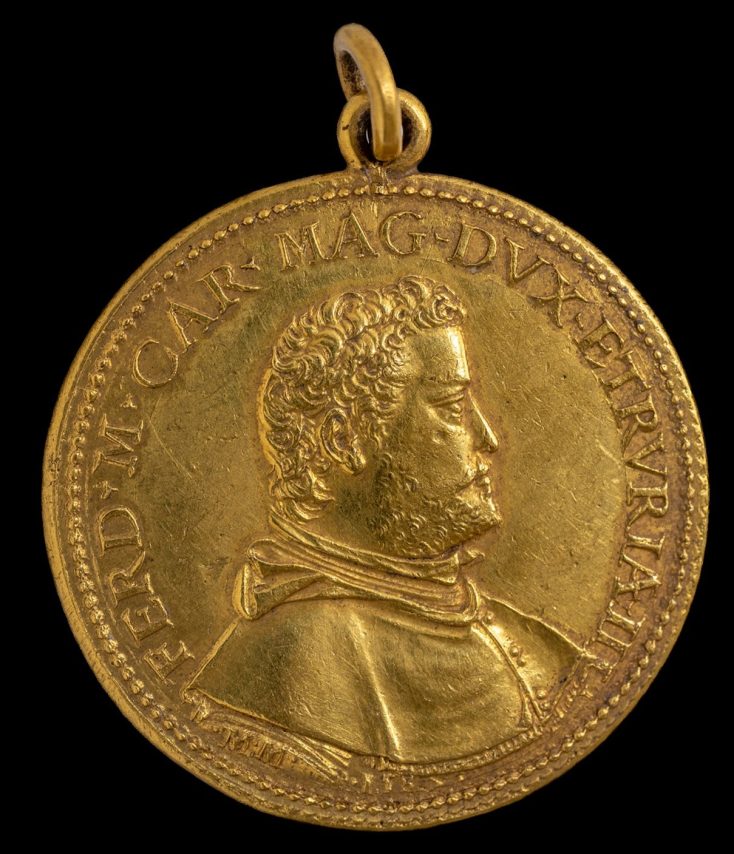
Struck gold, with hook
Newsletter
Stay in Touch
Sign up for the Piazza dei Cavalieri newsletter
to receive updates on project progress and news.