
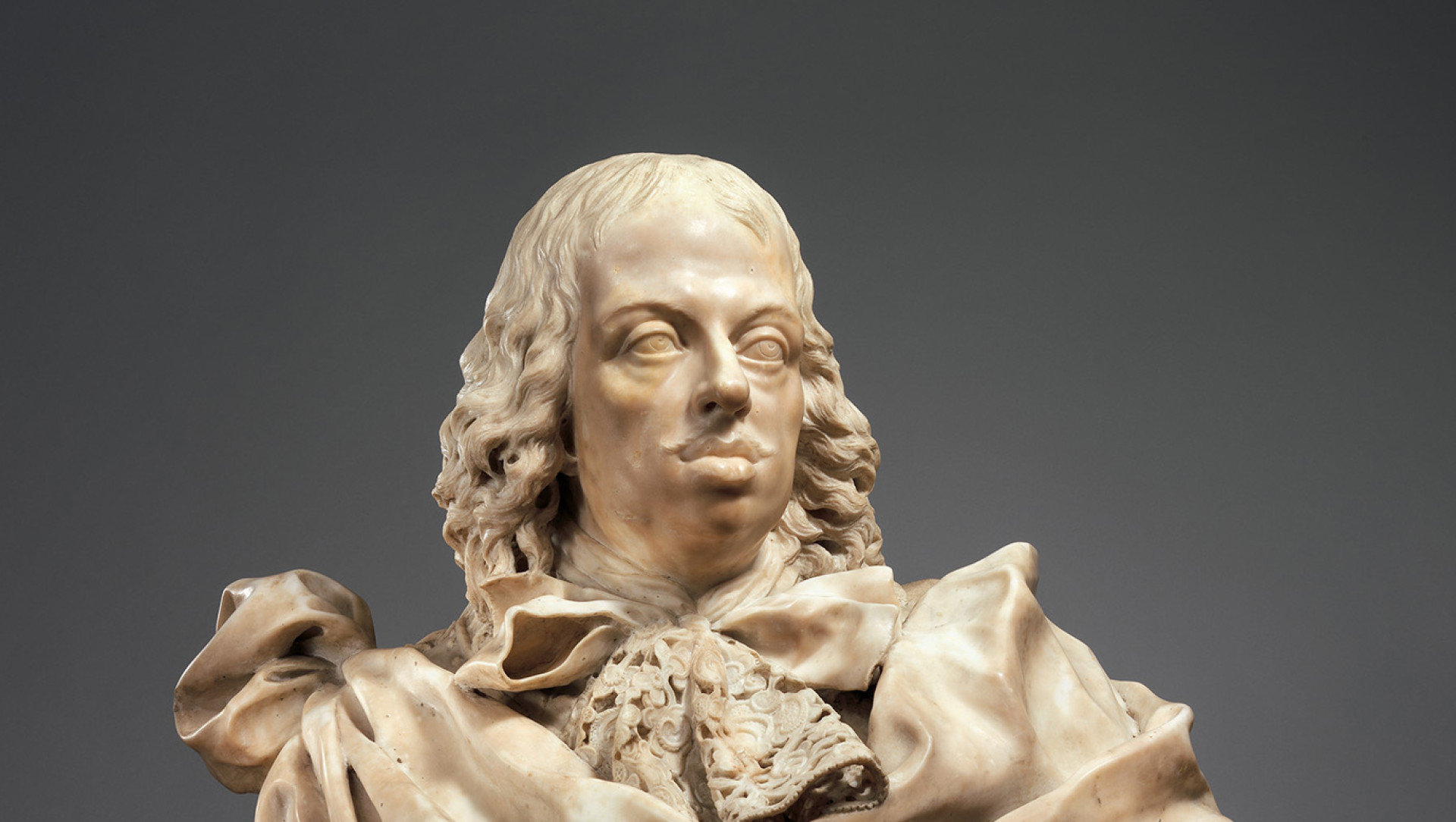
Cosimo III de’ Medici
[1642-1723]
Cosimo III de’ Medici, son of Grand Duke Ferdinando II and Vittoria della Rovere, was born in Florence on 14 August 1642. He received a thorough court education befitting his rank, overseen by his mother and guided by scholars such as Carlo Dati and Lorenzo Magalotti. However, he never displayed a marked intellectual inclination or taste for princely pastimes; instead, he favoured religious studies, to which his mother had directed him from childhood, and which profoundly shaped his character and actions.
In 1661, at only nineteen years of age, he married by proxy Marguerite Louise d’Orléans, the niece of Louis XIII, the late King of France. However, she never appreciated her husband’s austere and at times bigoted way of life, and her steadily mounting dissatisfaction led her to avoid living with him on several occasions until she ultimately chose to return to her homeland. The marriage proved deeply troubled and difficult to manage, and even the birth of their three children—Ferdinando, Anna Maria Luisa, and Gian Gastone—was insufficient to repair the relationship.
From an early age, he was encouraged to travel, both to establish diplomatic ties and to broaden his knowledge of diverse cultures. In the 1660s and 1670s, Cosimo undertook numerous journeys, visiting northern Italy and several European countries, including Germany, the Netherlands, Spain (where he visited Santiago de Compostela incognito in 1669), Portugal, and France—often acquiring exotic items and curiosities to bring back to court. Upon his father’s death in 1670, he inherited both his estates and the title of Grand Duke. While he successfully carried forward Ferdinando’s policies, he also granted considerable influence to his advisers, his mother, his brother Francesco Maria, and prominent members of the aristocracy.
In Pisa, while his predecessors, Cosimo II and Ferdinando II, had not undertaken any significant urban projects, under Cosimo III’s rule, renewed attention was directed to Piazza dei Cavalieri and its buildings. Determined to ensure the piazza’s full use by the Order of Saint Stephen—its symbolic home and a monumental expression of its institutional and territorial presence—the Grand Duke promoted a series of redevelopment works, which also extended to structures in the surrounding area. In particular, in 1691 he worked to allocate to the Council of the Twelve—the judicial body of the Order of Saint Stephen—the former Palazzo dei Priori, now known as Palazzo dei Dodici, located at the south-west corner of the piazza, the only building up to that point not owned by the Order.
The religious fervour that consistently guided Cosimo’s initiatives—and had, not by chance, led the Grand Duke to promote the solemn transfer of Pope Saint Stephen’s relics to Pisa on 25 April 1683—also inspired him to sponsor a new project to decorate and enlarge the church dedicated to the saint. Today, these sacred remains are preserved in an urn set in the high altar of the conventual church. The project, entrusted to the Florentine architect Pier Francesco Silvani, included, among other elements, the addition of two lateral wings to the main structure, each containing a domed chapel. However, the plan was soon abandoned following Silvani’s sudden death in August 1685, by which time only the annex walls and their respective roofs had been completed.
An integral part of the church’s interior reorganisation was the construction of a new altar, for which Silvani had already prepared a scale model. The altar was eventually executed fifteen years later by Giovanni Battista Foggini, who altered Silvani’s original design and incorporated both the relics of the church’s patron saint and his cathedra—a gift from Pope Innocent XII to the Order, which had been transferred from Rome to Pisa by Cosimo III himself in 1700.
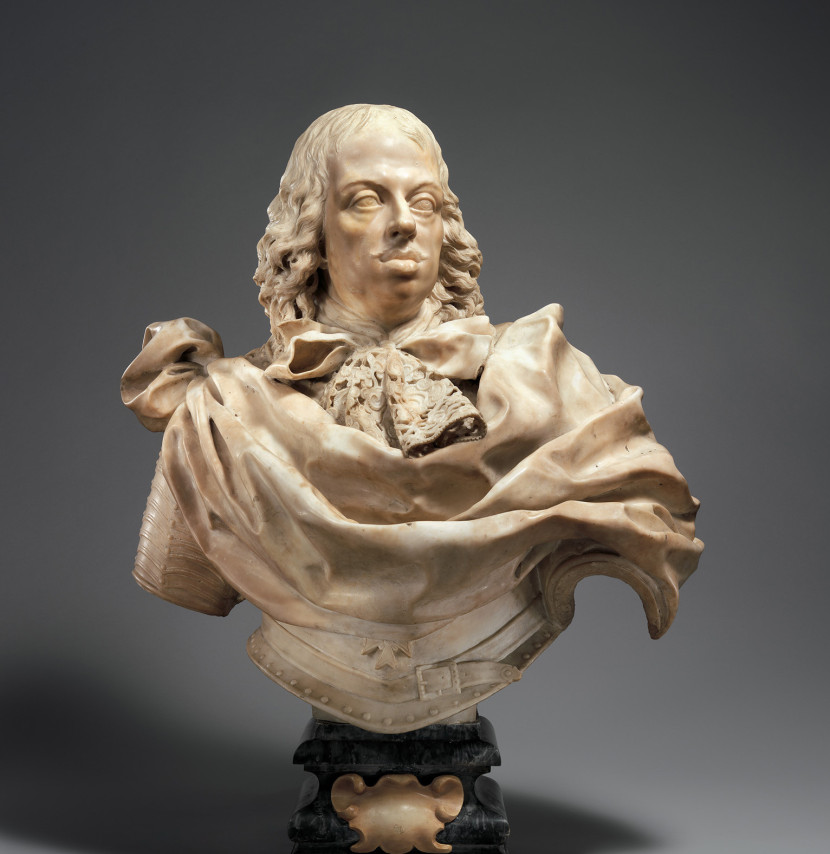
Cosimo also commissioned Foggini to create an altar for Saint Rainerius in Pisa Cathedral (1687–1690), another dedicated to Saint Francis Xavier, later sent to the Jesuit community in Goa, India (1689–1697), and finally, a bust of himself (1717–1718) to be placed in the last empty niche at the far right end of the façade of the Palazzo della Carovana, thus completing the sequence of portraits still visible there today.
Cosimo III died in Florence on 31 October 1723. He was succeeded by his son Gian Gastone, the last of the Medici dynasty and the only Grand Duke not represented on the façade of Palazzo della Carovana.
Prominent Personalities
Main Entry- Ugolino della Gherardesca
- Anna di Świdnica
- Francesco I de’ Medici
- Carlo Antonio dal Pozzo
- Ferdinando I de’ Medici
- Morgiano
- Cosimo II de’ Medici
- Ferdinando II de’ Medici
- Cosimo III de’ Medici
- Azzolino Bernardino della Ciaia
- Gian Gastone I de’ Medici
- Leopoldo II d’Asburgo-Lorena (imperatore)
- Napoleone Bonaparte
- Elisa Bonaparte
- Leopoldo II di Toscana (granduca)
- Ulisse Dini
Media gallery
Marble, 99.4 × 78.7 × 42.9 cm
Newsletter
Stay in Touch
Sign up for the Piazza dei Cavalieri newsletter
to receive updates on project progress and news.