
Other Artworks
In addition to the well-known Stoning of Saint Stephen by Giorgio Vasari (1569–1570) and the Nativity by Agnolo Bronzino (1564), Santo Stefano dei Cavalieri houses two other late sixteenth-century paintings and a significant bronze Crucifix.
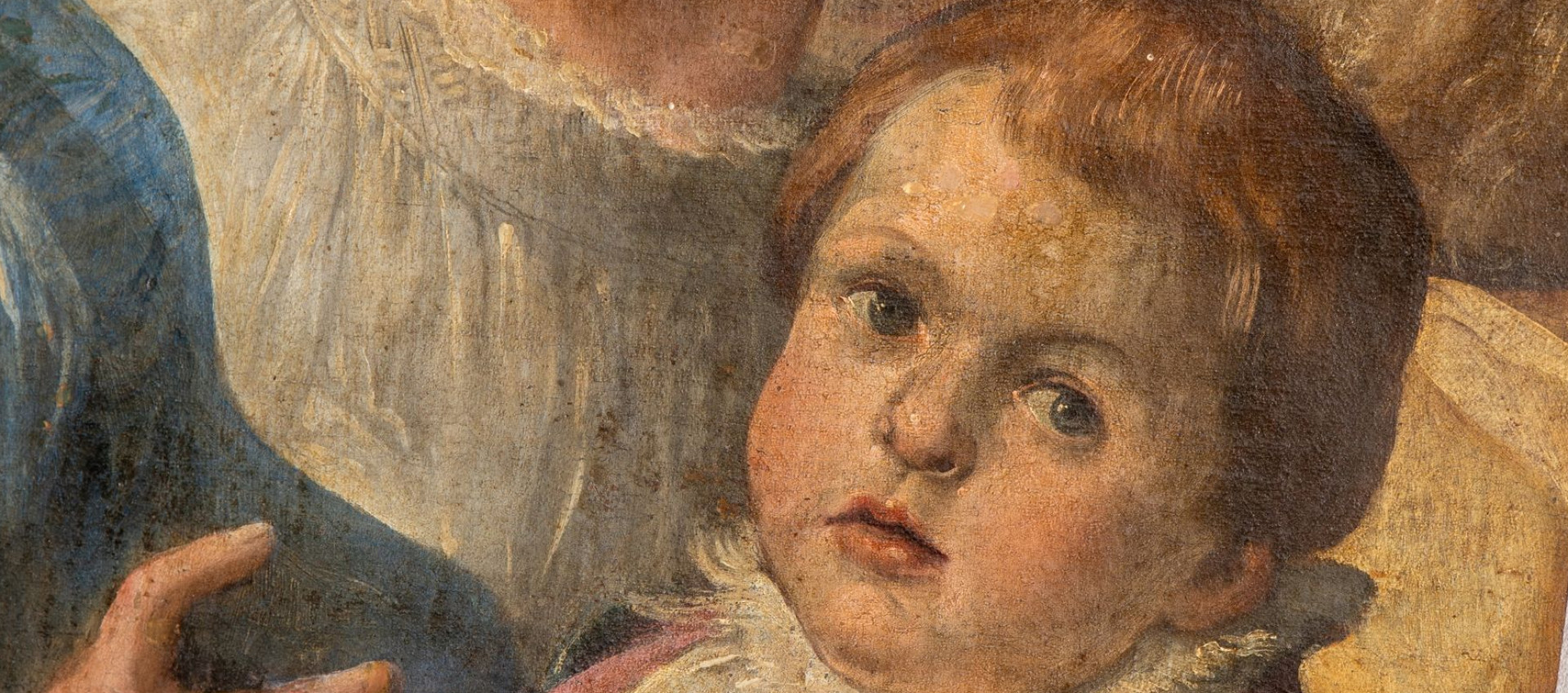
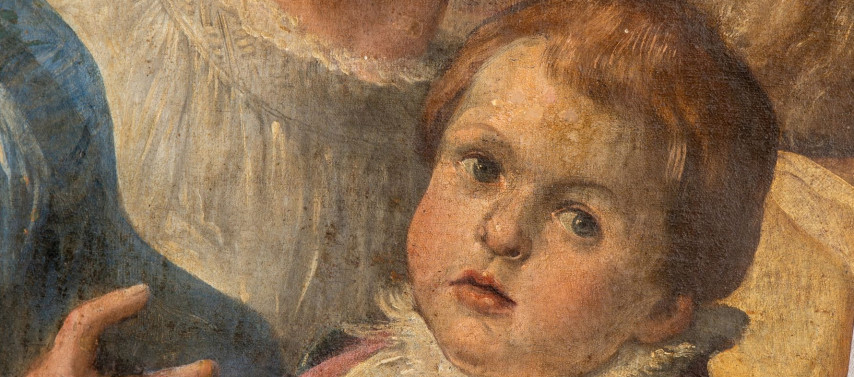
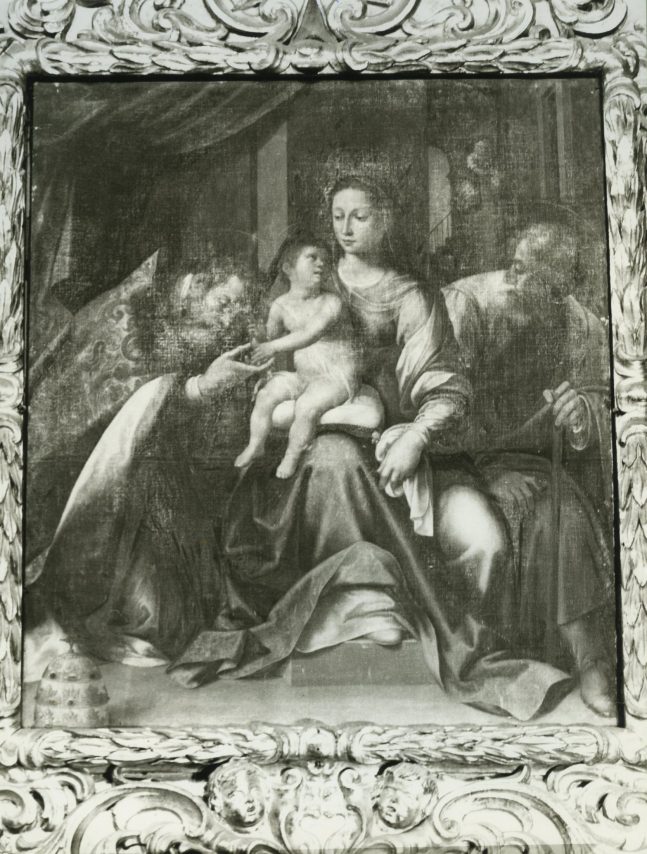
Of notable value is the Holy Family with Pope Saint Stephen, c. 1593, by Aurelio Lomi (c. 1556–1623), a prolific painter from Pisa and brother of the more famous Orazio—better known by the surname Gentileschi. Regarded as one of Lomi’s finest achievements, the painting is set within a lavish contemporary wooden frame adorned with gilded scrollwork, featuring two cherub heads at the base and the Stephanian cross at the top. It was originally commissioned by Ridolfo Sirigatti ‘for the Council Hall of the Knights’ [per la Sala del Consiglio dei Cavalieri], located on the second floor of the Palazzo della Carovana, now the Sala Gran Priore in the Directors’ Offices. Around 1689, after the completion of Pier Francesco Silvani’s Chapel of the Holy Sepulchre near the sacristy, the painting was placed on the chapel’s altar, as noted by Filippo Baldinucci (1702) and Pandolfo Titi (1751). In the nineteenth century, during the church’s reorganisation, the work was relocated to the nave and subsequently to the presbyterial area, to the right of the high altar (with one’s back to the entrance), where it remains today. Lomi’s eclectic style emerges in the painting’s blend of Correggio’s soft colourism, Tuscan-Emilian influences in the composition of the central group and background—where a small figure descends a staircase—the graceful elegance of Parmigianino, and the intimate devotional tone of Roman painters such as Scipione Pulzone. The work exemplifies the intellectual and unadorned spiritual climate promoted by Duke Cosimo de’ Medici with the foundation of the Order of Saint Stephen. Indeed, scholars have identified in the figure of Pope Stephen, kneeling to the left before the infant Jesus, a discreet portrait of Cosimo himself.
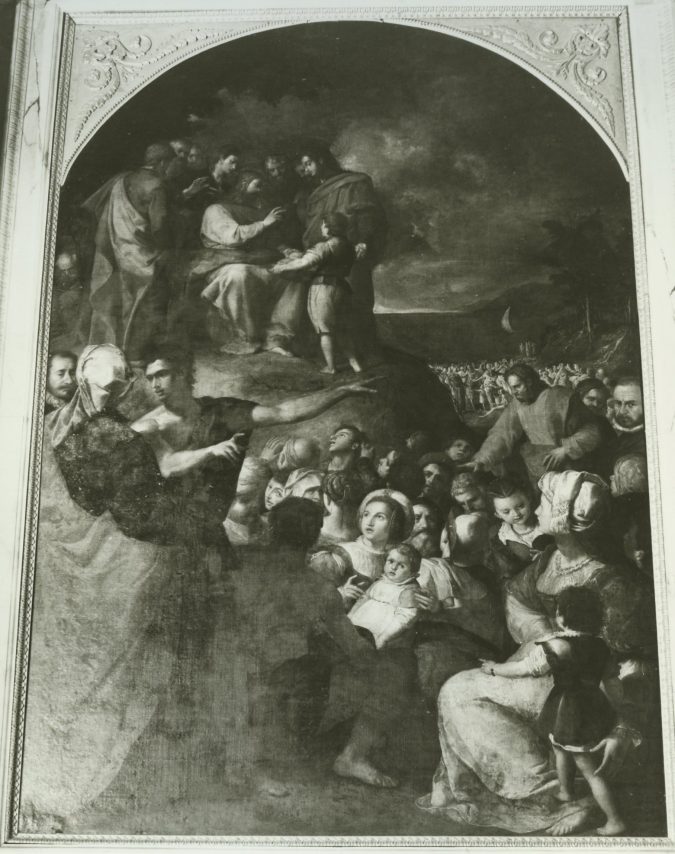
The second canvas, Multiplication of the Loaves, was painted by the Florentine Ludovico Buti (1550/1560–1611), a pupil of Santi di Tito, and is datable to the 1580s or 1590s. Originally from the Spedale di San Paolo dei Convalescenti in Florence, the painting was installed in the nineteenth century on the first altar of the left-hand aisle of the Pisan church, replacing a Burial of Christ by Lattanzio Gambara (c. 1530–1574)—a work noted by local sources and by nineteenth-century travellers such as Antoine-Claude Pasquin Valéry—which was removed in 1822 by Grand Duke Ferdinand III of Habsburg-Lorraine for his own collections and is now held at Palazzo Pitti (inv. 806). Buti’s painting, which fully embraces the compositional structure and figural types of his master, presents a densely populated foreground echoed by further figures in the background. The composition unfolds in a spiral movement: it begins with a man on the far left raising his arm to guide the viewer’s gaze, passes through the group of bystanders on the right, and ascends to the figure of Christ at the top, captured in the act of performing the miracle.
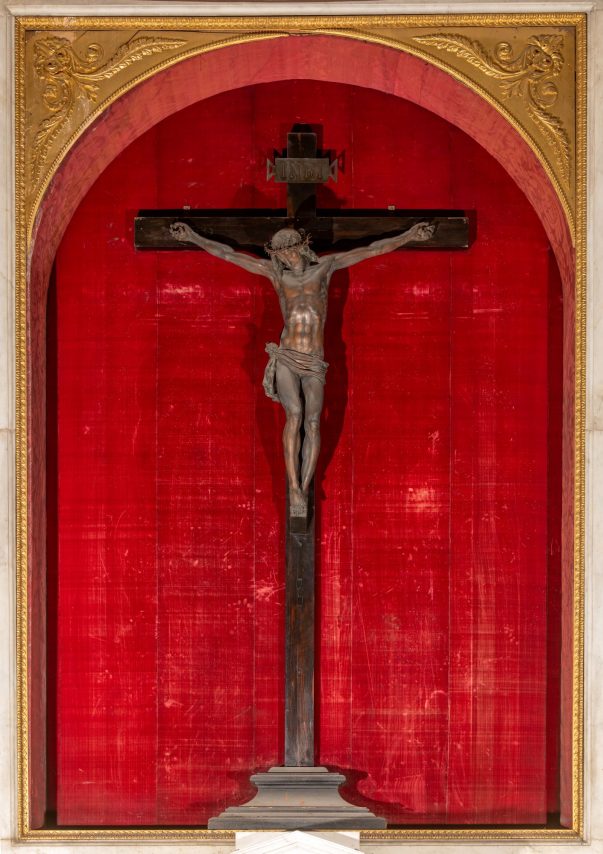
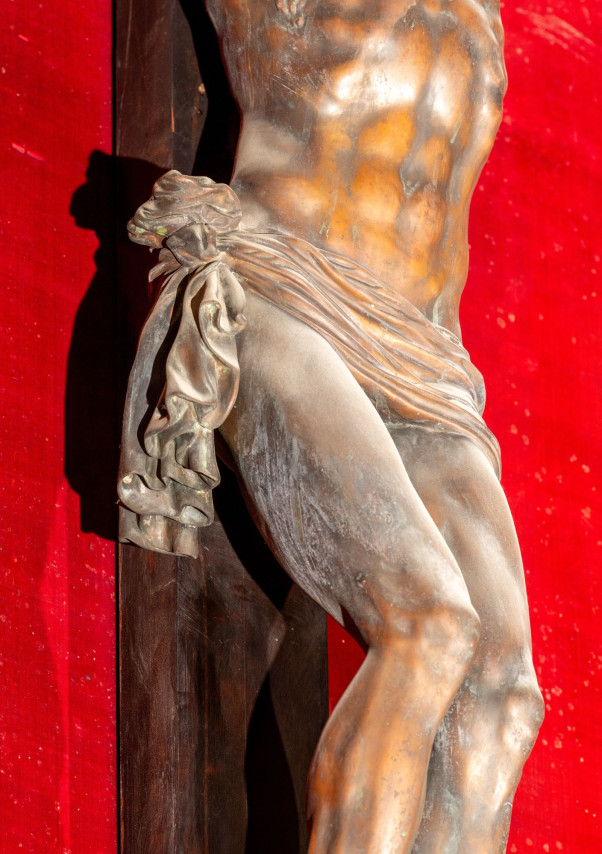
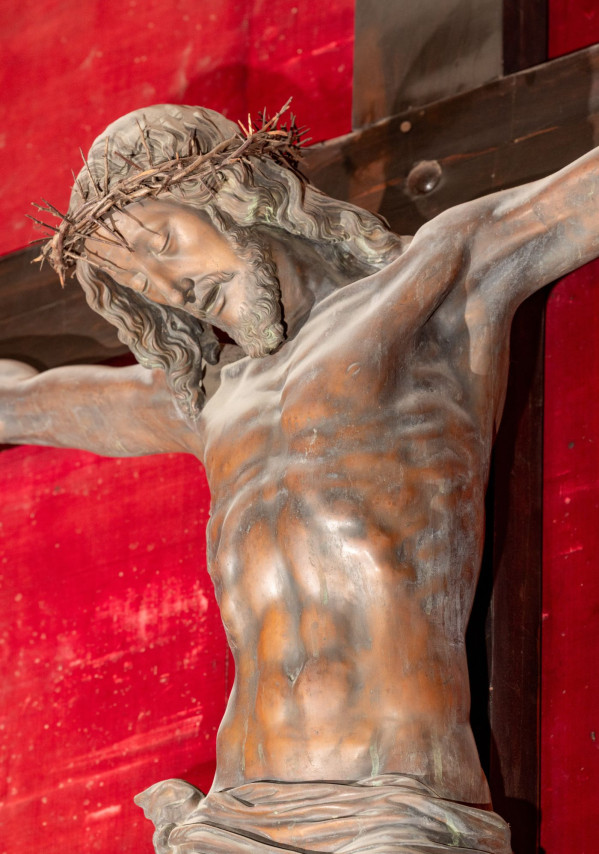
A notable bronze Crucifix is displayed within a marble aedicula on the right-hand side of the church (second altar). Of uncertain origin, it was installed in place of a nineteenth-century silver crucifix, ‘sculpted in Rome by Giovacchino Belli after a design by the sculptor Pietro Tenerani’ [scolpito in Roma da Giovacchino Belli sul disegno dello scultore (Pietro) Tenerani], which was partially destroyed by a lightning strike in 1866. That work had in turn replaced, at the behest of Grand Duke and Grand Master Ferdinand III of Habsburg-Lorraine, a valuable ‘other crucifix of the same metal, greatly esteemed for its artistry, attributed to the Bolognese Alessandro Algardi’ [altro crocifisso dell’istesso metallo, molto pregevole per l’arte, attribuito ad Alessandro Algardi bolognese]. Francesco Caglioti was the first to reattribute the current bronze to Felice Palma (1583–1625), a proposal that overturned the traditional attribution to the Carrara-born Pietro Tacca (1577–1640), correcting the dating frequently found in local guidebooks, which had placed the work in the nineteenth century. More recently, Grégoire Extermann undertook a close re-examination of the sculpture, definitively confirming Palma’s authorship. After training in the Veneto, Palma worked in Pisa from 1606 to 1614, taking on commissions from the Medici family at the church of San Nicola. Even after relocating to Florence, he continued to maintain links with the city, devoting himself, in particular around 1615–1620, to the production of crucifixes.
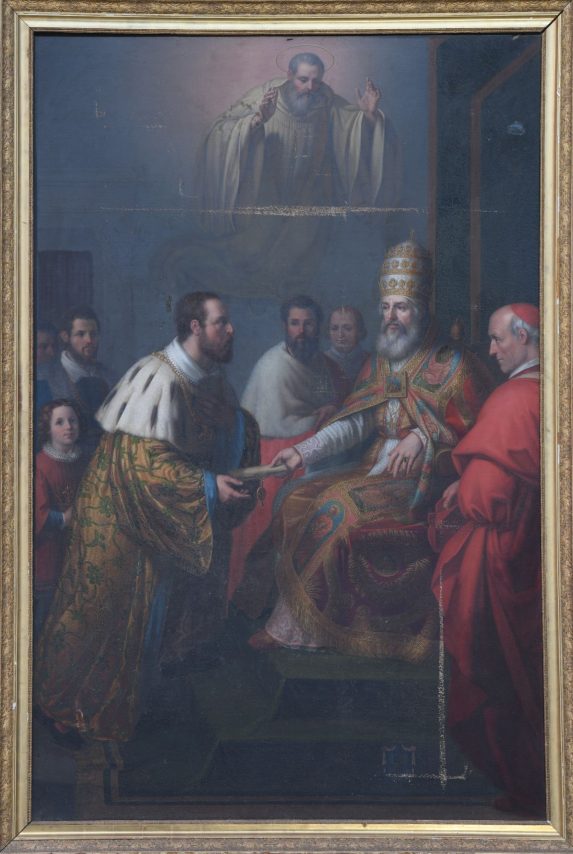
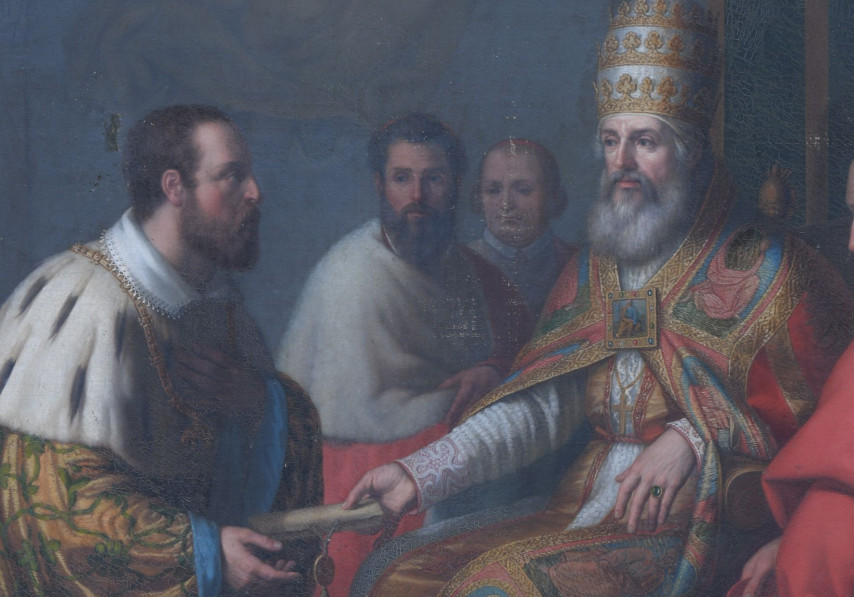
A later work, painted in 1838 by the Florentine artist Carlo Brighenti, depicts the historical episode in which Pope Pius IV hands Duke Cosimo the bull establishing the Order of Saint Stephen. Initially intended for the Chapel of the Holy Sepulchre—formerly home to Lomi’s Holy Family—the canvas was later deemed thematically unsuitable for that setting. Following several relocations within the church, it is now installed on the left wall of the presbyterial area, just inside the nave. According to Alfredo Giusiani, the seventeenth-century altar was subsequently occupied by an unidentified ‘Madonna of Mercy belonging to the noble Mecherini family of Pisa’ [Madonna della Mercede di proprietà della nobile famiglia Mecherini di Pisa].
Media gallery
Newsletter
Stay in Touch
Sign up for the Piazza dei Cavalieri newsletter
to receive updates on project progress and news.