
Functions
16th and 17th centuries
Santo Stefano dei Cavalieri was begun in 1563 to serve as the conventual church of the newly established Order of the same name, founded by Duke Cosimo de’ Medici. The Order combined religious and chivalric ideals with a mission to defend the Christian faith. The church served as the spiritual heart of the Order and as a repository of its most celebrated naval victories, evidenced by the captured enemy flags and standards brought back to Pisa. From the outset, it fell under the direct jurisdiction of the Knights. In the early modern period, it helped define the piazza in front of it as an urban enclave dedicated to the celebration of Christianity and to the prestige of the Medici dynasty.
As stipulated in the statutes, the knights of the Order were divided into three categories: militi (military-knights) serventi (servant-knights), and sacerdoti (priest-knights). The sacerdoti bore particular responsibility for administering the conventual church and the Order’s ecclesiastical properties. Unlike the fully-fledged militi, they were not required to prove noble lineage; legitimate birth alone sufficed. Nevertheless, they had to complete a one-year novitiate at Santo Stefano before being admitted as full members of the Order. Within the church, these priest-knights performed their sacerdotal duties and celebrated the annual liturgical rites. They also attended to the spiritual needs of the military knights, for example, through confession. The prior of Santo Stefano oversaw the communal life of the sacerdoti, to whose authority they were subject. His duties included admitting novices to the Order, supervising the conduct of the sacerdoti, and ensuring the proper administration of the church. It is noteworthy that, in numerous instances, priors also held the office of provveditore at the the Studio (administrator of the university).
In addition to hosting regular religious services, the church of Santo Stefano frequently served as the principal venue for commemorating extraordinary events. These included celebrations of military victories, such as the victory at Bona, and ceremonial entries into Pisa by the Grand Master when he was also Grand Duke, for example, that of Ferdinando I de’ Medici. The piazza in front of Santo Stefano, together with the church itself, was likewise the setting for the funeral rites of deceased knights, although they were not buried inside the building. The most solemn obsequies, however, were reserved for the Grand Duke. These were major public ceremonies that combined the religious observance of the funeral rite with a celebration of the Order’s prestige and authority. Similarly, lavish ceremonies were organised from the seventeenth to the nineteenth century for members of the House of Lorraine, including Emperor Francis I. On all these occasions, as well as during ordinary liturgy, the church’s musical chapel played a prominent role. Thanks to the careful selection of its maestros, the cappella musicale (musical chapel) stood out as a centre of excellence within the Order and, consequently, a significant source of institutional pride.
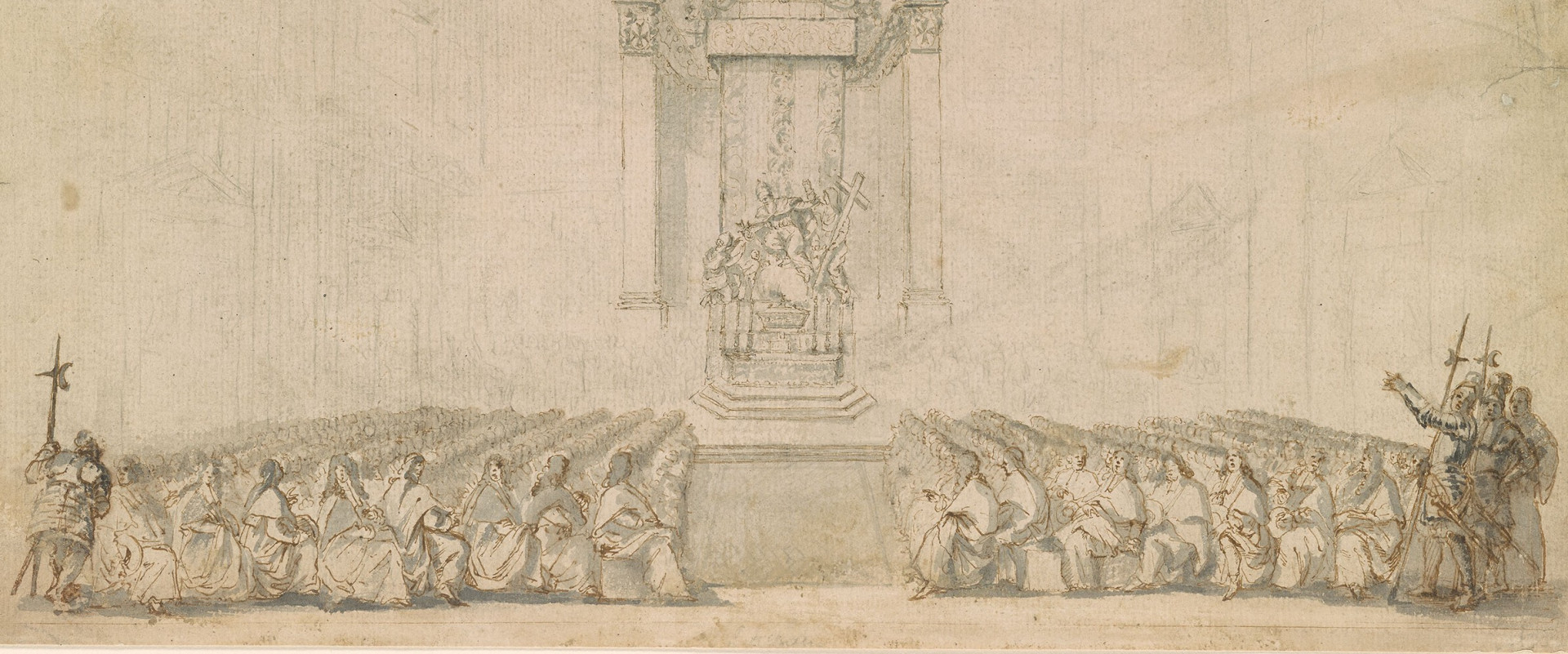
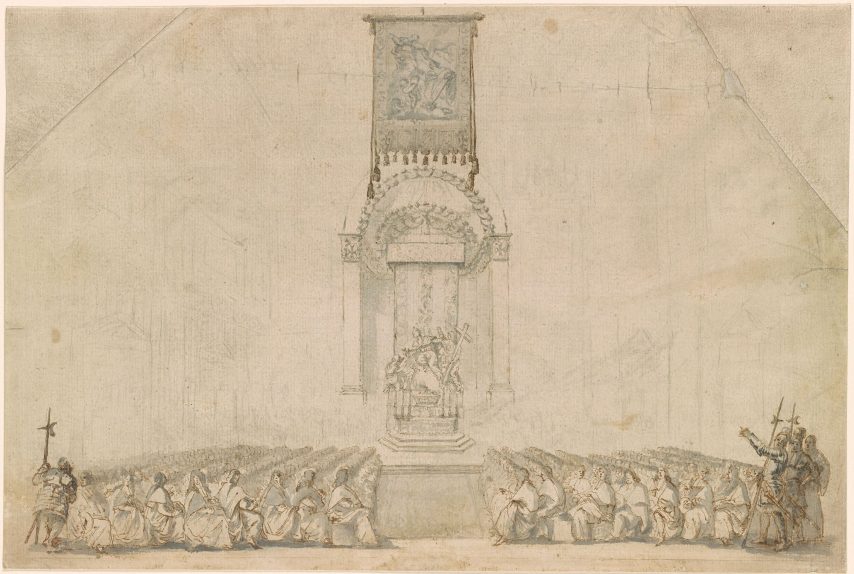
Among the most significant events held in the conventual church was the general chapter of the Order, an assembly convened in Pisa every three years. On these occasions, all knights resident in Tuscany were required to gather in the presence of the Grand Master. The chapter served above all a legislative and disciplinary function, providing the most appropriate forum for introducing new regulations or amending the shared statutes. During its sessions, knights who had violated the Order’s rules could also be tried, and the gravest offences could lead to deprivation of the habit of Santo Stefano and expulsion from the Order. It was likewise during the general chapter that appointments to the principal offices were confirmed: terms of office were renewed here as a matter of course, and commanderies granted to the most senior or deserving knights. Like many other foundational institutions of the Stephanian Order, the general chapter drew heavily on the assemblies convened by other religious–military orders of medieval origin.
Media gallery
https://www.themorgan.org/drawings/item/140946 (attributed to Stefano della Bella)
Newsletter
Stay in Touch
Sign up for the Piazza dei Cavalieri newsletter
to receive updates on project progress and news.