
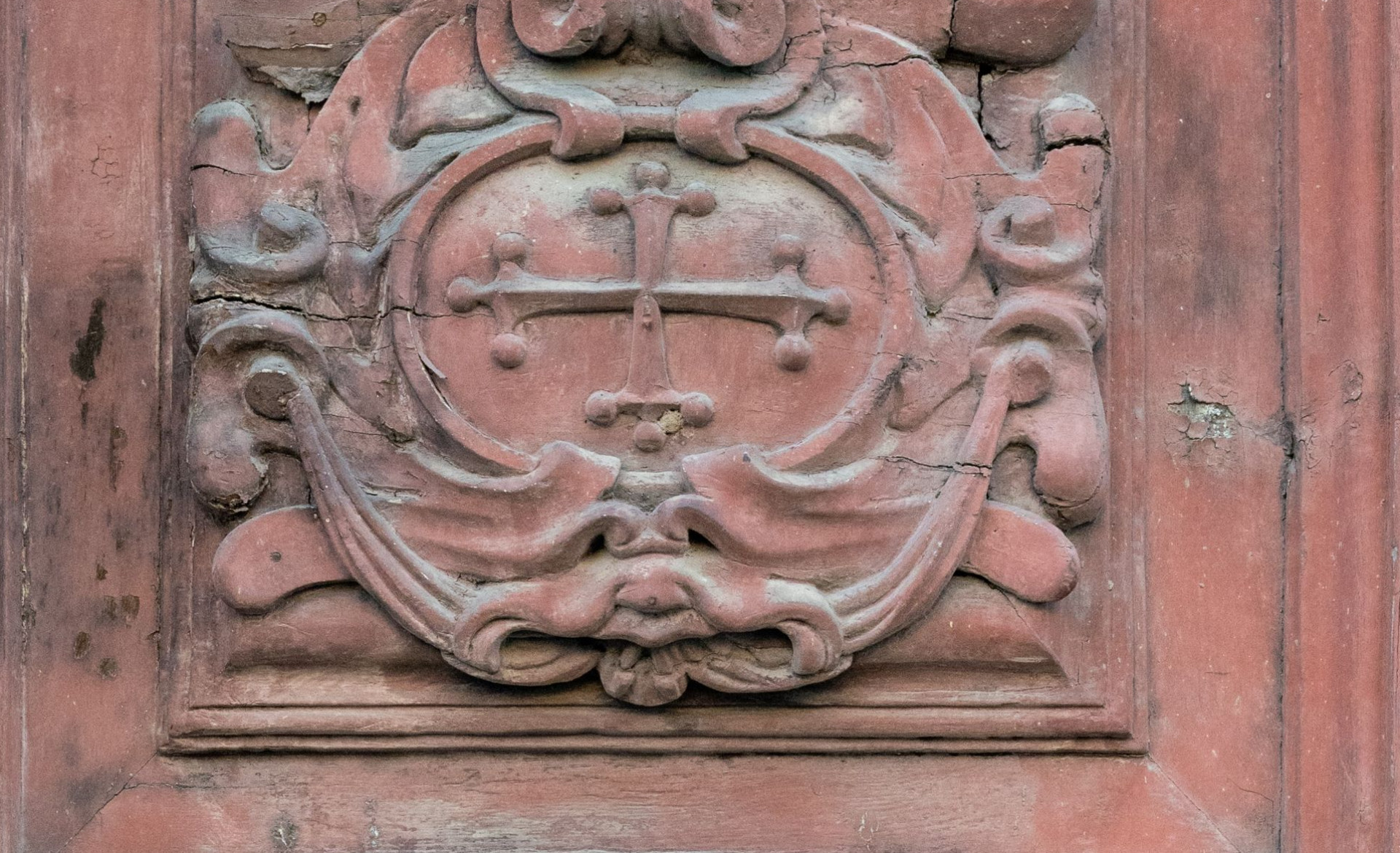
San Rocco
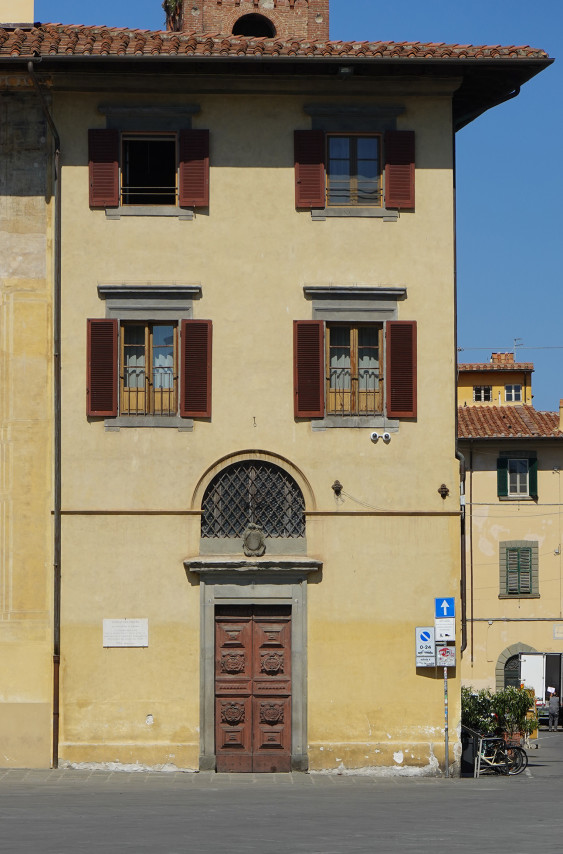
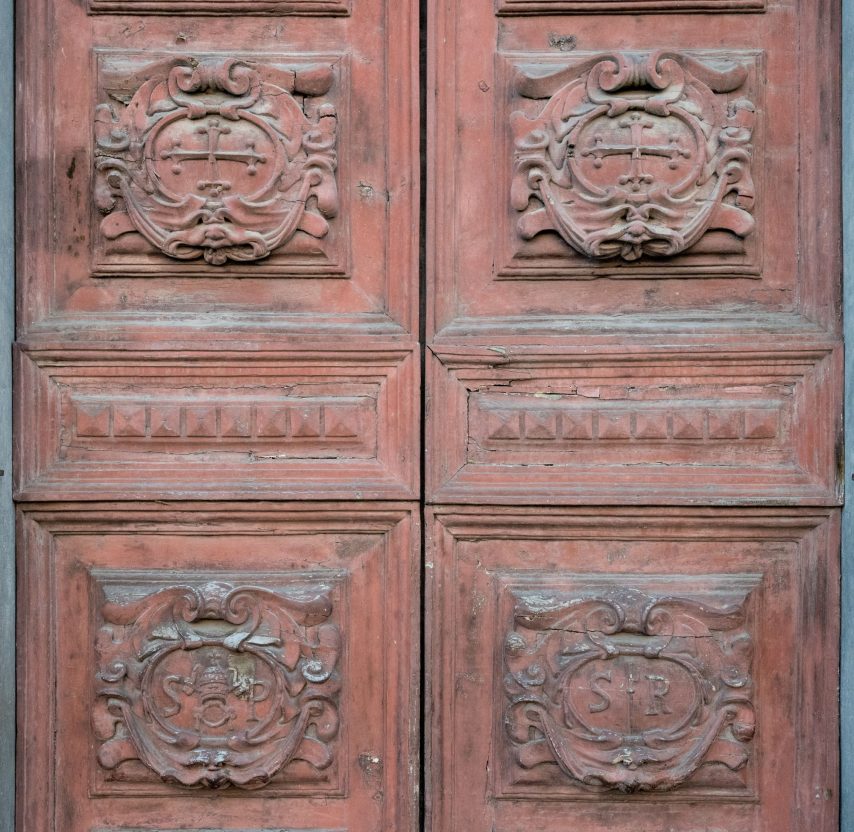
Now scarcely recognisable as an independent religious building due to its incorporation into a single block of terraced buildings on the western side of Piazza dei Cavalieri, the church of San Rocco nevertheless boasts a distinguished past. Its construction renewed the medieval fabric of San Pietro in Cortevecchia, a church built before the nearby San Sisto and which, despite numerous modernising interventions, had retained its autonomy until the late sixteenth century. In 1578, when the building was transferred to the Confraternity of San Rocco—whose coat of arms still crowns the entrance—major renovation and expansion works were undertaken, giving the church (now dedicated to Roch, the patron saint of plague victims) its broadly current form. In the early seventeenth century, the architect Cosimo Pugliani integrated the façade into a small, residential-style palazzo, harmonising its height with the adjacent buildings recently constructed by the Order of Saint Stephen, including the Collegio Puteano. An additional extension unified the side facing the Palazzo dell’Orologio, ensuring continuity with San Sisto along the present-day Via Corsica.
Over the centuries, a longstanding interaction—both structural and institutional—has linked San Rocco to the adjacent buildings and the institutions associated with them, and this connection remains clearly perceptible today. Directly connected to the church of San Sisto in Cortevecchia, the small oratory still forms part of its parish. Meanwhile, the two upper floors—whose regularly spaced windows preserve the visual continuity with neighbouring façades—are now used by the Scuola Normale Superiore. Since 2001, they have housed the Ennio De Giorgi Research Centre in Mathematics, which is accessed via the adjoining Collegio Puteano, the institution’s guesthouse.
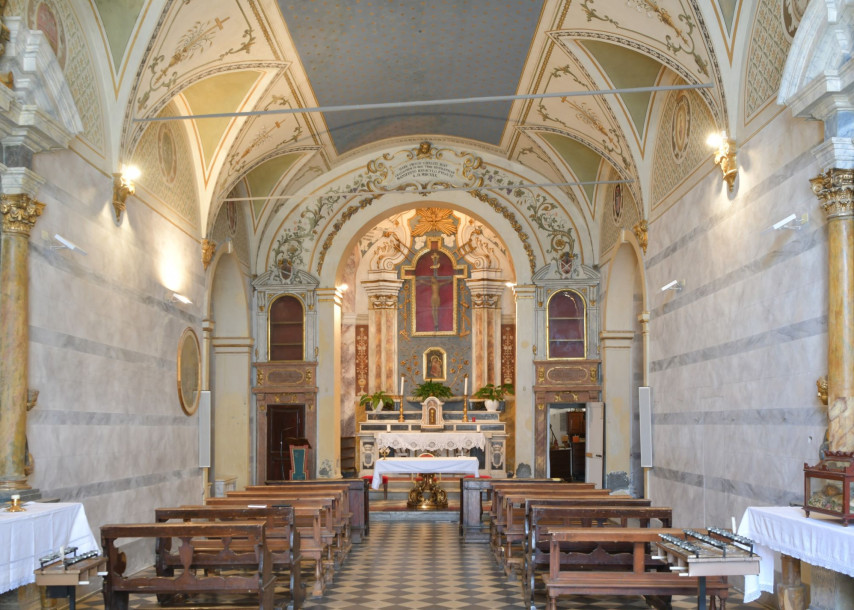
The interior of San Rocco likewise reflects the church’s complex history. Seventeenth-century elements—such as the tabernacles flanking the presbytery and the first altar on the left as one enters—stand alongside significant eighteenth-century additions that continue to define the space. Among these are the fresco at the centre of the vault, Saint Roch Healing the Plague-Stricken, attributed to the Pisan painter Francesco Venturi, and the late eighteenth-century altar in marble and white stucco.
Several furnishings currently found in the nave, including the striking fifteenth-century crucifix in the apse, did not originally belong to the church. These pieces were donated from the seventeenth century onwards, often by private citizens as ex-votos during periods of worsening public health in the city.
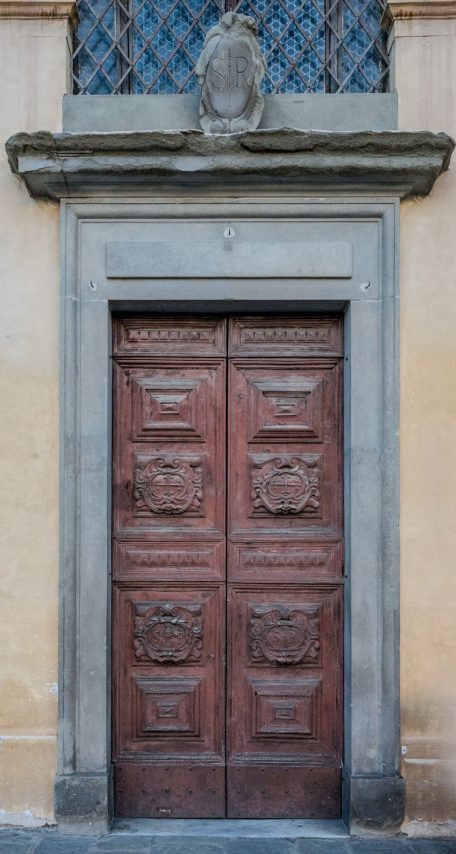
The interior and façade of the church were also affected by extensive restoration and reconstruction works carried out during the nineteenth century. These interventions, however, spared the monumental wooden doors of the main entrance, which probably date to the second half of the eighteenth century.
Media gallery
Newsletter
Stay in Touch
Sign up for the Piazza dei Cavalieri newsletter
to receive updates on project progress and news.