
The Terraced Houses
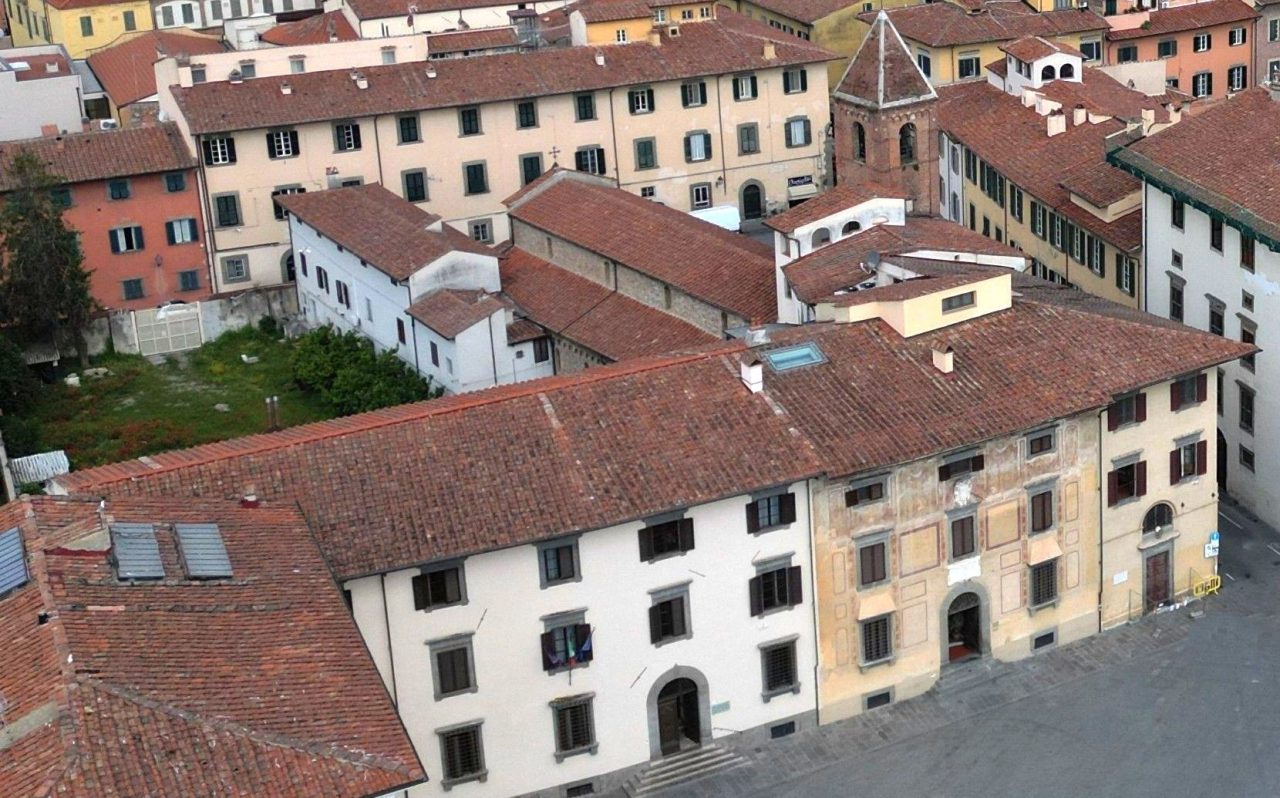
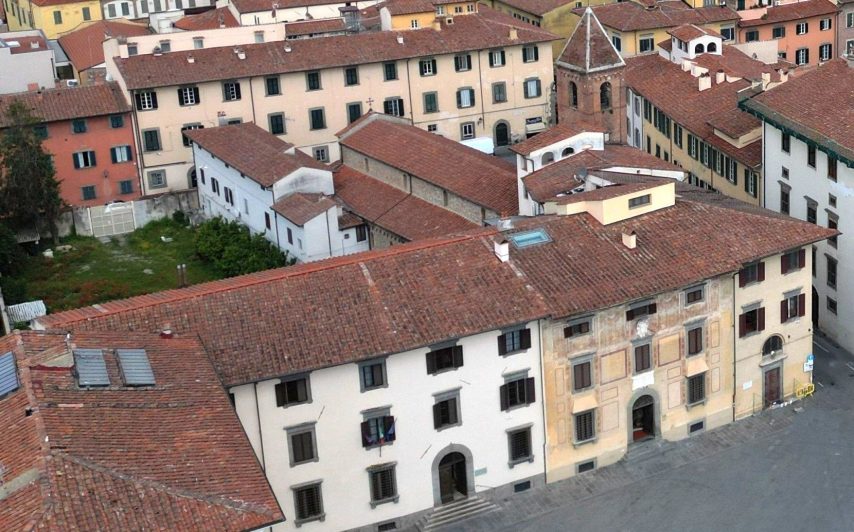
These three terraced houses—today incorporated into Palazzo dell’Università and the Collegio Puteano—were completed in 1598 on the west side of Piazza dei Cavalieri for the Order of Saint Stephen. They exemplify a distinctive type of building that became established in Tuscany from the second half of the sixteenth century. Among such secondary constructions, the most substantial undertaking financed by the Order was the block of houses built in Florence’s Via del Prato in the late 1570s under Francesco I de’ Medici: fifty-nine units, later extensively modified in the nineteenth century, stretching for about 450 metres from Borgo Ognissanti almost to Porta al Prato. These inexpensive structures, rented to artisan families, had three storeys above ground and a small rear courtyard with a well. Their internal layout echoed that of the Pisan houses, with the difference that the staircase was located roughly in the middle of the corridor rather than at its end, thereby dividing the rear part of the dwelling from the front.
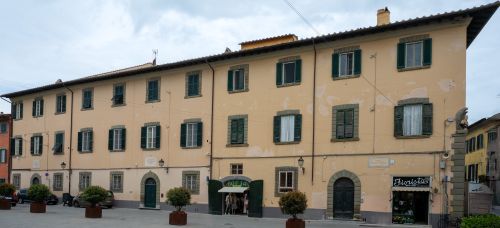
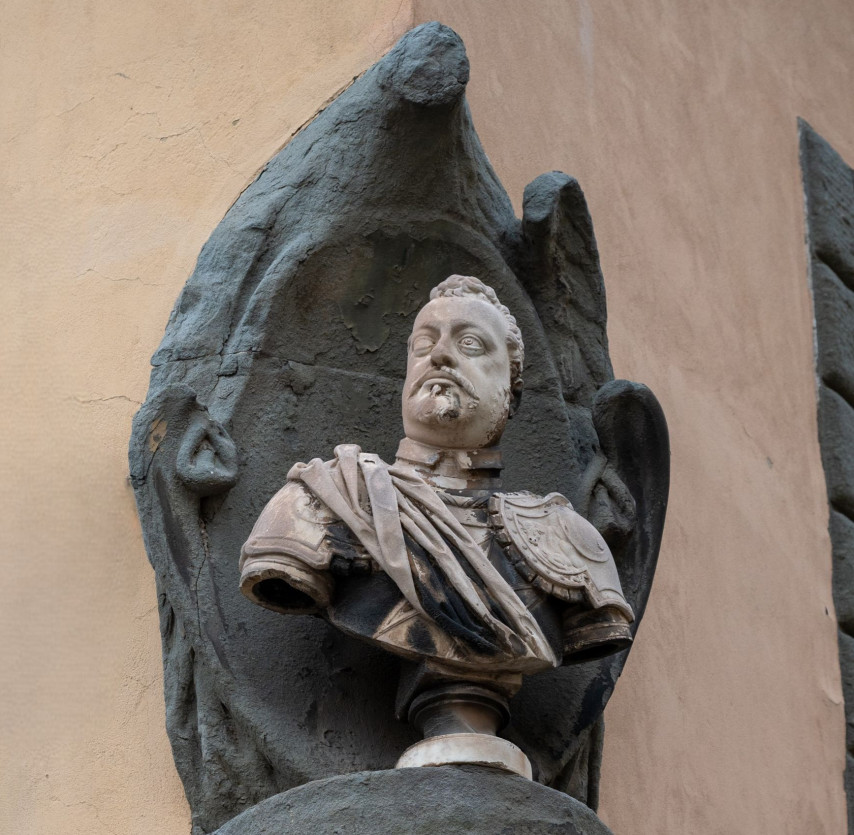
Four terraced houses, contemporary with those in Piazza dei Cavalieri but not commissioned by the Order, stand nearby in what is now Piazza Buonamici, opposite the church of San Sisto at the corner of Via dei Mille. They were built at the behest of Ferdinando I de’ Medici—whose marble bust still marks the corner of the building—and of Archbishop Carlo Antonio dal Pozzo, to a design by Raffaello di Zanobi di Pagno, who also oversaw the works on Palazzo dei Dodici and the Medici aqueduct. The façade is regular, articulated by three rows of windows and arched doorways, all framed in pietra serena (grey sandstone). As in Piazza dei Cavalieri, the plaster surface was probably intended to be fully decorated. Evidence for this comes from the sgraffito mythological scenes still visible on the upper part of the adjacent Palazzo Altini in Via dei Mille, which forms a single block with Pagno’s building. The internal layout of the four houses followed the same scheme as those of the Order: a central ground-floor corridor, with rooms on either side, leading to a small private courtyard at the rear.
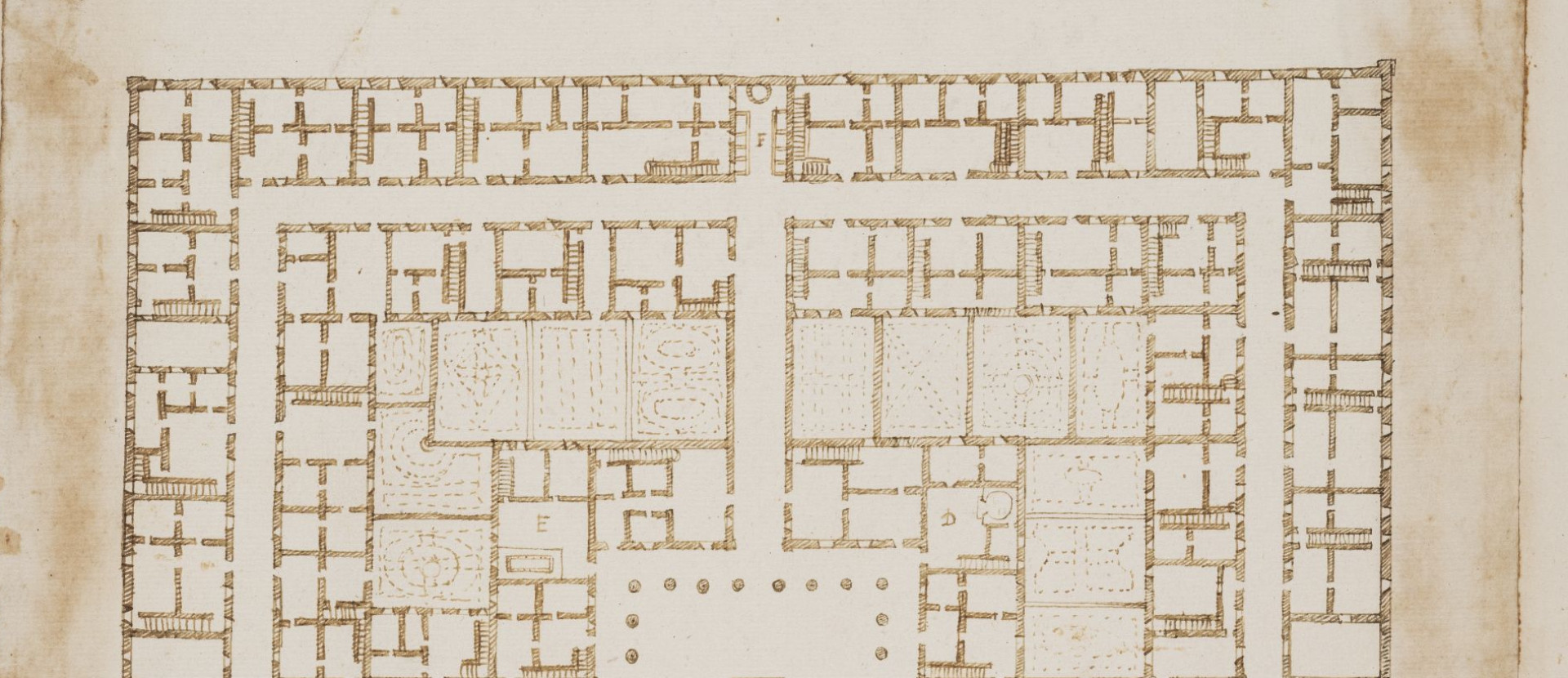
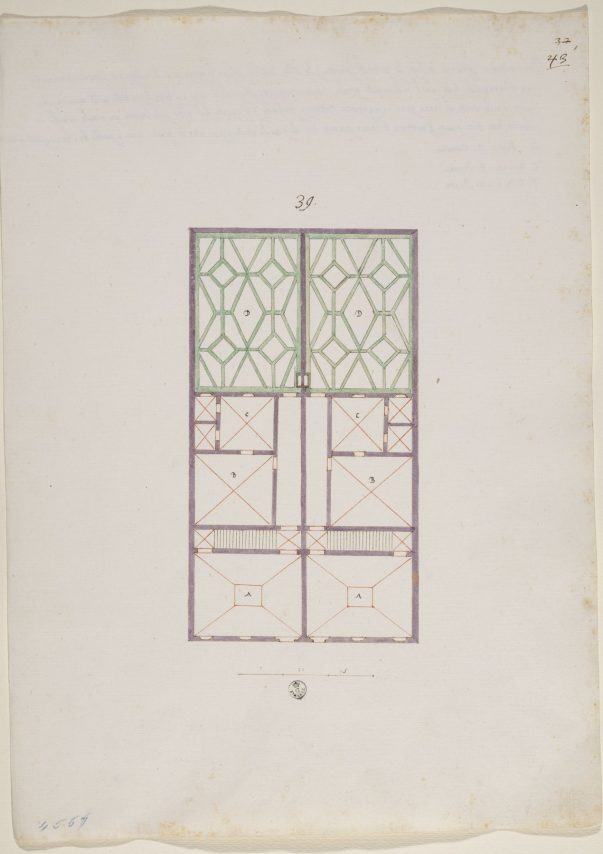
Modular repetition, particularly suited to the construction of inexpensive dwellings, was rarely treated in early modern architectural literature. Giorgio Vasari the Younger addressed it in his manuscript Città Ideale. Piante di chiese [palazzi e ville] di Toscana e d’Italia (1598), preserved in the Prints and Drawings Department of the Uffizi. A Knight of St Stephen from 1577 (his coat of arms is still preserved in the collection of heraldic shields displayed in Palazzo della Carovana) and nephew of his famous namesake, author of the Vite, Vasari presents in this collection of drawings, accompanied by brief notes, a pair of dwellings for artefici (artisans), no. 39 sharing a common long wall in una medesima pianta due cassette (two small houses on a single plan). The ground-floor plan comprised a street-facing sala (hall), followed by a staircase placed transversely so as to conceal the corridor and two rooms cameraand anticamera (chamber and antechamber), aligned to the rear and opening onto the orto (kitchen garden).
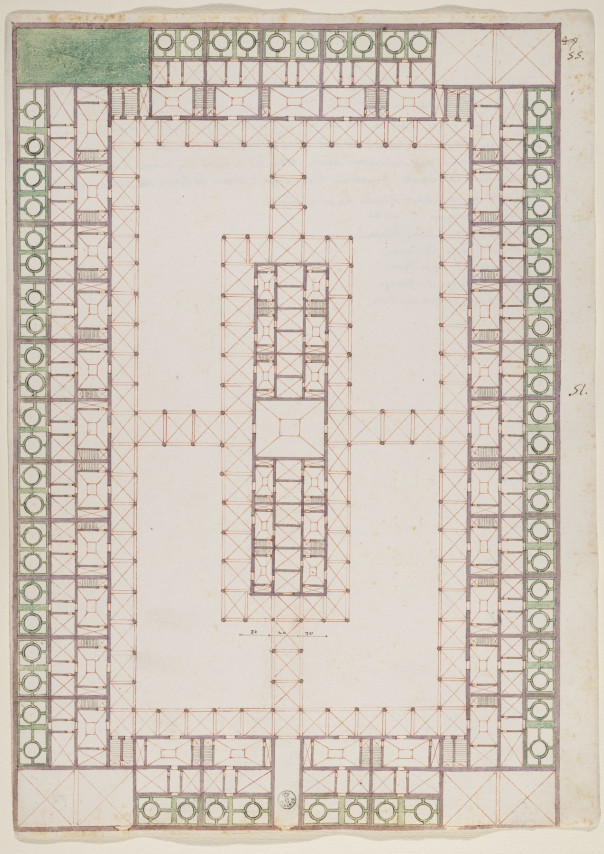
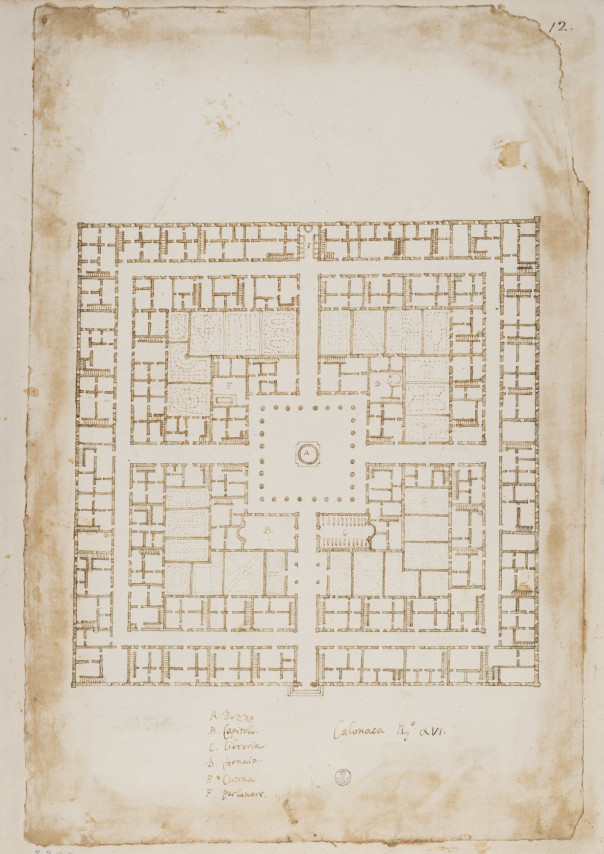
Other drawings in Giorgio Vasari the Younger’s treatise also return to the theme of serial housing, such as no. 51, which depicts thirty small houses within a complex referred to as the ‘canonica’. This theme is also addressed by Bartolomeo Ammannati in his collection of graphic studies, known as Città ideale (dated before 1592). In one of the most significant drawings, 3393A (‘calonaca’), the housing units, as in Vasari the Younger’s work, are arranged on two storeys and in some cases include gardens. Both proposals, never built, were preceded by Giorgio Vasari the Elder’s multi-level lodgings in Pisa’s Canonica, intended for the priest-knights of St Stephen, and seem to be linked to them in some respects. A further intriguing coincidence is that Ammannati was also the architect of the Palazzo di Ugolino Grifoni, still standing in Florence’s Piazza Santissima Annunziata, who can be identified with ‘Monsignore Altopasso’ cited in the sources as the first financier of the works on the Palazzo della Canonica in Piazza dei Cavalieri.
Bartolomeo Ammannati addressed the theme of terraced houses not only in theory but also in practice, with three buildings constructed in Florence at the corner of Via degli Alfani and Via della Pergola, commissioned by the Arte della Lana between 1577 and 1584. Largely preserved, the structures rise three storeys above ground and were conceived by the Florentine architect to appear as a single unified palazzo, achieved through devices such as the regular repetition of nine windows per floor, the continuity of a broad projecting cornice, and, at the intersection known as Canto alla Catena, a striking rusticated corner still bearing the prominent arms of the Arte della Lana and of the Alberti family. Architecturally, these buildings stand on a higher level than those in Via del Prato and also compared with the terraced houses—attributed to Ammannati, though undocumented—on the left side of Piazza Santo Spirito when facing the church. Begun in 1575 on commission from the Augustinians, these were probably completed by Ammannati’s pupil Alfonso Parigi, who in 1579 was living in the penultimate house overlooking the piazza. Records attest to their use until at least 1612.
Media gallery
Newsletter
Stay in Touch
Sign up for the Piazza dei Cavalieri newsletter
to receive updates on project progress and news.