
![Piazza – copertina e testata- MUZZI – SNS_017 – [PH]](https://piazzadeicavalieri.sns.it/wp-content/uploads/2023/07/Piazza-Drone-MUZZI-SNS_017.jpg)
Piazza dei Cavalieri
Piazza dei Cavalieri, located in Pisa’s Santa Maria quarter was known in the Middle Ages as ‘Sette Vie’ area (seven ways or streets) or as Piazza del Popolo o degli Anziani. It was the heart of the city’s political life and also the stage for some of its bloodiest episodes, notably the horrific death of Count Ugolino della Gherardesca in the Tower of Famine overlooking this urban space, immortalised by Dante Alighieri in Canto XXXII of the Inferno.
In 1562, a century and a half after the first Florentine conquest of 1406, Cosimo de’ Medici designated Piazza delle Sette Vie as the seat of the newly founded Order of Santo Stefano. The Order was created to defend Christendom and to consolidate the bond between the Medici and the nobility of the grand duchy, the only class eligible for admission. To provide the Order with appropriate facilities, the duke commissioned designs from Giorgio Vasari. Construction, however, continued beyond the deaths of both Vasari and Cosimo in 1574, with significant progress achieved through the commitment of Cosimo’s son, Ferdinando I.
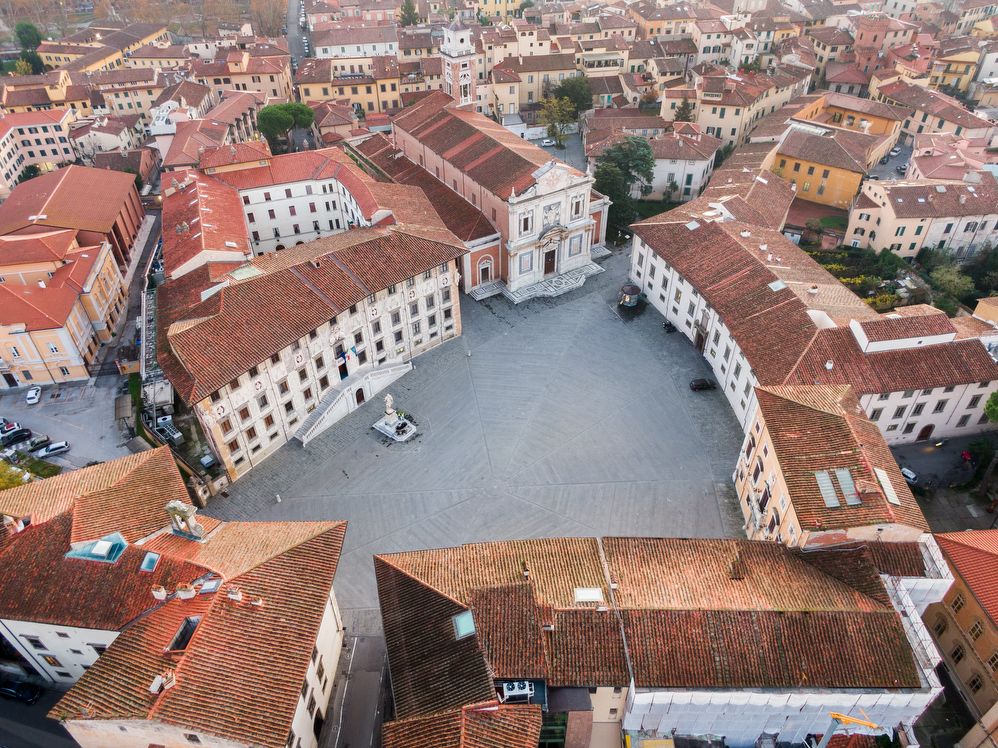
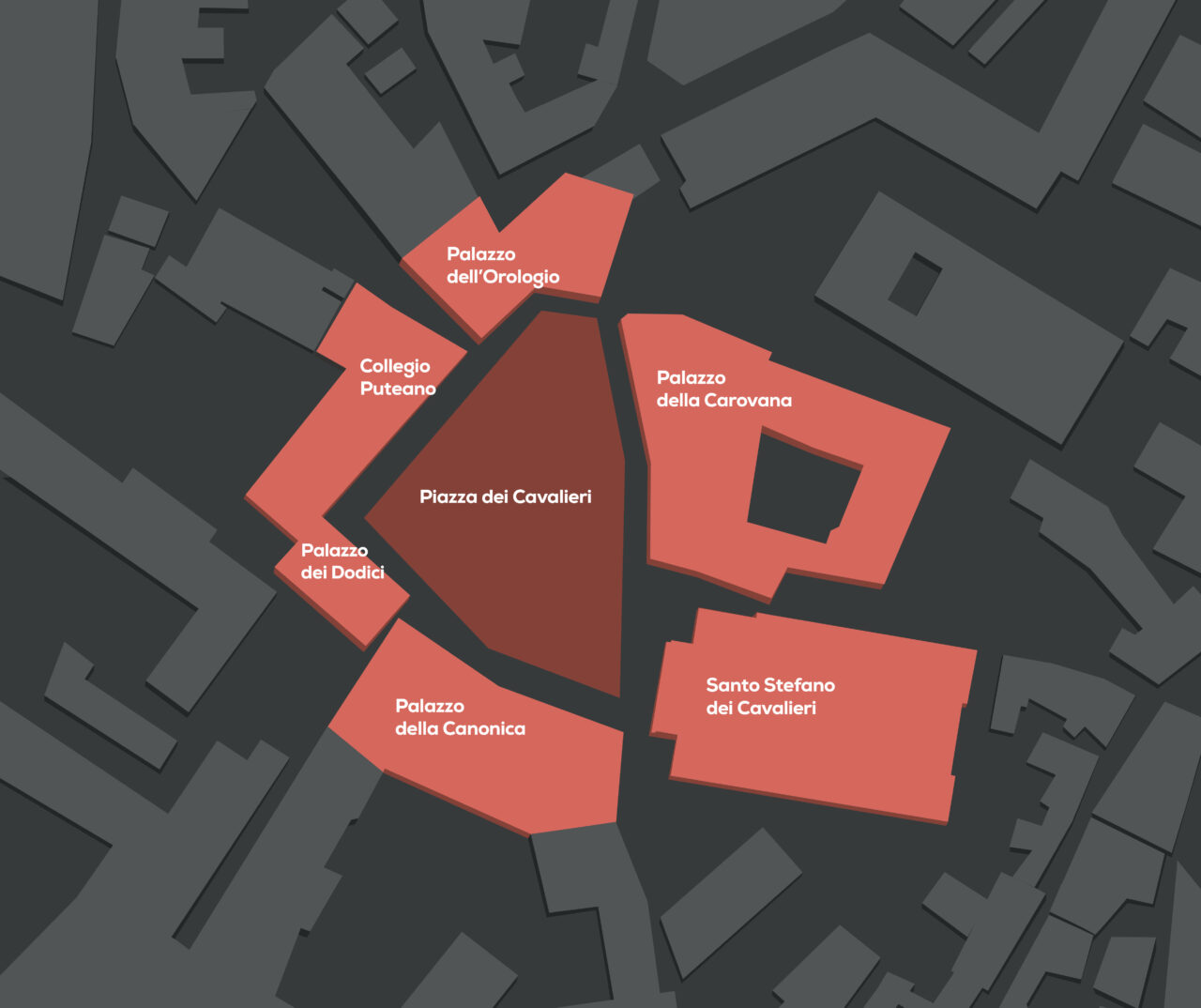
Dominating the view from every approach to Piazza dei Cavalieri is the Palazzo della Carovana (1562–1567), along with the nearby church of Santo Stefano dei Cavalieri, which was built between 1563 and 1572, with its façade completed in 1596. The church is separated from the Canonica (constructed from 1566 to1594) by the present-day Via Ulisse Dini. On the western side are three residential buildings (1594–1598, now the Palazzo dell’Università di Pisa and the Collegio Puteano), whose block by 1612 also incorporated the church of San Rocco. These connect seamlessly with the adjoining Palazzo dei Dodici, completed in the early seventeenth century, whose monumental façade faces that of the Carovana. Finally, the piazza is characterised by the distinctive Palazzo dell’Orologio (1603–1608), composed of two distinct wings, one of which, to the north-east, incorporates the Torre della Fame.
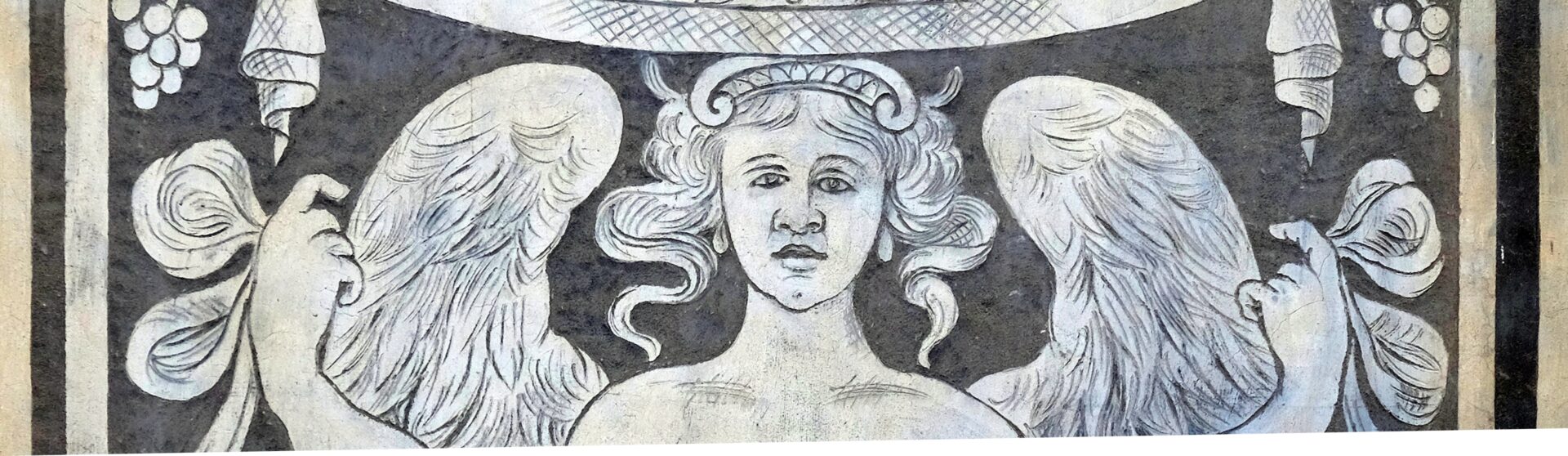
Against this Mannerist backdrop, enriched with elaborate sgraffito and fresco decorations on the surrounding palazzi (now partly lost or extensively altered), the central focus is the statue of Cosimo I, executed by Pietro Francavilla between 1594 and 1596. Depicted in the guise of a Roman emperor, the grand duke rests on his left leg while his right presses upon the head of a dolphin—Neptune’s attribute—symbolising Florence’s dominion over the sea. The statue is complemented by the series of grand-ducal busts installed on the façade of the Carovana between the late sixteenth and early eighteenth centuries.
In 1846, Palazzo della Carovana became the principal seat of the Scuola Normale Superiore. Since then, the institution has acquired most of the buildings facing the piazza, overseeing their restoration systematically. Finally, commemorating the distinguished Pisan mathematician and politician — and former director of the Normale — the statue of Ulisse Dini stands on one of the four streets that now lead into the piazza.
Countless travellers and distinguished observers evoked Piazza dei Cavalieri in their writings, and throughout the twentieth century, it was the focus of meticulous conservation efforts. Equally abundant were the events it hosted from the Middle Ages onwards, later staged within the spectacular urban theatre designed by Vasari, including battles, festivals, processions, and demonstrations, which continue to the present day.
Media gallery
![Piazza – copertina e testata- MUZZI – SNS_017 – [PH]](https://piazzadeicavalieri.sns.it/wp-content/uploads/2023/07/Piazza-Drone-MUZZI-SNS_017-854x462.jpg)
Newsletter
Stay in Touch
Sign up for the Piazza dei Cavalieri newsletter
to receive updates on project progress and news.