
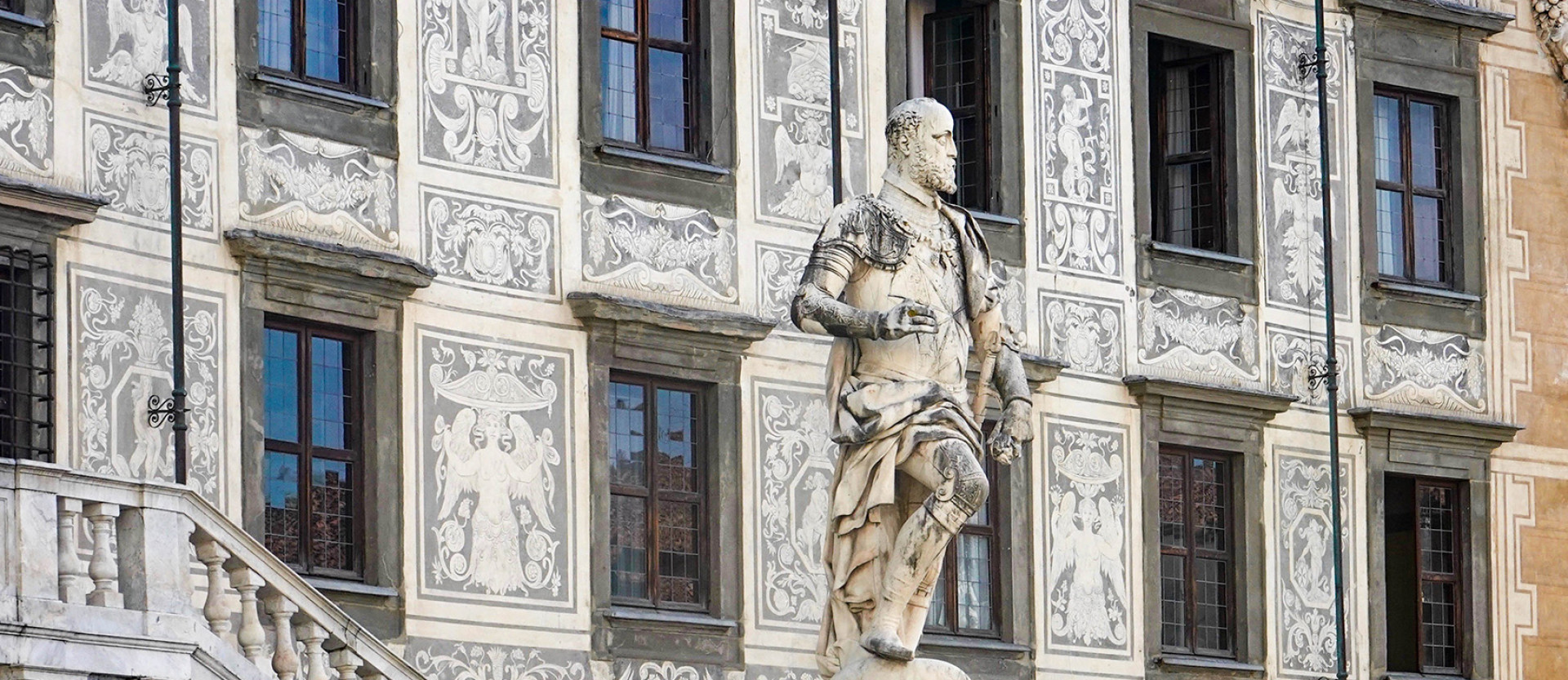
Monument to Cosimo I de’ Medici
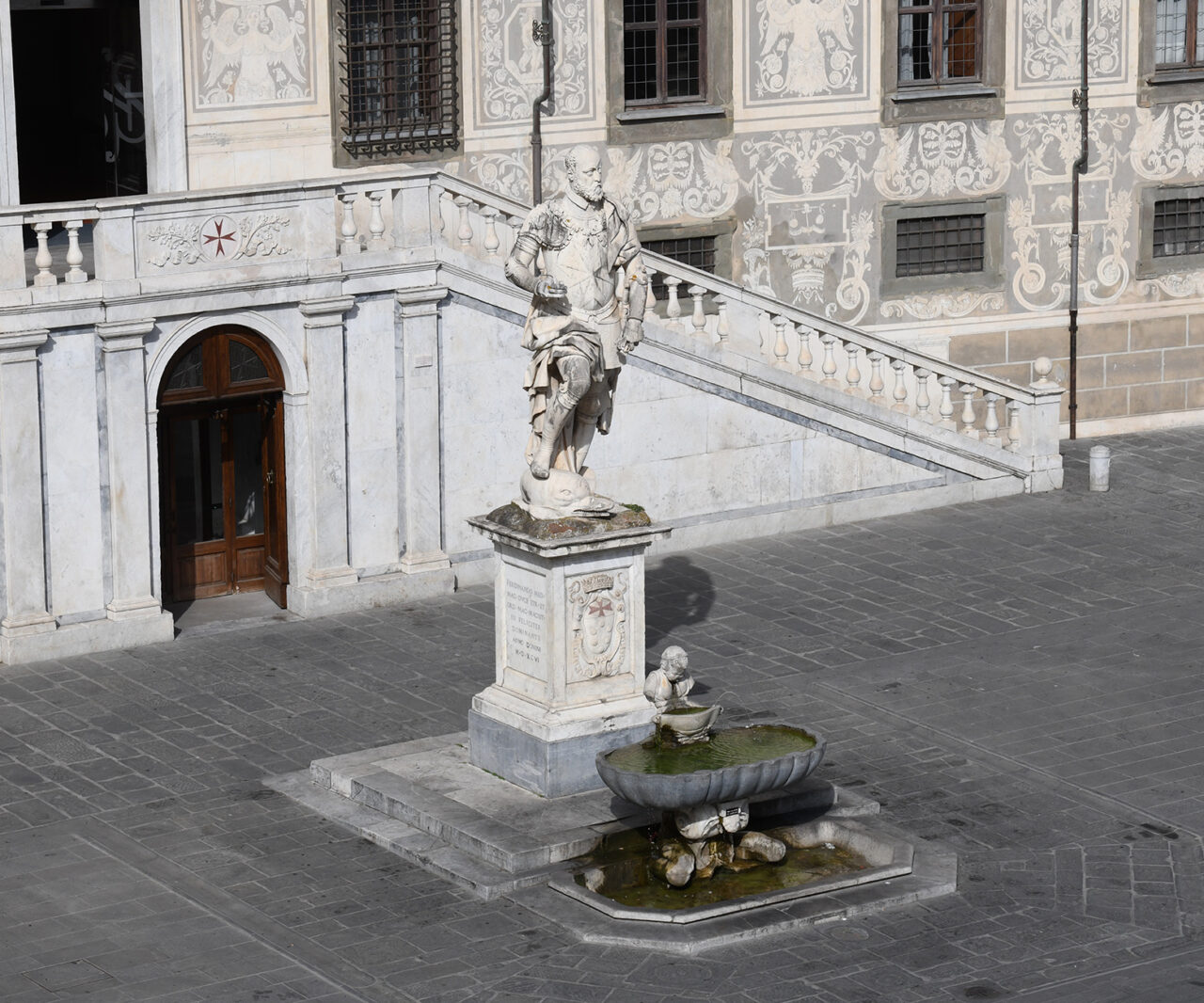
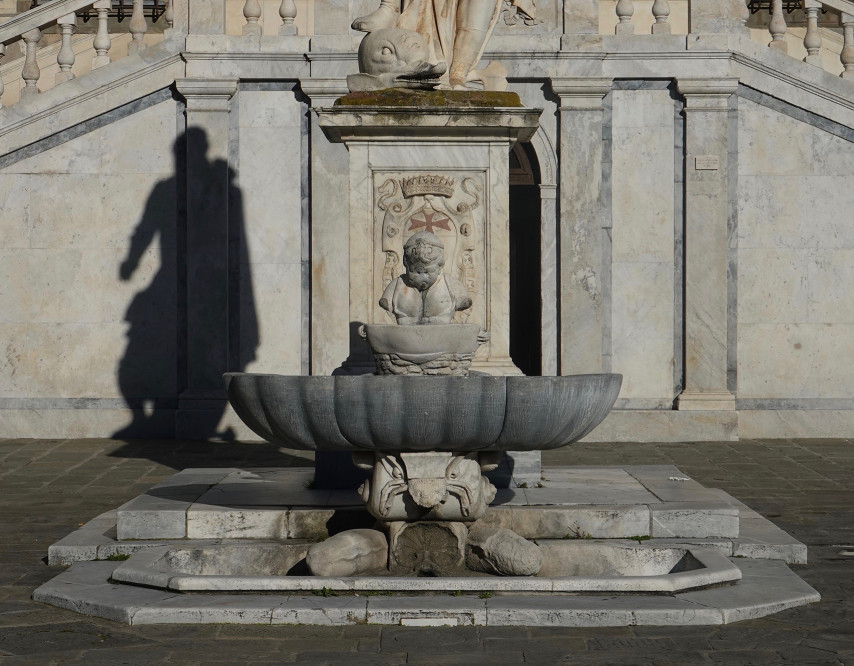
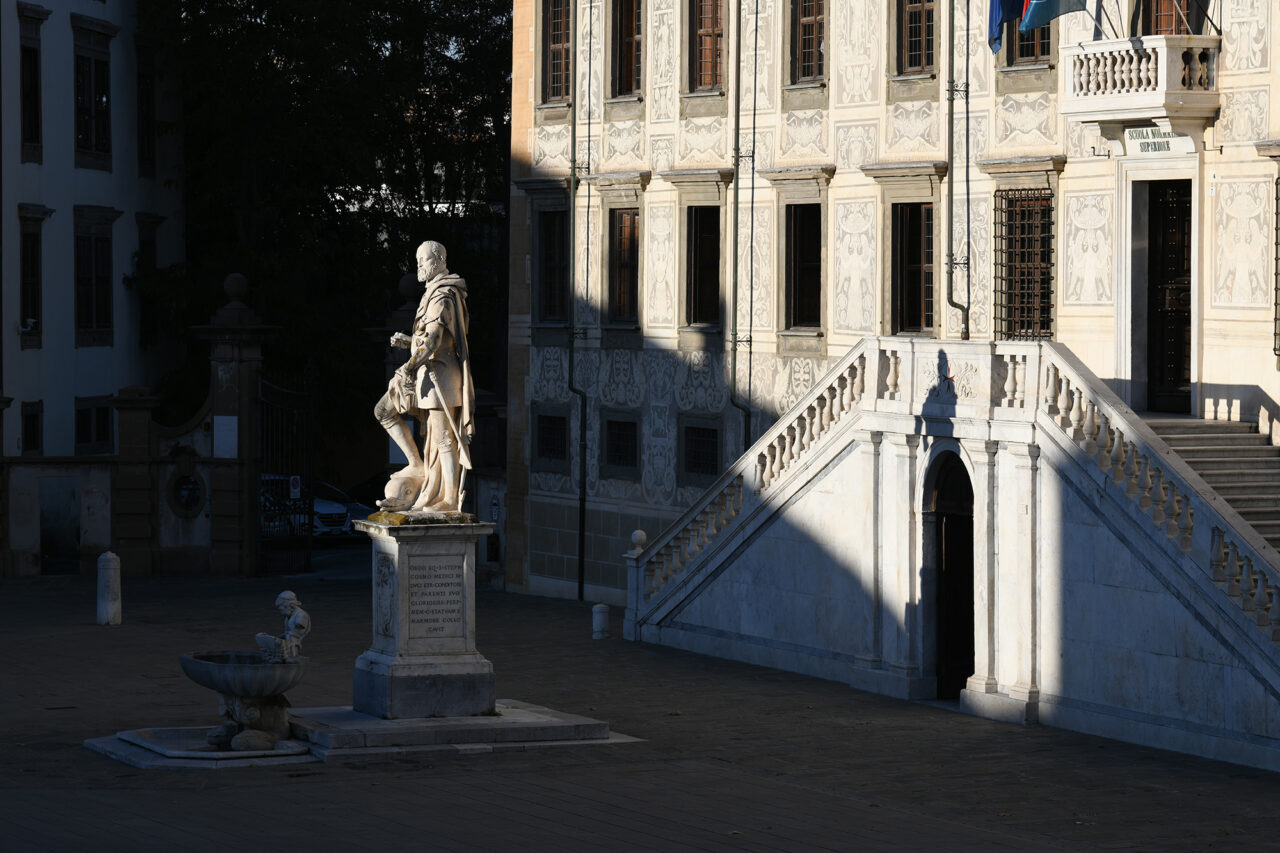
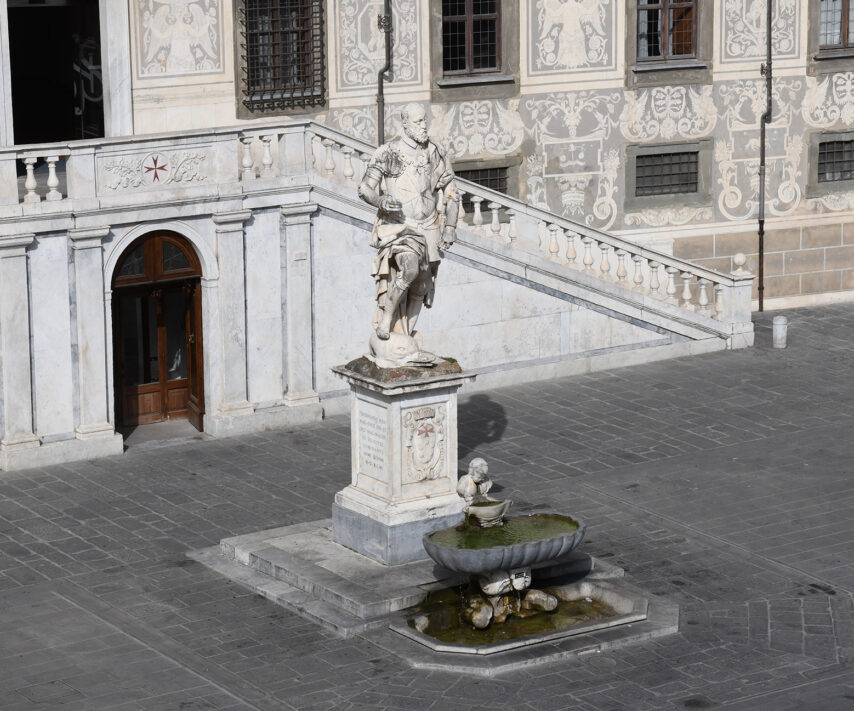
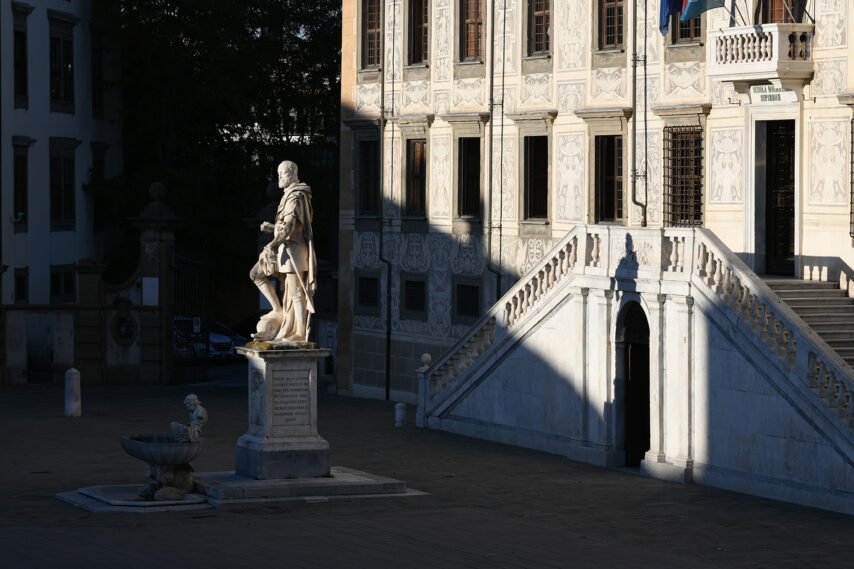
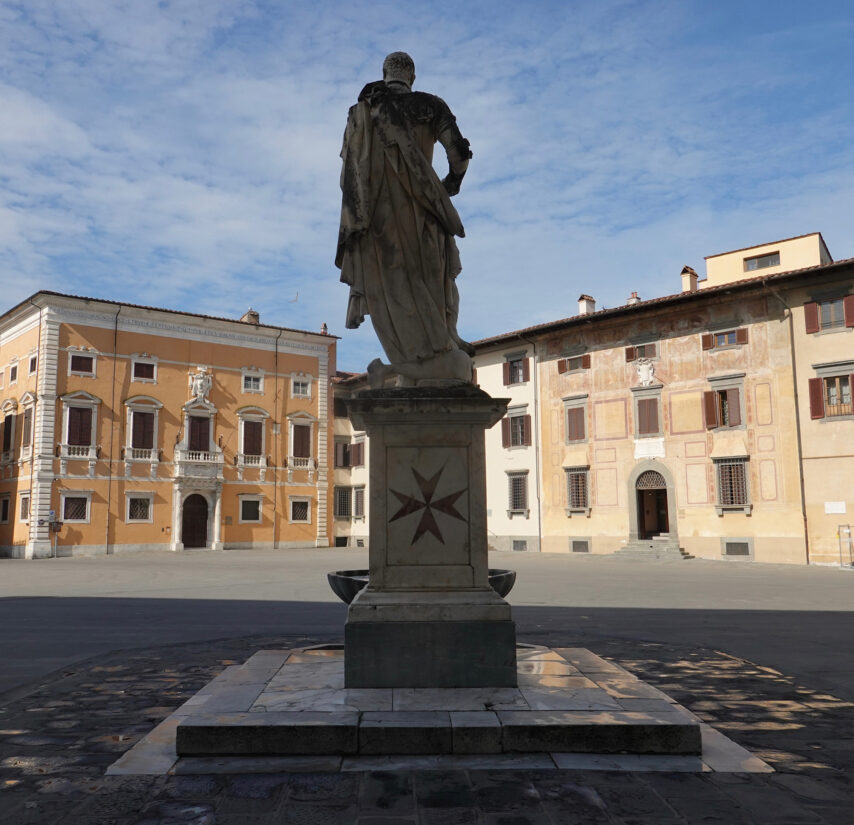
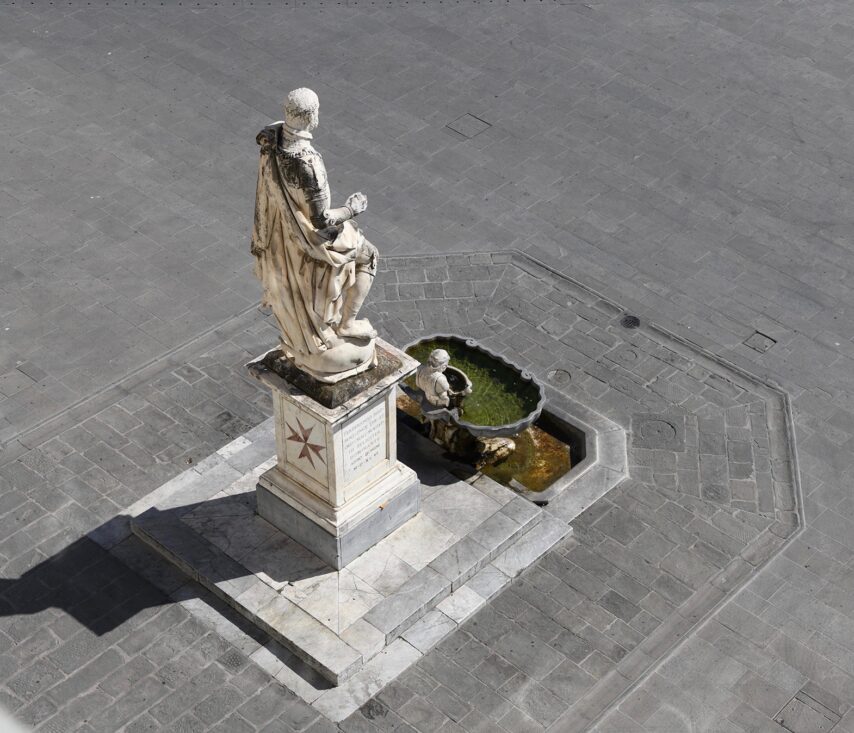
The monument and fountain in front of Palazzo della Carovana were commissioned by Ferdinando I de’ Medici to commemorate the achievements of his father, Cosimo, founder of the Order of Saint Stephen. Ferdinando’s initiative, in continuity with Cosimo’s own projects, not only completed the urban design of Piazza dei Cavalieri but also provided an outlet for a new aqueduct. This unity of purpose is made explicit by the inscriptions on the two faces of the pedestal, which refer to both the patron and the figure represented.
FERDINANDO MED. / MAG. DVCE ETR. ET / ORD. MAG. MAGIST. / III FELICITER / DOMINANTE / ANNO DOMINI /MDXCVI
ORDO EQ. S. STEPH. / COSMO MEDICI M. /DUCI ETR. CONDITORI / ET PARENTI SVO / GLORIOSISS. PERP. / MEM. C. STATUAM E / MARMORE COLLO / CAVIT
On the other sides of the pedestal are depicted a Medicean-Stephanian coat of arms and the Cross of Saint Stephen.
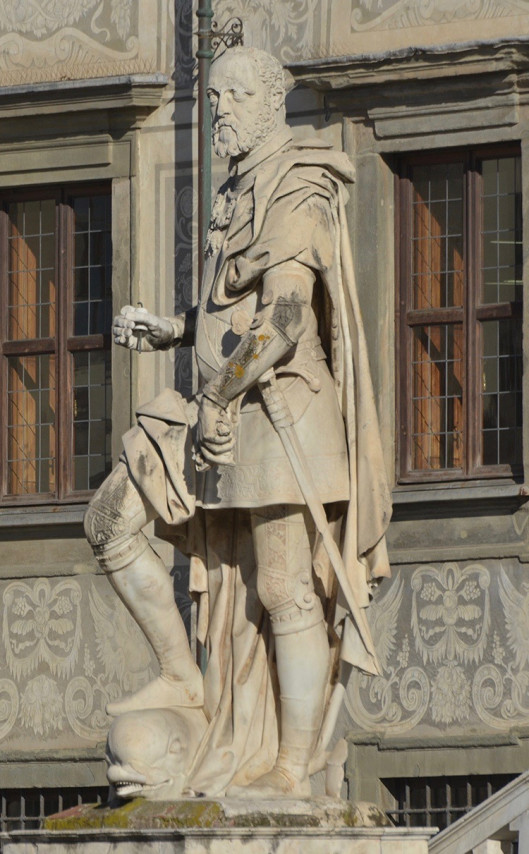
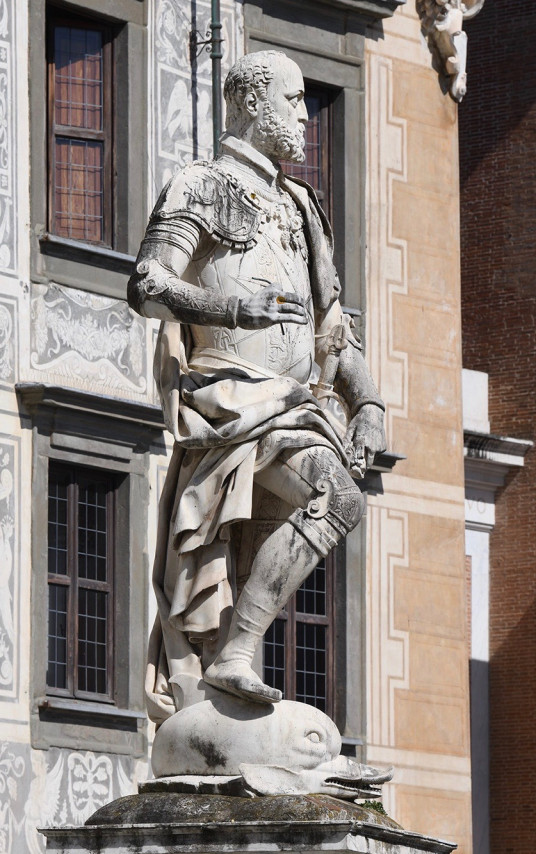
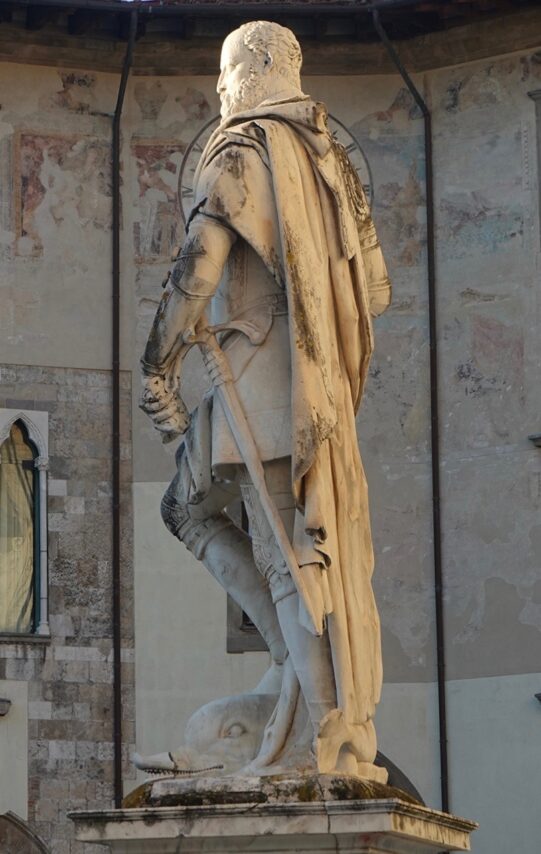
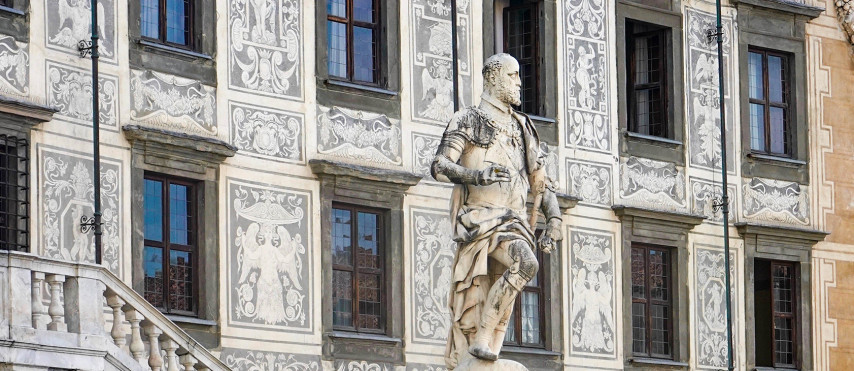
Cosimo is depicted standing, with one foot resting on a dolphin—symbolising the dominion of Florence and the Order of Saint Stephen over the seas—from whose mouth, in an early design, a water jet was to emerge. The Grand Duke wears full armour enriched with relief decoration: on the torso, the cross of Saint Stephen overlays bands bearing emblems and martial trophies, echoing motifs from the sgraffito façade. Similar ornamentation appears on the thigh and knee guards, while the left shoulder piece features a Capricorn, a zodiac sign of particular significance to the Grand Duke. Around his neck hangs the Golden Fleece, emblem of the chivalric order in which he was invested by Emperor Charles V.
A long mantle falls from his left shoulder, descends behind him, and wraps around his right flank and leg. According to various documentary and visual sources, Cosimo was originally intended to hold a command staff in his right hand, while his left still appears to grasp a handkerchief. The statue, like the fountain beneath it, currently presents significant conservation issues.
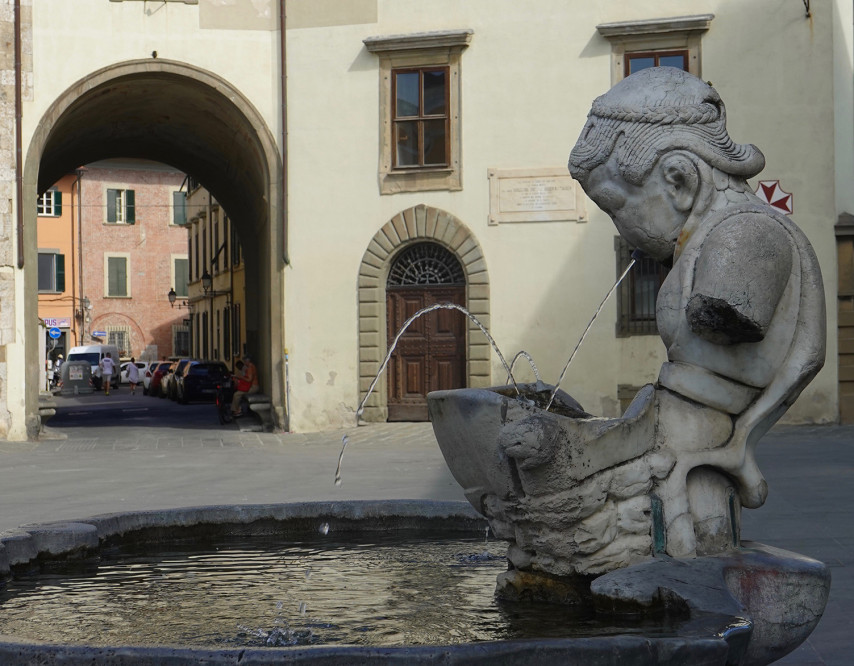
Reactivated in 2021 after twenty years of inactivity, through the Pisa città d’acqua project—a collaboration between the Municipality of Pisa, Pisamo, and Acque S.p.A.—the fountain features a highly distinctive iconography. A first jet of water emerges from the mouth of the figure known as the ‘Gobbo’ and falls into a small basin supported by his arms. A sea monster bears the second basin with human legs and torso, and a crab-shaped head set upon a shell-like structure adorned with wings.
The statue of the Grand Duke was created by Pietro Francavilla, a French-born artist who was also active as an architect in Piazza dei Cavalieri. Archival records date its execution to between 1594 and 1596. Stylistically, the work follows the models of Francavilla’s master, Giambologna, though these are rendered in more rigid and stereotyped forms.
The fountain’s development was more protracted. Initially, the basin was commissioned to Ridolfo Sirigatti, but the Consiglio of the Order of Saint Stephen deemed the result ‘small and mean’ [‘piccola e meschina’] and likely reassigned the project to Francavilla. The fountain’s completion is dated to 1600, coinciding with the placement of Cosimo’s statue in situ.
Eighteenth- and nineteenth-century guidebook writers and travellers often expressed negative views of Cosimo’s statue, as exemplified by Baron de Montesquieu’s terse remark: ‘In the centre of the square stands an extremely ugly statue of a grand duke—I know not which’.
The fountain, by contrast, captured the imagination and drew greater attention, both for its iconography and craftsmanship. Pandolfo Titi even suggested a Michelangelesque model for the monster’s legs and for the arms of the ‘Gobbo’. However, the latter are now too badly damaged to allow for stylistic assessment.
Twentieth-century criticism has echoed earlier condemnation of the monument, though it shifted the focus from the period of Late Mannerism to the artist himself, Pietro Francavilla, creator of several grand ducal effigies. The image of Cosimo forms a sort of pendant to the sculptural group Allegory of Pisa Raised by Grand Duke Ferdinando (1594), now in Piazza Carrara, executed by Francavilla after a model by Giambologna, whose influence appears to have lent the composition greater elegance and fluidity.
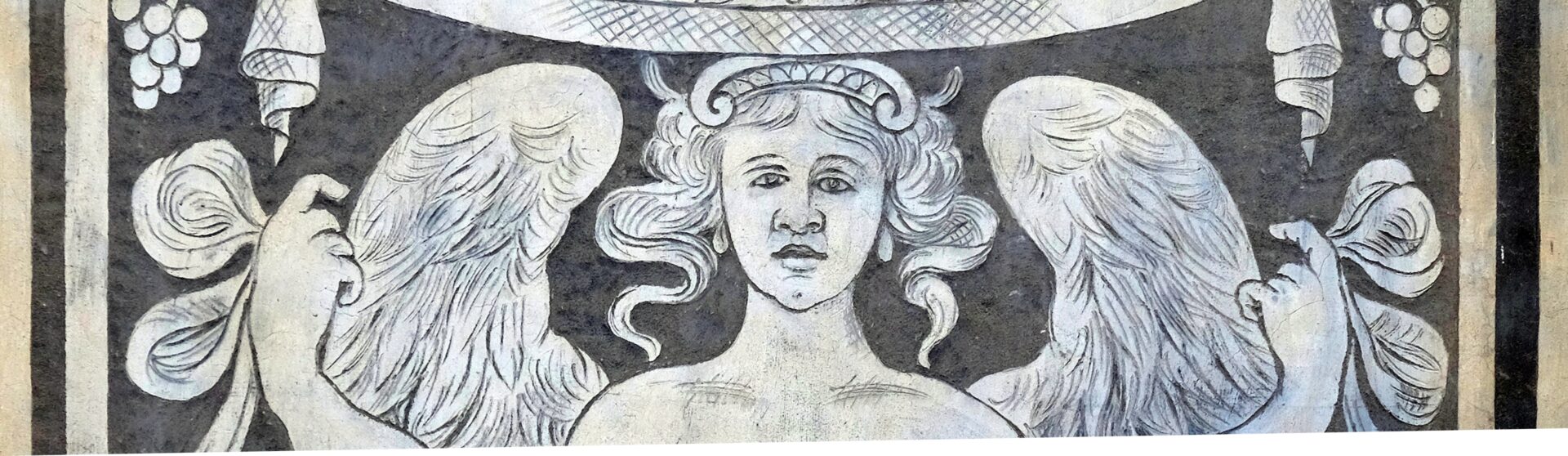
The fountain’s distinctive character has been associated with contemporary sculptural experiments undertaken by Medici court artists in the Boboli Gardens and at Pratolino. A recent interpretation by Stijn Bussels reads the ensemble as a celebration of the sovereign’s dominion over the horrors of the marine abyss, embodied by the enigmatic monster beneath the statue. Bussels also notes a visual dialogue between the grotesque ‘Gobbo’ and the winged masks above the attic windows of the façade of Palazzo dei Dodici, likewise attributed to Francavilla.
Monument to Cosimo I de’ Medici
Main EntryMedia gallery
Newsletter
Stay in Touch
Sign up for the Piazza dei Cavalieri newsletter
to receive updates on project progress and news.