
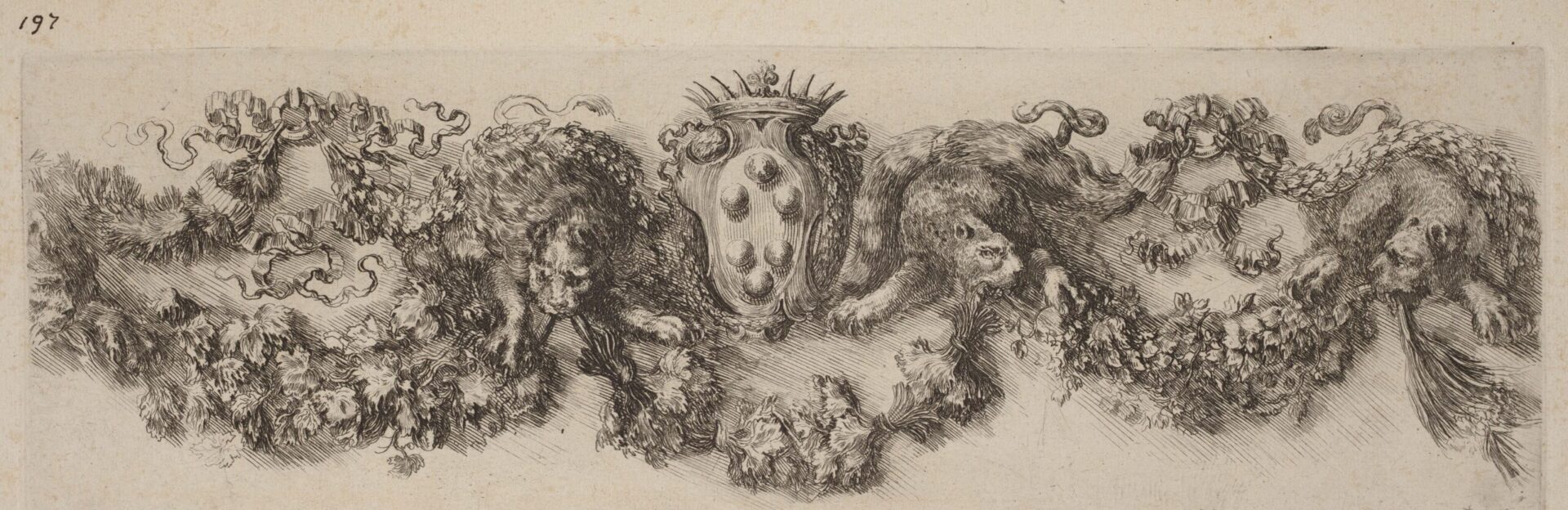
The Medici Dynasty
The Medici rank among the most important dynasties in Florence and in Italy, from their documented beginnings in the early thirteenth century to the last direct descendant, Anna Maria Luisa, with whom the main line ended in 1743. The family, of popular origin, amassed enormous wealth through the activities of Giovanni di Bicci (1360–1429), who became ‘the richest banker in Italy’. It was his son, however, who transformed this undisputed economic power into political dominion: from 1434 Cosimo the Elder (1389–1464) effectively governed Florence while formally preserving its republican institutions.
The shift to an overtly aristocratic regime came only in 1532, when Emperor Charles V granted Alessandro de’ Medici the ducal title. In 1569 the family’s standing rose still further when Pope Pius V elevated Cosimo I’s descendants to the rank of grand dukes, thereby consolidating unchallenged Medici authority over Tuscany.
Alongside their financial acumen and political mastery, the Medici also owe their lasting renown to a deliberate cultural strategy that made Florence the cradle of Italian humanism and the centre of refined artistic patronage. This commitment marked the entire trajectory of the dynasty, for Anna Maria Luisa ceded Tuscany to the the House of Habsburg-Lorraine only after securing a binding agreement that the city’s artistic heritage would be preserved intact.
Although the history of early modern Tuscany undeniably bears the imprint of the Medici, it is striking that the events leading to Florence’s conquest of Pisa fall outside the periods of their direct rule. The capture of the city in 1406 preceded Cosimo the Elder’s rise to power, while the reconquest of 1509 — which brought the Second Pisan Republic to an end — occurred during a phase of republican restoration in Florence that followed the expulsion of the Medici (1494–1512). Thus, although Pisa’s incorporation into the emerging Tuscan regional state cannot be attributed to decisions made by individual members of the dynasty, the distinctive “stamp” of Tuscan Pisa is nonetheless entirely the product of Medici policy.
This transformation was made possible by Florence’s gradual internal stabilisation and by the subjugation of Siena in 1559, which laid the foundations for a genuinely regional policy. Within the new framework of the grand duchy, Pisa — previously subjected to systematic spoliation — began to be incorporated into a broader strategic vision. Under the Medici, and especially through the efforts of Cosimo I and Ferdinando I, the city’s commercial and maritime vocation was strengthened, notably through its designation as the seat of the Order of Saint Stephen. At the same time, Pisa was affirmed as a privileged university centre. Extensive legislative measures were introduced to counter demographic decline and enhance urban decorum: duties on building materials entering the city were abolished, and owners were even required to restore buildings in ruin. It was, however, in architecture and infrastructure that the dynastic “imprint” emerged most clearly: from the construction of the Loggia di Banchi and the development of water-supply systems to the thorough remodelling of the grand-ducal palazzo (today Palazzo Reale) on the Lungarno.
The crowning achievement of this policy was the brilliant transformation of Piazza dei Cavalieri, dominated by the Monument to Cosimo I de’ Medici and, set into the façade of Palazzo della Carovana, the busts of six grand dukes — a lasting reminder of the close bond between the Medici dynasty, the Order of Saint Stephen and its piazza: Cosimo I, Francesco I, Ferdinando I, Cosimo II, Ferdinando II and Cosimo III. The only grand duke absent is Gian Gastone, who was portrayed in marble but never incorporated into the sequence, as the arrival of the Lorraine brought the project to an end.
Media gallery
Newsletter
Stay in Touch
Sign up for the Piazza dei Cavalieri newsletter
to receive updates on project progress and news.