
Order of Saint Stephen
[16th-19th centuries]
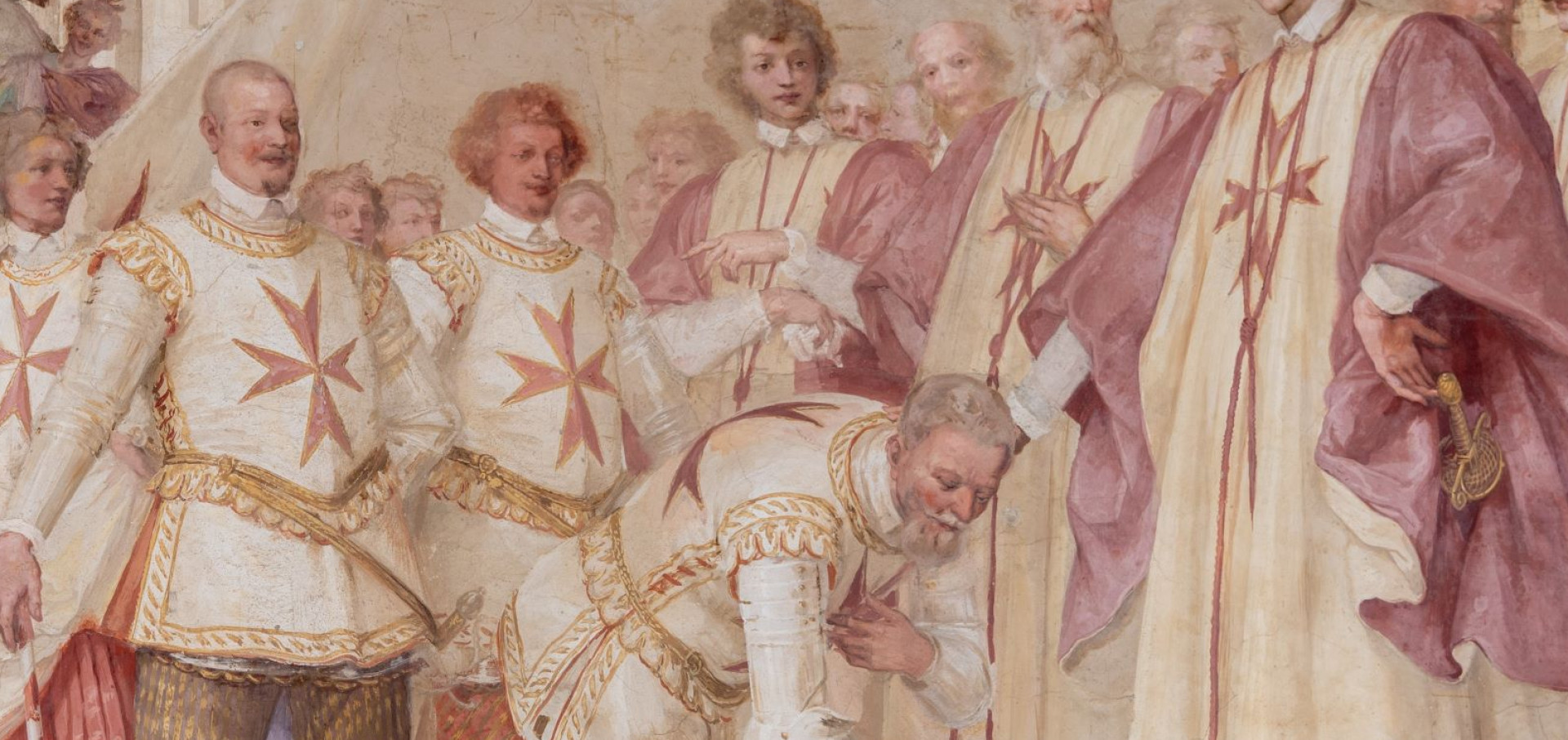
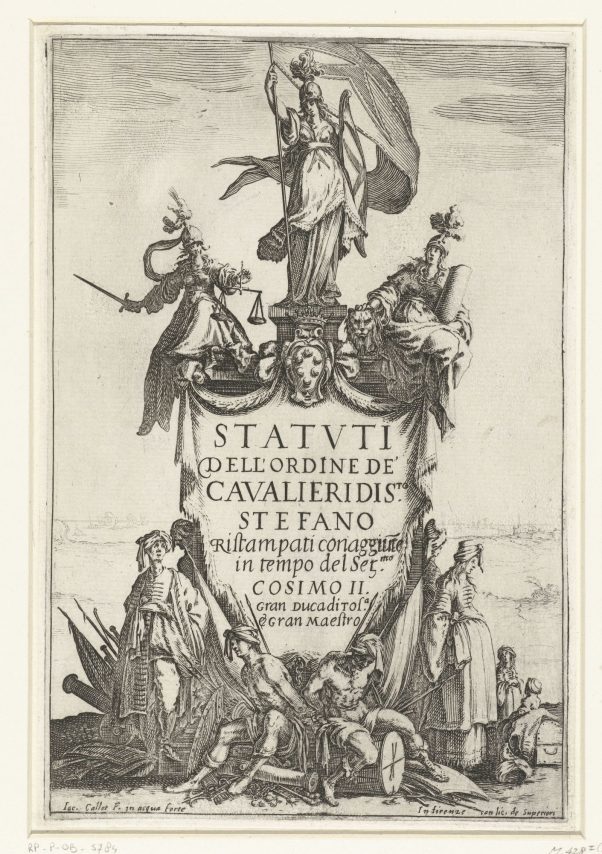
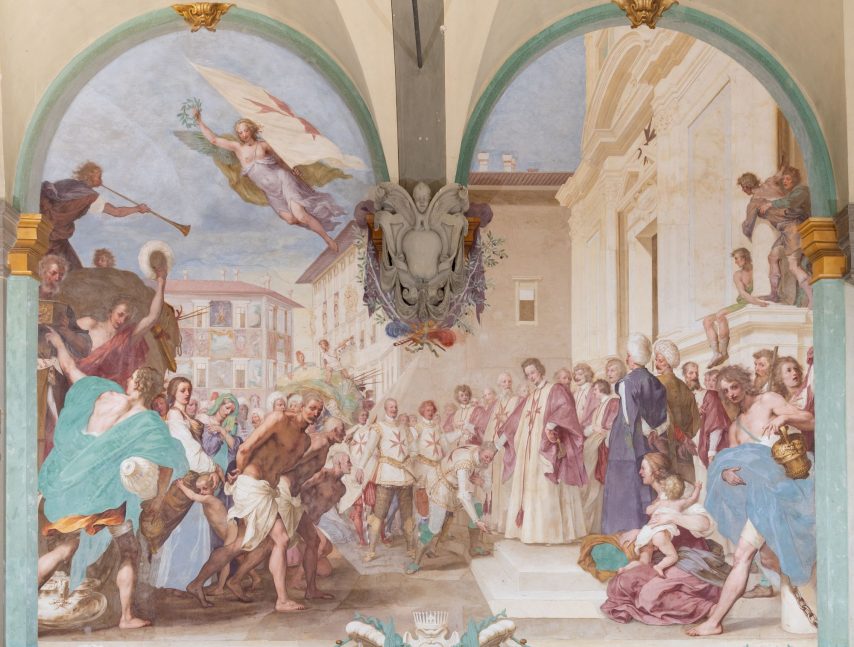
The Sacred Military Order of Saint Stephen Pope and Martyr is a religious chivalric order established by Cosimo de’ Medici (then Duke of Florence) on 9 January 1561. With the papal brief Dilecte Fili of 1 October 1561 (‘ad Dei laudem, et gloriam, ac fidei Catholicae defensionem, Marisque Mediterranei ab infidelibus custodiam, et tuitionem’) and the bull His quae pro Religionis Propagatione of 1 February 1562 (approving the statutes), Pope Pius IV blessed the new institution, granting Cosimo and his successors the title of Grand Master. Medici conceived of an order similar in vocation, statutes and even symbolic apparatus to that of the Knights of St John of Jerusalem (but also to the Knights of St James of the Sword and the Knights of Christ). The primary task of the Religione (the term used at the time to refer to these military-religious orders) was to defend Christianity and rid the Mediterranean of the threat of Barbary piracy. Its constitution, however, was more prosaically intertwined with the maritime aspirations of Cosimo, who had found the Tuscan fleet completely dysfunctional (partly due to the system of contracting out to private individuals); with the desire to establish a more solid link with the Holy See; and, finally, with the need to balance the alliance with the Spanish power of Philip II (which had become increasingly cold after the Florentine conquest of Siena in 1557).
As early as 1560, the duke contemplated a reform of the Tuscan fleet and set himself the task of forming a ruling class trained in the art of naval warfare. In this way, he sought to facilitate what Franco Angiolini describes as ‘the process of aligning Tuscan noble groups with those of other Italian and foreign states’ [‘il processo di omologazione dei gruppi nobiliari toscani a quelli di altri stati italiani e stranieri’]. The decision to found a chivalric order stemmed, moreover, from a desire not to place further strain on the state coffers, since by bringing wealthy ecclesiastical benefices under its control the Order would impose only a limited burden on the budget. Within two decades, the Order’s landed patrimony—comprising arable land and farms—had become considerable, thanks to donations, purchases, and exchanges. The homage to Saint Stephen, in turn, reflected reasons of self-celebration, since on 2 August, the saint’s feast day, Cosimo’s troops had achieved significant military victories.
The principal office of the Order—that of Gran Maestro (Grand Master), assigned by dynastic succession to the reigning Grand Duke of Tuscany—was supported by the commendatore maggiore, the gran contestabile, the ammiraglio (who exercised operational functions), and the auditore. The Consiglio dei Dodici (Council of Twelve) , comprising the aforementioned figures together with several knights elected by the Grand Duke and the General Chapter, formed a collegiate body exercising full authority over the Order. Candidates for knighthood were required to demonstrate four quarters of nobility and to take vows of charity, chastity, and obedience. These themes were repeatedly emphasised in the orations that opened the General Chapter; such references to the statutes probably concealed forms of social conflict within the ranks of the Religion. During their three-year period of training in Palazzo della Carovana, the carovanistiacquired basic instruction in history, cosmography, cartography, arithmetic, and combat practice. Another position of importance was that of prior of the conventual church of Santo Stefano.
Cosimo chose as the seat of the Order the medieval Piazza degli Anziani, the political heart of the ancient Pisan Commune, which thus became Piazza dei Cavalieri. Thanks to the genius of Giorgio Vasari, the area was transformed into the headquarters of the Religion, with the exception of a few buildings not incorporated into the project. It was equipped with accommodation for the priest-knights (Palazzo della Canonica), an infirmary (Palazzo del Buonomo, named after its overseer and now known as Palazzo dell’Orologio), an ‘academy’ (Palazzo della Carovana, where knights in training were housed), and, finally, the conventual church.
224 x 302 mm
224 x 302 mm
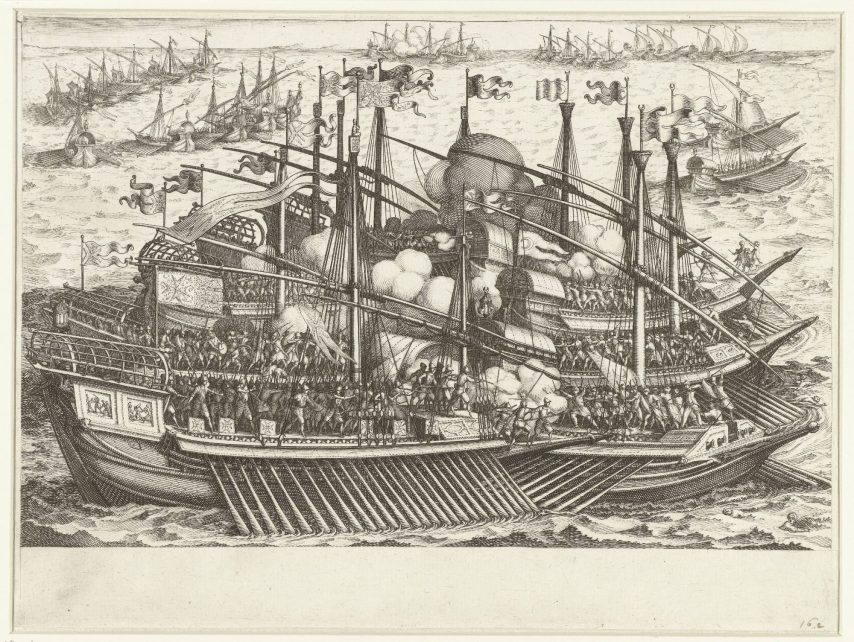
The period of greatest military prominence of the Order fell under the grand duchy of Ferdinando I de’ Medici. In this phase, thanks also to the military abilities of its admirals—foremost among them Iacopo Inghirami, appointed in 1605—the Knights of Saint Stephen distinguished themselves in a number of successful operations, including Prevesa (1605) and Bona (1607). These operations involved the enslavement of prisoners of Islamic faith, who were subsequently employed as galley oarsmen in the Tuscan fleet, assigned to public works, or ransomed and exchanged. The last undertaking of note by the Order was its participation, between 1684 and 1688, in the war against the Turks alongside Venetian forces. With the accession of the Lorraine dynasty, the institution lost its military dimension and instead reinforced its role in the standardisation of Tuscan elites. In this context, it increasingly became an obstacle to policies of diplomatic agreement and commercial cooperation with North African states. While Francis Stephen undertook a broad reorganisation of the institutional and organisational structures, Peter Leopold increasingly transformed the Order from a military appendage of the grand duchy into an educational apparatus.
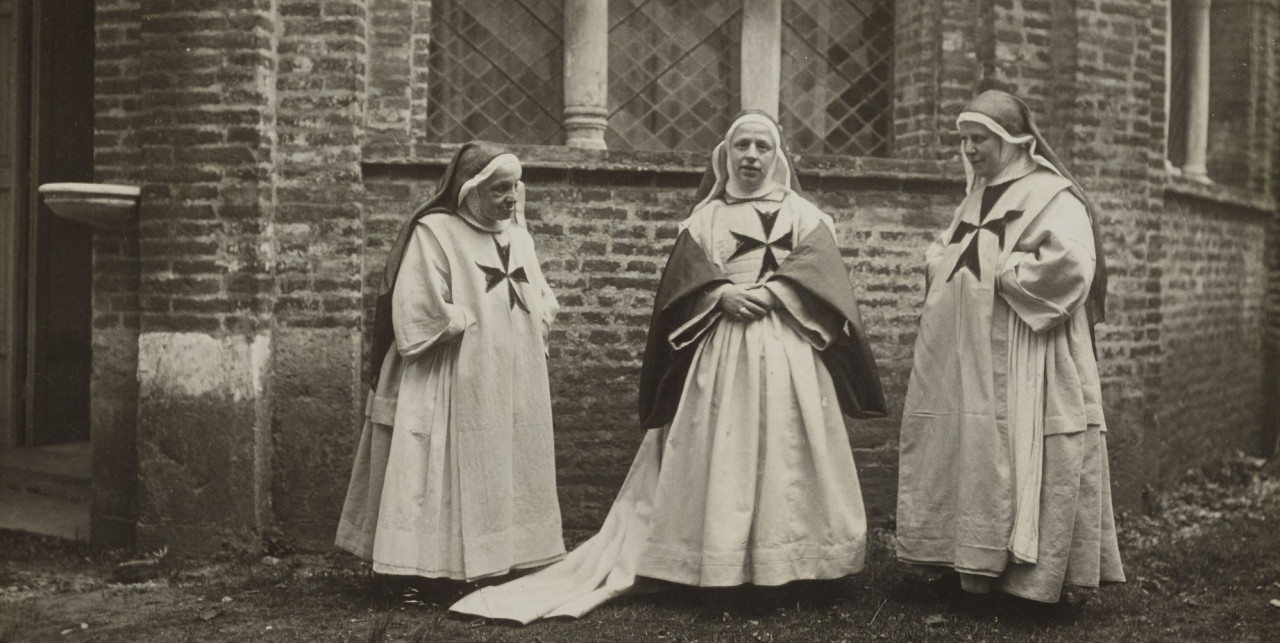
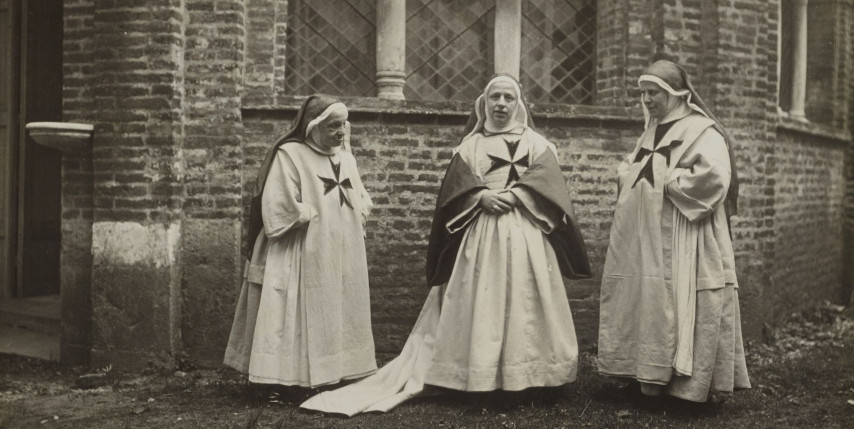
A female branch soon joined the male branch of the Knights of Saint Stephen. Eleonora di Toledo, first, and later Grand Dukes Cosimo I and Ferdinando I, promoted, from 1563 onwards, the foundation of the monastery of the Santissima Concezione in Via della Scala, Florence. Intended for the daughters of aristocratic families of the grand duchy, the monastery fell under the authority of the Grand Master and, in spiritual matters, under that of the prior of the Order’s conventual church. From 1592, ‘the first nuns were received there; as members of the Military Order of Saint Stephen, they were known as knight-nuns’ [‘vi furono accolte le prime suore che facendo parte dell’Ordine militare di Santo Stefano furono chiamate le monache cavaliere’]. A similar arrangement applied to the church and adjoining Benedictine monastery of San Paolo a Ripa d’Arno in Pisa, which were placed under the authority of the prior of the Order’s conventual church from 1565.
Abolished in 1809 during the Napoleonic occupation and restored in 1817, the Order was suppressed in 1859—aside from lingering legal matters—by the Provisional Government that guided Tuscany into the Kingdom (first of Sardinia and then) of Italy. The present Istituzione dei Cavalieri di Santo Stefano—an Italian state moral entity established by Royal Decree on 14 February 1939—aims to perpetuate the memory of the ancient Order, support the Italian maritime tradition, and assist the children of members of the merchant and military navy, including through the award of scholarships. It is based in Palazzo dei Dodici. Finally, the rich archive of the Order, preserved in the Archivio di Stato di Pisa, continues to captivate generations of Italian and foreign historians and scholars.
Media gallery
224 x 302 mm
224 x 302 mm
Newsletter
Stay in Touch
Sign up for the Piazza dei Cavalieri newsletter
to receive updates on project progress and news.