
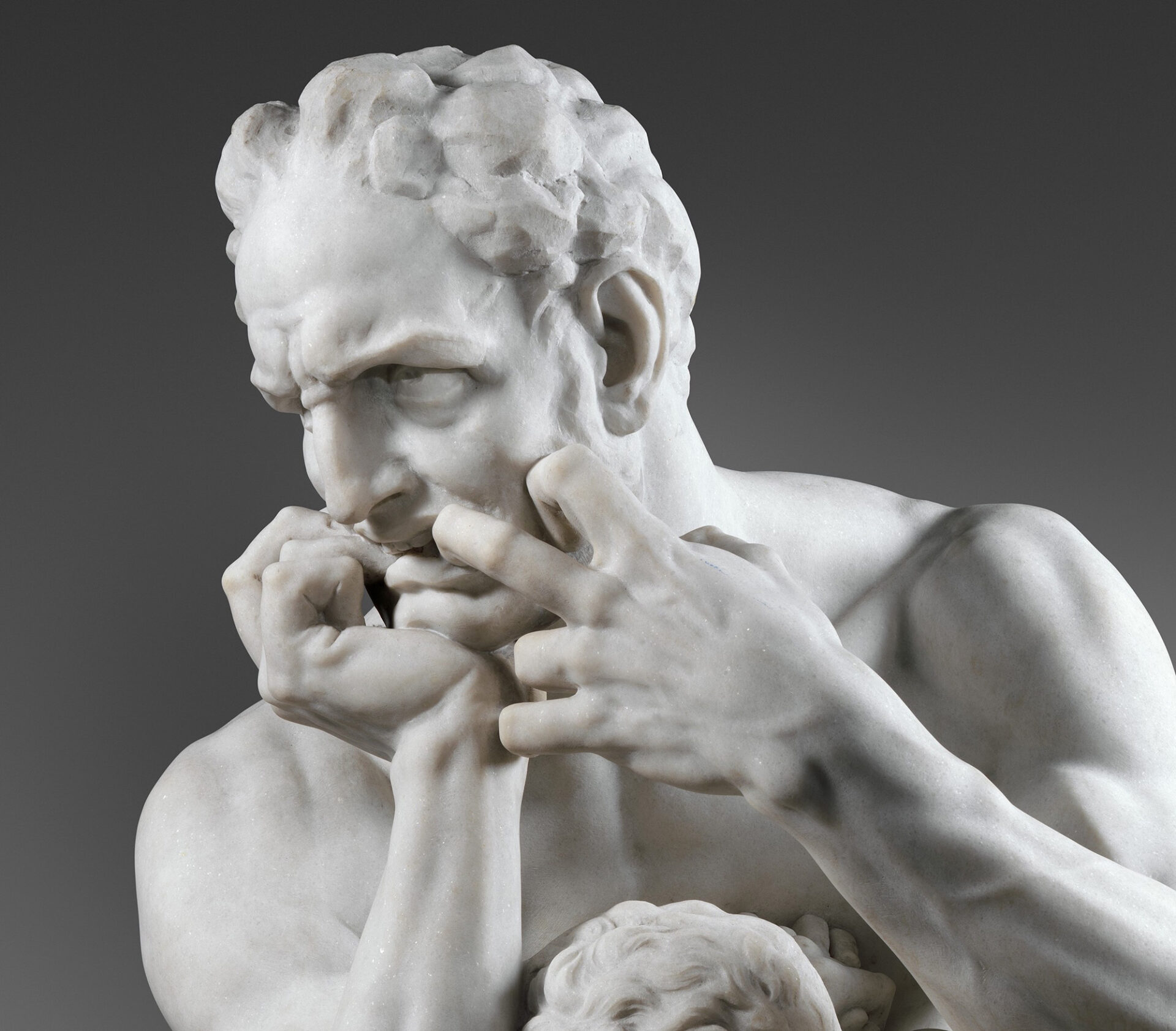
Ugolino della Gherardesca
[1210-1289]
Behind the tragic episode that Dante Alighieri recounts (not without literary filters) in Canto XXXIII of the Inferno lies the name of one of the most influential figures in Pisan history: Ugolino della Gherardesca. Born in Pisa in the early decades of the thirteenth century, he was the son of Count Guelfo and belonged to a prominent family with strong Ghibelline traditions. His first documented appearance dates to 1252, when he served as vicar to King Enzo—a largely symbolic title, as the sovereign was already imprisoned in Bologna, but one that nonetheless helped legitimise his Sardinian holdings. His claims to the Kingdom of Cagliari generated persistent conflict with the Pisan government, leading to the political vacillations that defined Ugolino’s career, as he alternately aligned himself with the Commune’s Ghibelline position or the Guelph position championed by the Visconti.
Ugolino’s emergence onto the broader historical stage occurred in 1284. At this time, the Republic of Pisa was embroiled in difficulties, facing recurring conflicts with Genoa over dominance of the northern Tyrrhenian Sea (especially regarding Corsica) and with Florence over trade disputes. This conflict reached its climax on 6 August of the same year when, at the Battle of Meloria, the Pisan fleet suffered a devastating defeat at the hands of the Genoese forces. During this confrontation, Ugolino, commanding twelve galleys, managed to retreat to the Pisan port—a manoeuvre that raised suspicions of treachery among his fellow citizens. Despite these suspicions, Pisa—amid a profound crisis—relied on his proven diplomatic skills to mediate with neighbouring powers and between the city’s internal factions. Historians unanimously regard his governance as notably moderate. During his rule, he diminished the influence of the magistracy of elders and guilds and shared power with his nephew Nino Visconti while refraining from persecuting Ghibelline families. He also sought to improve relations with Florence and Lucca through territorial concessions. According to Giovanni Villani in his Cronaca, Ugolino had maintained political connections with these cities since at least 1275. However, it was precisely the cession of certain castles that revived accusations of treachery and collusion with the enemy.
In his Cronaca, Villani portrays Ugolino as a ruthless traitor consumed by jealousy. According to this account, he poisoned his sister’s son, Count Anselmo da Capraia, and expelled his other nephew, Nino di Gallura di Visconti, all in his relentless pursuit of absolute power over the Republic. However, a more balanced analysis of historical sources presents a substantially different picture. Following an internal conflict, a Ghibelline power coalition led by the Archbishop of Pisa, Ruggieri degli Ubaldini, and several powerful city families (including the Sismondi, Gualandi, and Lanfranchi mentioned by Dante) attacked the ruling diarchy. They first removed Nino Visconti from power and subsequently targeted Ugolino himself. According to the vivid account in the Fragmenta historiae Pisanae, Ugolino returned to the city from his castle at Settimo ‘at the hour of vespers’ on 1 July 1288 and attempted to quell the rebellion promoted by Archbishop Ruggieri, who in his absence had installed himself in the Palace of the Comune located in Piazza Sant’Ambrogio (in the area of present-day Piazzetta Lischi). After a bitter struggle through the city streets lasting an entire day, he was captured and detained along with his family in the Palazzo del Popolo or degli Anziani in the future Piazza dei Cavalieri. Their forced stay there lasted twenty days, the time needed for workers commissioned by the Commune to transform the ancient Torre dei Gualandi on the same square (later known as the Tower of Famine and eventually incorporated into today’s Palazzo dell’Orologio) into a prison for him, his two sons Gaddo and Uguccione, and his nephews Anselmo and Nino. According to Villani, their death was predetermined from the very beginning, and he reports a detail found only in his Cronaca, namely that after closing the door, the jailers proceeded to throw the key into the Arno. However, other ancient witnesses suggest that the tragic end of Ugolino and his family members was the unplanned outcome of a political conflict that dragged on for some time. In February 1289, when Count Guido da Montefeltro entered the city, the prisoners had been dead for only a few days.
From the actual words of Dante’s text, the reason for Ugolino’s condemnation is not clearly apparent. Scholarship tends to believe that the poet (who probably heard the count’s story when he was just twenty-four years old) did not appreciate Ugolino’s political ambiguities in managing relations between factions. What is certain is that his account, while based on realistic details, is influenced by powerful poetic embellishments ranging from literary filters (derived particularly from Statius and Virgil) to tearful and even horrific details. For example, while it now seems well established that all the prisoners had reached adulthood by 1288-1289 (there were, therefore, no children, contrary to what can be inferred from Inf. XXXIII, 28-75), the centuries-old debate about Ugolino’s anthropophagy continues. While hypotheses supported by scientific (or pseudo-scientific) data regarding the episode of cannibalism had already circulated during the positivist period, it was in 2002 that a turning point in research emerged with the alleged discovery of the Gherardesca bodies, on which a careful clinical examination was conducted. However, the results of this discovery have been profoundly challenged by subsequent studies.
The violence unleashed against the count’s family is still perceptible today: the palace that the Gherardesca family owned on what is now Lungarno Gambacorti was dismantled piece by piece, and salt was scattered on the land. Even after more than seven hundred years, it remains the only undeveloped area running near the river. The count’s remains are preserved in San Francesco.
Prominent Personalities
Main Entry- Ugolino della Gherardesca
- Anna di Świdnica
- Francesco I de’ Medici
- Carlo Antonio dal Pozzo
- Ferdinando I de’ Medici
- Morgiano
- Cosimo II de’ Medici
- Ferdinando II de’ Medici
- Cosimo III de’ Medici
- Azzolino Bernardino della Ciaia
- Gian Gastone I de’ Medici
- Leopoldo II d’Asburgo-Lorena (imperatore)
- Napoleone Bonaparte
- Elisa Bonaparte
- Leopoldo II di Toscana (granduca)
- Ulisse Dini
Media gallery
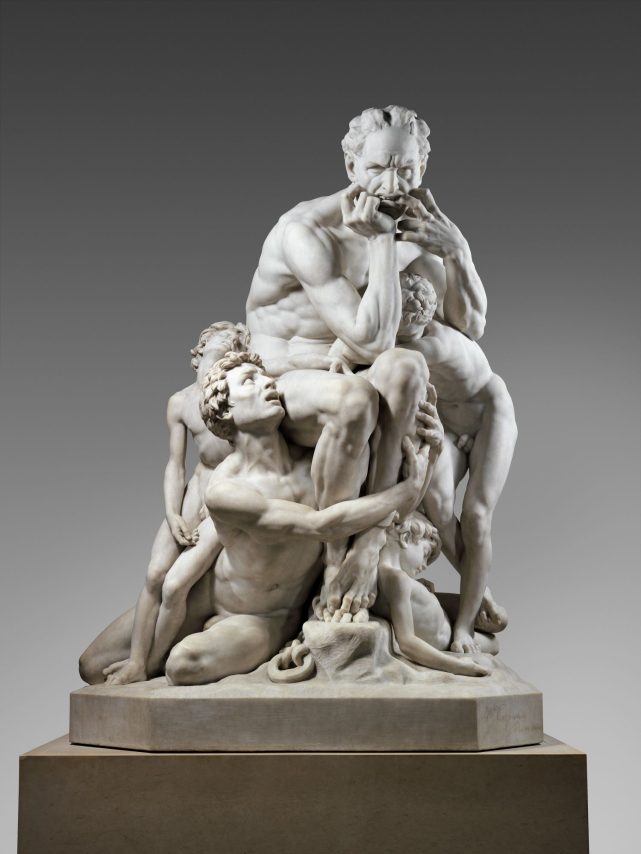
Saint-Béat marble, 197,5 × 149,9 × 110,5 cm
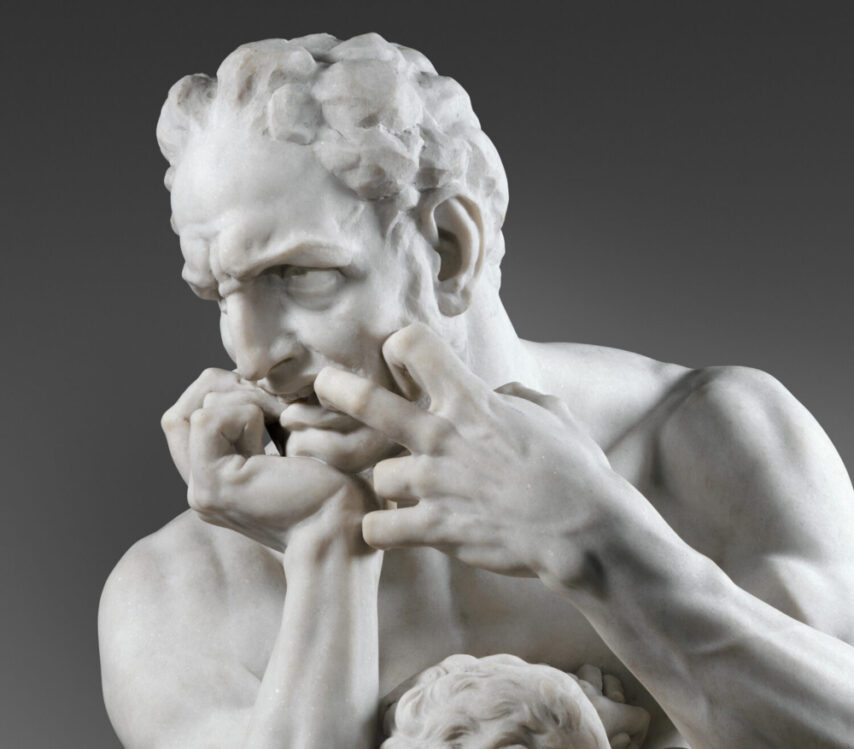
Saint-Béat marble, 197,5 × 149,9 × 110,5 cm
Newsletter
Stay in Touch
Sign up for the Piazza dei Cavalieri newsletter
to receive updates on project progress and news.