

Dante Alighieri
[1265-1321]
Dante Alighieri (Florence, 1265–Ravenna, 1321). Father of Italian language and culture. Dante was just twenty-four years old when he learned of the tragic death of Count Ugolino della Gherardesca and his family members in 1289. He had only recently begun his career as a poet (having produced only a few lyrical poems): all his major works, including the early Vita Nova, were yet to come, although he already displayed an intellectual profile ‘entirely unusual for a Florentine’. Very little certain information exists about his life, particularly his apprenticeship years. A sonnet transcribed by the notary Enrichetto delle Querce in his memorial suggests a plausible visit by Dante to Bologna in 1287 (attracted, as Marco Santagata suggests, by the city’s university) before returning to Florence. During this phase, he probably met Nino Visconti (establishing a long friendship sealed by his mention in Purgatorio, VIII, 43-84). Nino, together with his grandfather Ugolino, governed Pisa from 1284 to 30 June 1288, when Nino was overthrown by a popular revolt led by Archbishop Ruggieri degli Ubaldini along with a coalition of Ghibelline families.
The following year (1289), Dante first served among the ranks of the Florentine Guelphs against the Ghibellines of Arezzo in the victorious battle of Campaldino (11 June) and shortly afterwards in the war against the Commune of Pisa, by then the last stronghold of the Ghibelline ‘party’ in Tuscany. Leading the Guelph armies during the clashes at Caprona on 16 August, in which the poet participated, was none other than Nino Visconti. Ugolino and his family members had been dead for about six months, having starved to death in the Tower of Famine. It seems plausible that Dante learned about the count’s personal circumstances and the broader political situation in Pisa from the exiled Visconti himself or his associates. We can only imagine the impression this story must have made on the young poet, who would later rework the episode (probably around 1309) into the memorable verses of canto XXXIII of the Inferno. In it, Dante spares none of the protagonists of the terrible episode. He portrays Archbishop Ruggieri embedded in the ice of Lake Cocytus, with Ugolino gnawing at his skull—a punishment toward which the poet directs his greatest fury. Yet Ugolino himself is also among the damned, punished not for the rumoured cannibalism but for a grave sin of betrayal stemming from the profound ambiguity of his political conduct. The powerful invective against Pisa that concludes the Ugolino episode (verses 79-90) forms part of Dante’s broader critique of ongoing political violence, both in the Tuscan city itself and throughout an Italy torn apart by factional conflict.
Recent critical literature also suggests that the Florentine poet’s relationship with the Pisan Republic did not end with the Caprona experience. In November 1301, the Black Guelph faction seized power in Florence with the support of Charles of Valois and Pope Boniface VIII. Dante probably learned this news during his return journey from an embassy he had undertaken on behalf of his city to the pope. As a prior of the White faction (during the two months from 15 June to 14 August 1300) and as a savio, the poet had participated in the highest levels of communal magistracy and was perfectly aware that he would face retribution from the opposing faction. This retribution materialised in January 1302 through ostensibly lega legal proceedings. Dante refused to appear before the new podestà to defend himself against accusations of corruption and embezzlement and, as a result, was condemned in absentia. Thus began a long exile from which he would never return. The poet’s subsequent wanderings took him through the courts of Lunigiana and northern Italy, though the complete details of this varied itinerary remain unknown. A widely discussed hypothesis, initially proposed by Guido Mazzoni in the early twentieth century and more recently supported by Marco Santagata, places Dante in Pisa between 1311 and 1316. What would have drawn him to this city was the presence of Emperor Henry VII of Luxembourg (known in Italian as Enrico or Arrigo VII)—a sovereign in whom Dante had invested profound hopes for restoring order to Italy and liberating it from papal control, as evidenced in Paradiso, XXX, 133–148. Such a stay in Pisa would have been possible for Dante, despite his authorship of the famous invective against the city in canto XXXIII of the Inferno, only if he had received protection from the royal court.
Apart from the necessary chronological clarifications, the hypothesis of Dante’s stay in Pisa around 1312 remains particularly intriguing. During this visit, the poet could have seen (perhaps for the first time) the places described in his poem. But the city had changed its appearance: the Tower of Famine itself, following alterations made after Ugolino’s imprisonment, had undergone substantial alterations. And one wonders whether the Piazza del Popolo, flooded with August sunshine and decorated with the banners of the Comune and the Podestà during the celebrations of the Feast of the Assumption, might have evoked a sense of estrangement in the poet who envisioned those very places as the setting for the human (and otherworldly) tragedy of Ugolino.
Key Figures
Main EntryMedia gallery
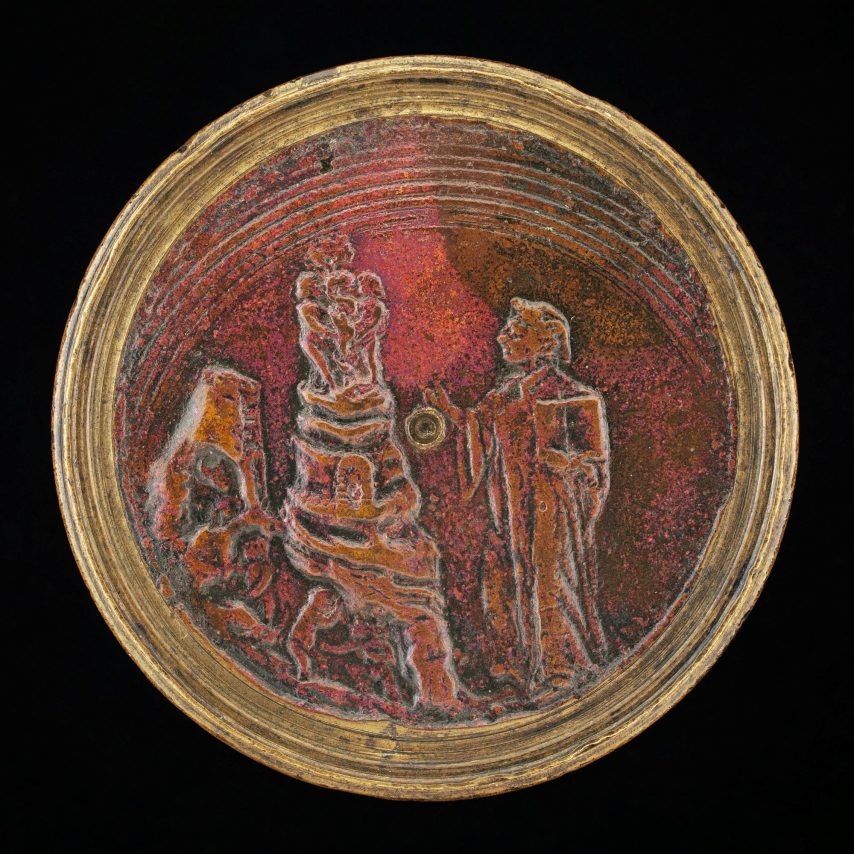
Cast bronze, 67,8 mm
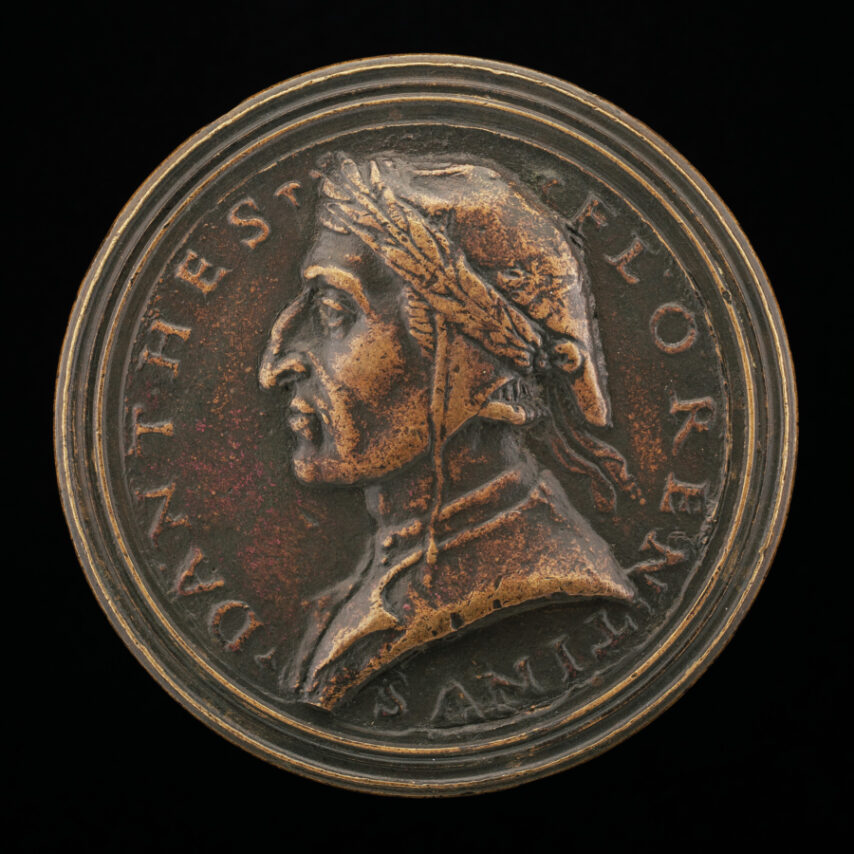
Cast bronze, 67,8 mm
Newsletter
Stay in Touch
Sign up for the Piazza dei Cavalieri newsletter
to receive updates on project progress and news.