
Designs by Giovanni de’ Medici
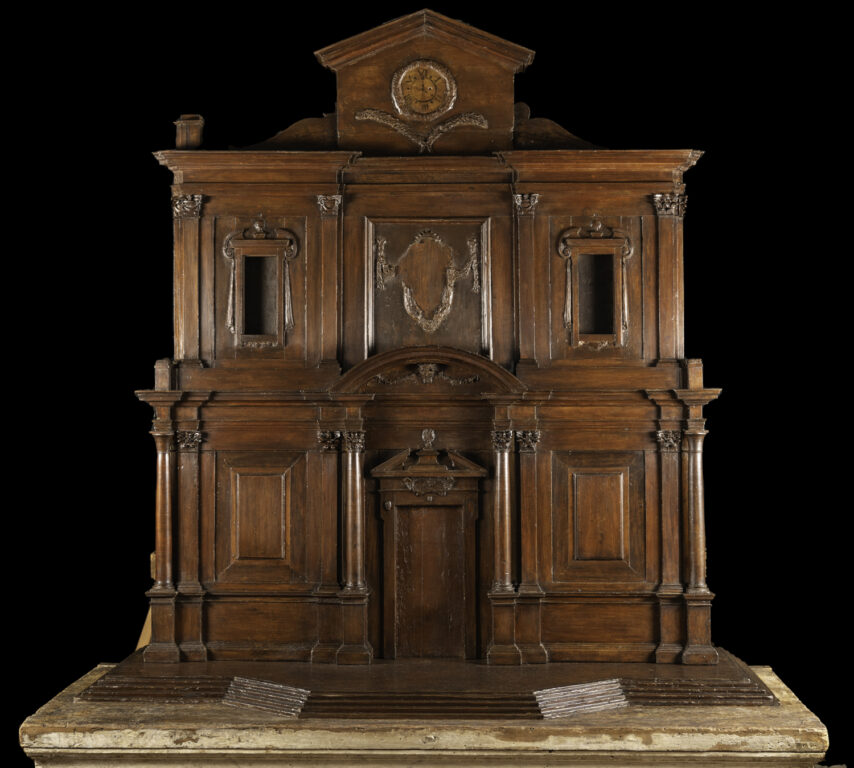
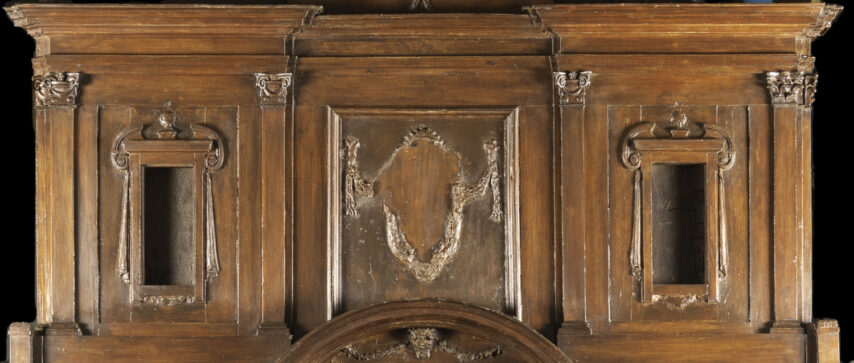
Don Giovanni de’ Medici’s design for the façade of Santo Stefano dei Cavalieri – possibly prompted by his knowledge of Vasari’s earlier scheme – can be reconstructed from three principal sources: a wooden model now preserved in the Museo Nazionale di San Matteo, a drawing held in the Gabinetto dei Disegni e delle Stampe of the Gallerie degli Uffizi, and a number of related documents.
This wooden model appears in the payments recorded by the knight Giovanni Santi Barca (1828) and later published by Peleo Bacci (1923). It was executed in 1593 by the carpenter Orazio di Zanobi Migliorini from a now-lost drawing by the architect. The sculptor Michelangelo Ferrucci also contributed, producing several wax models ‘of arms, draperies, ornaments and other elements’ [‘d’arme, panni, ornamenti e altro’]. These were almost certainly used to create the moulds for the pastiglia decorative elements. When compared with the model for the façade of Santa Maria del Fiore (Museo dell’Opera del Duomo, Florence, inv. no. 135), the Santo Stefano maquette has been attributed by Vera Daddi-Giovannozzi to Don Giovanni de’ Medici’s design. Both models share a two-storey arrangement — Corinthian below and Composite above — together with the alternation of triangular and segmental broken pediments. The effect of a compact and structurally robust design has, in turn, been linked by scholars to Giovanni’s extensive experience as a military architect and to the influence of Giovanni Antonio Dosio’s manner.
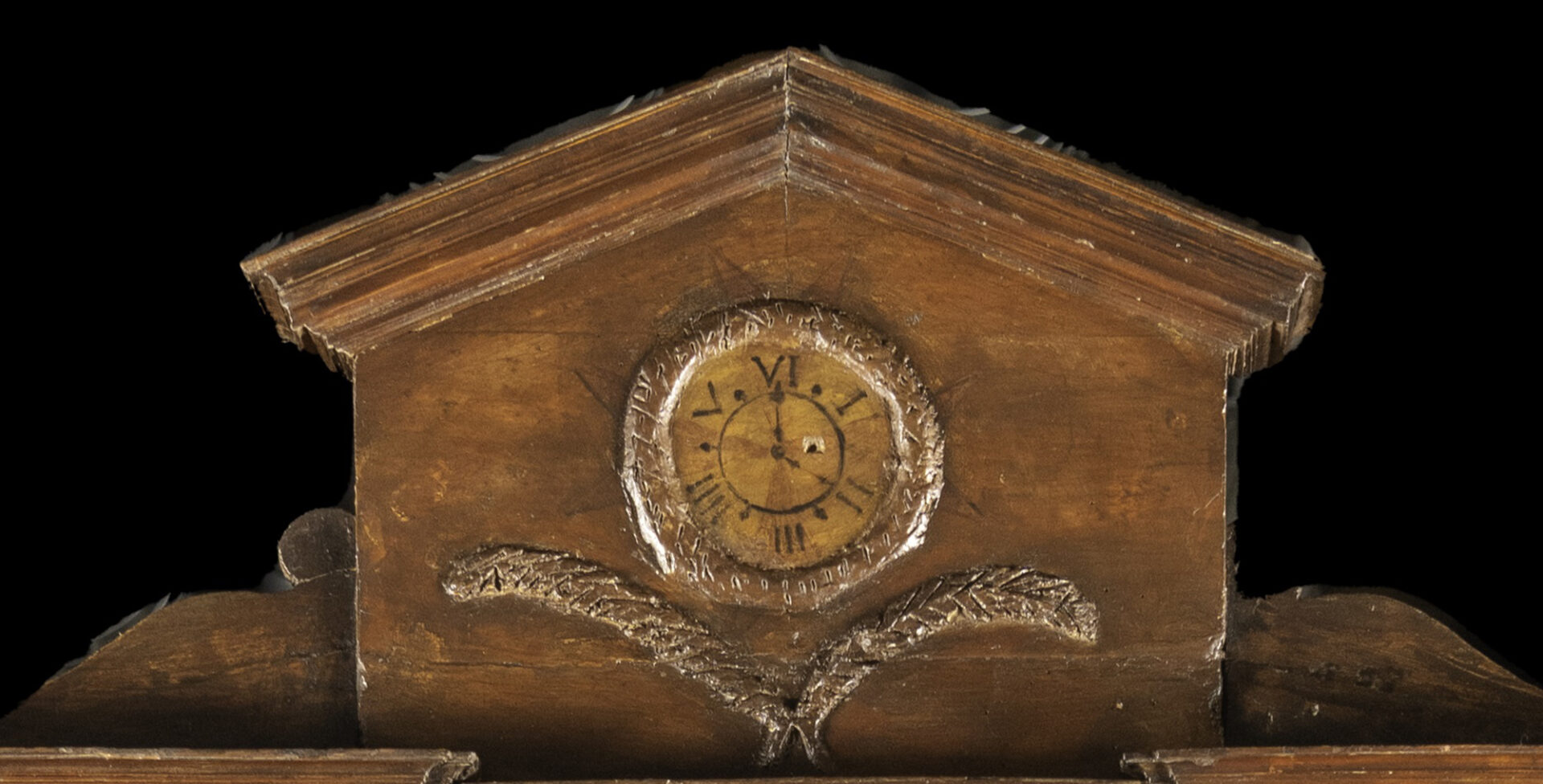
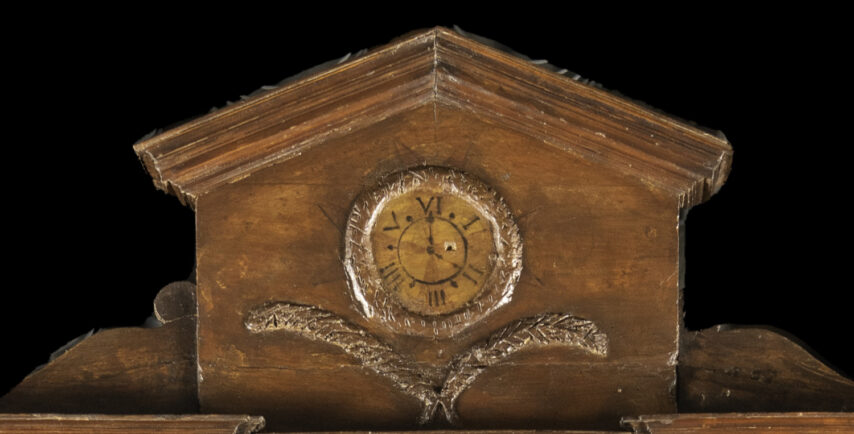
As noted by Franco Paliaga, the transition from design to execution involved no substantial modifications. Certain differences are nonetheless discernible: in the finished façade, the rectangular panels originally planned for the lower storey were replaced by octagonal ones, while the Medici-Stephanian coat of arms on the upper level was further enriched with the uppermost cherub and the flanking military trophies. The model underwent conservation treatment in 2023, which confirmed the range of woods used — not only limewood but also poplar and walnut — as well as the presence of pastiglia elements. It also raised the possibility that the upper section may have been remade or significantly altered at a later date; evidence for this includes the drawing of the clock set within the laurel wreath, which overlaps the cross of Saint Stephen.
In 1907, Augusto Bellini Pietri discovered among the Order’s papers a payment made in 1603 to the carver Bartolomeo Atticciati for a second façade model. That work has yet to be traced, but it may represent the definitive version of the design. In either case, when Migliorini produced the model now in the Museo Nazionale di San Matteo in 1593, the material and chromatic treatment of the façade had not yet been finalised.
Load-bearing structure in poplar, facing in walnut, elements in limewood, and additions in pastiglia, 138 x 120 x 17 cm
Black chalk, pen, grey and purple wash, bistre on white paper, 290 x 424 mm.
Inscription: lower left: ‘Ser.mo Gran Duca, Li duoi disegni fatti col medesimo ordine secondo il modello fatto, si son fatti per mostrare la differenza che fanno li fondi attorno alli bozzi di marmo di Caldana, al farli legati in marmo bianco come è questo o farli in fondo di pardiglio come è l’altro disegno acanto, et il simile attorno alle due finestre et all’arme di mezo che pare più ricca quella dove è il pardiglio, che questa che è legata in marmo bianco che apparisce povera perché in una piazza grande li duoi bozzi di caldana rimangano spogliati. Però a vostra altezza serenissima sta il risolvere come a lei piace’.
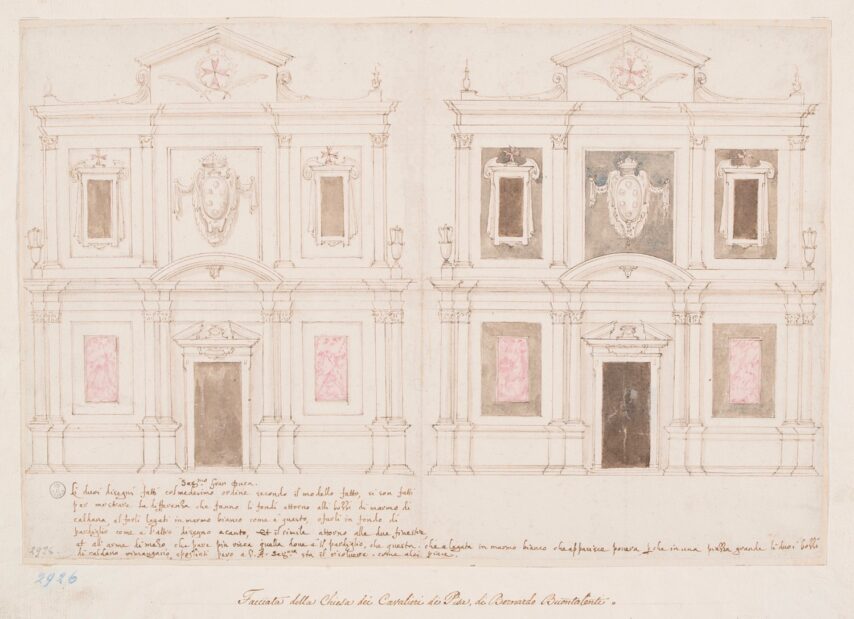
The Uffizi drawing was prepared to present Grand Duke Ferdinando I de’ Medici de’ Medici with two alternative schemes. In the first, white Carrara marble predominates as the background to the coloured marble panels of the lower storey; the accompanying note describes these panels as being in ‘marmo di Caldana’, that is, portasanta (a reddish marble). In the second proposal, the ‘marmo di Caldana’ panels, together with the coat of arms and the upper windows, are instead set against bands of bardiglio (a grey marble). The author of the note expresses to Ferdinando his preference — ‘the one with bardiglio seems richer than this one this one set entirely in white marble, which looks poor because in a large piazza the two blocks of Caldana remain bare’ [‘pare più ricca quella dove è il pardiglio, che questa che è legata in marmo bianco che apparisce povera perché in una piazza grande li duoi bozzi di caldana rimangano spogliati’] — yet naturally leaves the final decision to the Grand Duke. As the present façade clearly demonstrates, Ferdinando opted for the second scheme, although documents uncovered by Ewa Karwacka Codini reveal that the bardiglio was subsequently replaced during construction with black marble from Portovenere.
The Uffizi drawing — originally catalogued as a work by Bernardo Buontalenti, to whom sources had for centuries attributed the façade of Santo Stefano — was reassigned in 1932 by Mario Salmi to Don Giovanni de’ Medici. Vera Daddi-Giovannozzi, however, regarding the draughtsmanship as uncertain and hurried, preferred to attribute it to a figure close to the architect, perhaps one of his assistants. Andrew Morrogh, reversing this earlier judgement, has ascribed the drawing to the experienced hand of Alessandro Pieroni, Don Giovanni’s collaborator, whose handwriting unquestionably produced the accompanying note. Although this attribution is persuasive, it should be emphasised that the sheet represents the translation of an idea already developed by Medici in an initial (now lost) drawing and subsequently in the model explicitly mentioned in the manuscript note. At this stage, therefore, the question of any creative contribution from Pieroni is of limited relevance.
Media gallery
Load-bearing structure in poplar, facing in walnut, elements in limewood and pastiglia additions, 138 x 120 x 17 cm.
Load-bearing structure in poplar, facing in walnut, elements in limewood, and additions in pastiglia, 138 x 120 x 17 cm
Black chalk, pen, grey and purple wash, bistre on white paper, 290 x 424 mm.
Inscription: lower left: ‘Ser.mo Gran Duca, Li duoi disegni fatti col medesimo ordine secondo il modello fatto, si son fatti per mostrare la differenza che fanno li fondi attorno alli bozzi di marmo di Caldana, al farli legati in marmo bianco come è questo o farli in fondo di pardiglio come è l’altro disegno acanto, et il simile attorno alle due finestre et all’arme di mezo che pare più ricca quella dove è il pardiglio, che questa che è legata in marmo bianco che apparisce povera perché in una piazza grande li duoi bozzi di caldana rimangano spogliati. Però a vostra altezza serenissima sta il risolvere come a lei piace’.
Newsletter
Stay in Touch
Sign up for the Piazza dei Cavalieri newsletter
to receive updates on project progress and news.