
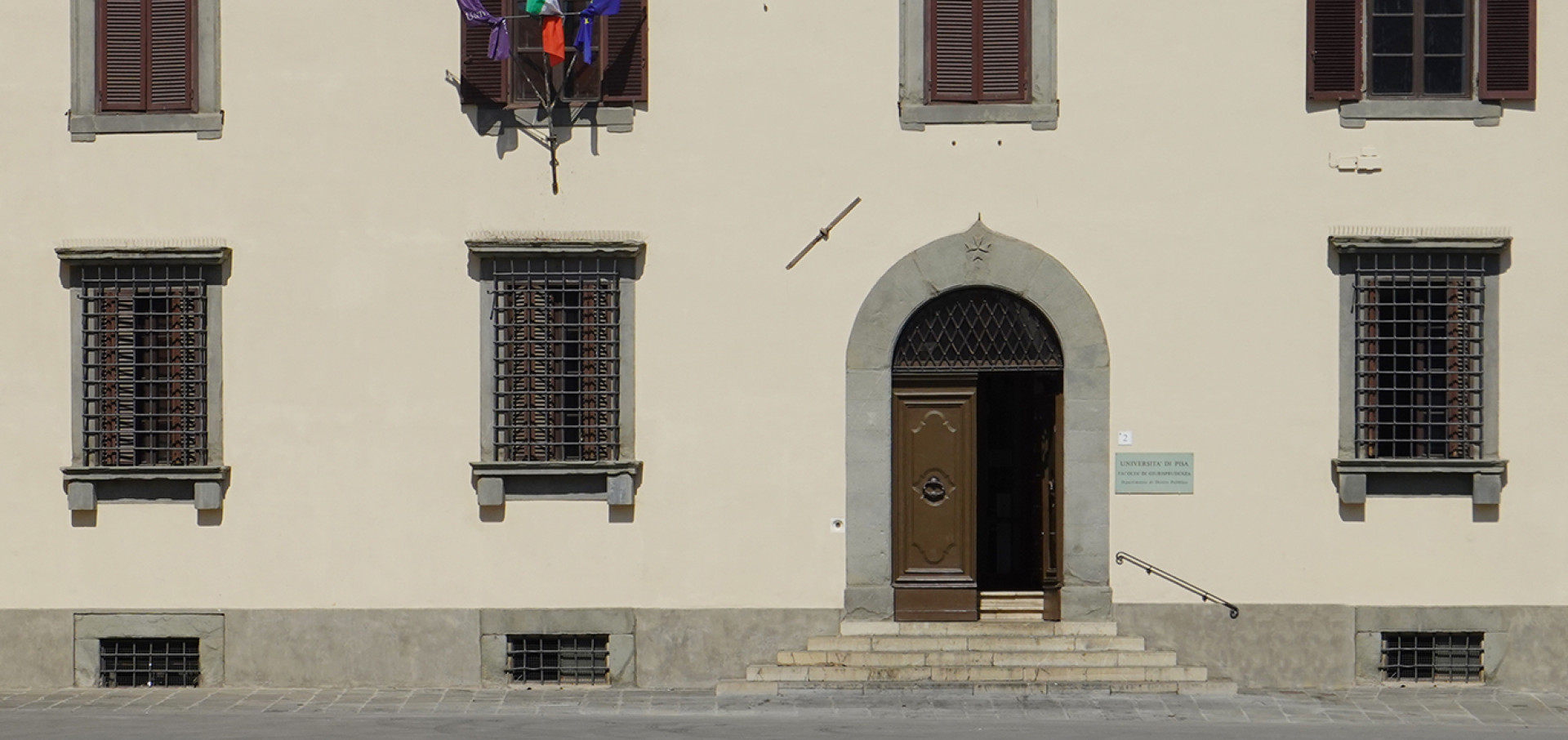
Palazzo dell’Università
Owned by the University of Pisa, the palazzo has been known by various names over the centuries, each reflecting a shift in function. In more recent scholarship, it appears both as the ‘former Collegio Pacinotti’, referring to the academic institution it housed for several decades after the Second World War, and as the Casa Auditoriale, in relation to its historical role within the Order of Saint Stephen.
Almost entirely completed by 1597 as two residential units closing the western side of Piazza dei Cavalieri, the buildings were only joined into a single structure in 1665. Unlike the nearby Collegio Puteano, with which they shared their origin under the patronage of the Order of Saint Stephen, the future Palazzo dell’Università was initially intended for private rental. It was only in the later seventeenth century that the Grand Duke designated it as the official residence of the auditore, the senior magistrate charged with overseeing the Order’s collegiate governance. As Pandolfo Titi recorded in 1751, the house still served ‘for the dwelling of the most illustrious lord auditor-president’ [‘per l’abitazione dell’illustrissimo signor auditor presidente’]. By that time, however, the Council of the Order had already moved in 1692 to the neighbouring Palazzo dei Dodici, and the building had long since combined its residential function with that of housing the Chancellery and the Archives of the Knights. Various structural alterations created internal passageways linking it with the adjoining Puteano, and these connections remained in use even after both buildings passed into state ownership and were adapted to serve as ceremonial rooms and administrative offices of the Province of Pisa. Further works were undertaken in the mid-twentieth century, this time to integrate the former auditor’s residence with the Puteano and ultimately to house the Collegio Pacinotti. This spatial continuity effectively lasted until the 1990s.
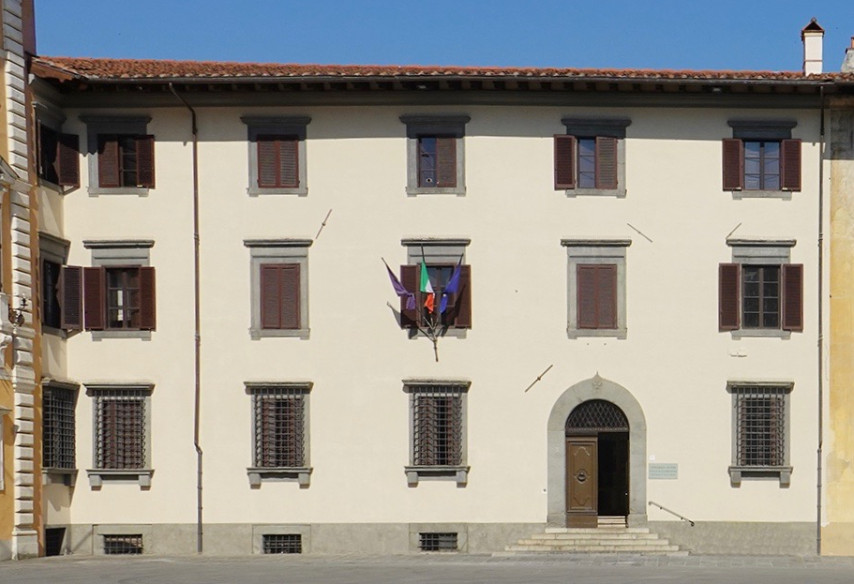
Today, the palazzo serves as one of the principal premises of the University of Pisa’s Department of Law, which also extends into several adjoining rooms of the Palazzo dei Dodici. A modern plaque beside the entrance portal marks this function. The portal itself—approached by five broad steps—is framed in rusticated stonework, with the arch’s keystone carved with the eight-pointed cross of the Order of Saint Stephen. The three tiers of rectangular windows, bordered in pale Golfolina Stone, continue along the narrow section of façade adjoining the Palazzo dei Dodici. Their sober mouldings recall those of the nearby Collegio Puteano, visually linking the two buildings into a coherent architectural composition.
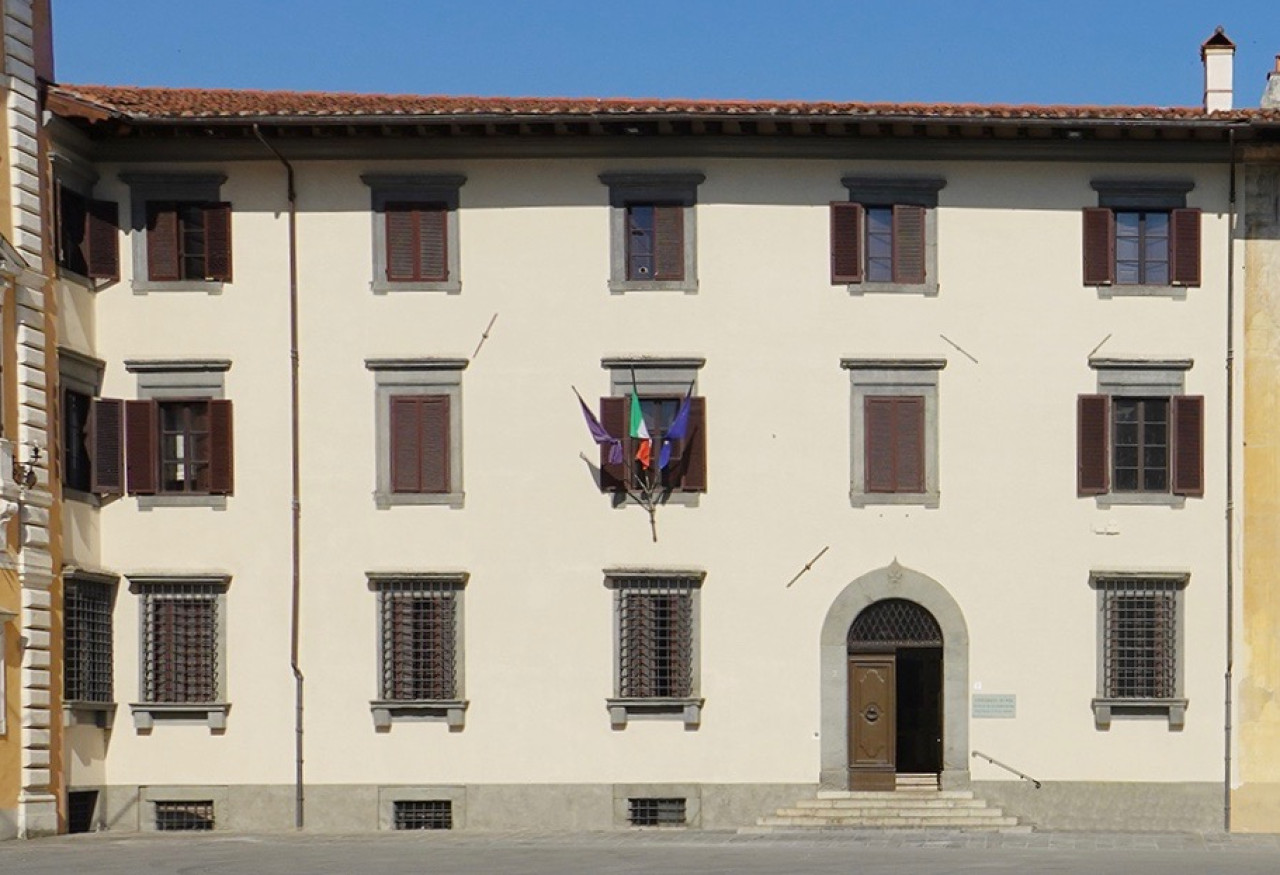
Palazzo dell’Università
Main EntryMedia gallery
Newsletter
Stay in Touch
Sign up for the Piazza dei Cavalieri newsletter
to receive updates on project progress and news.