
Façade and Vault
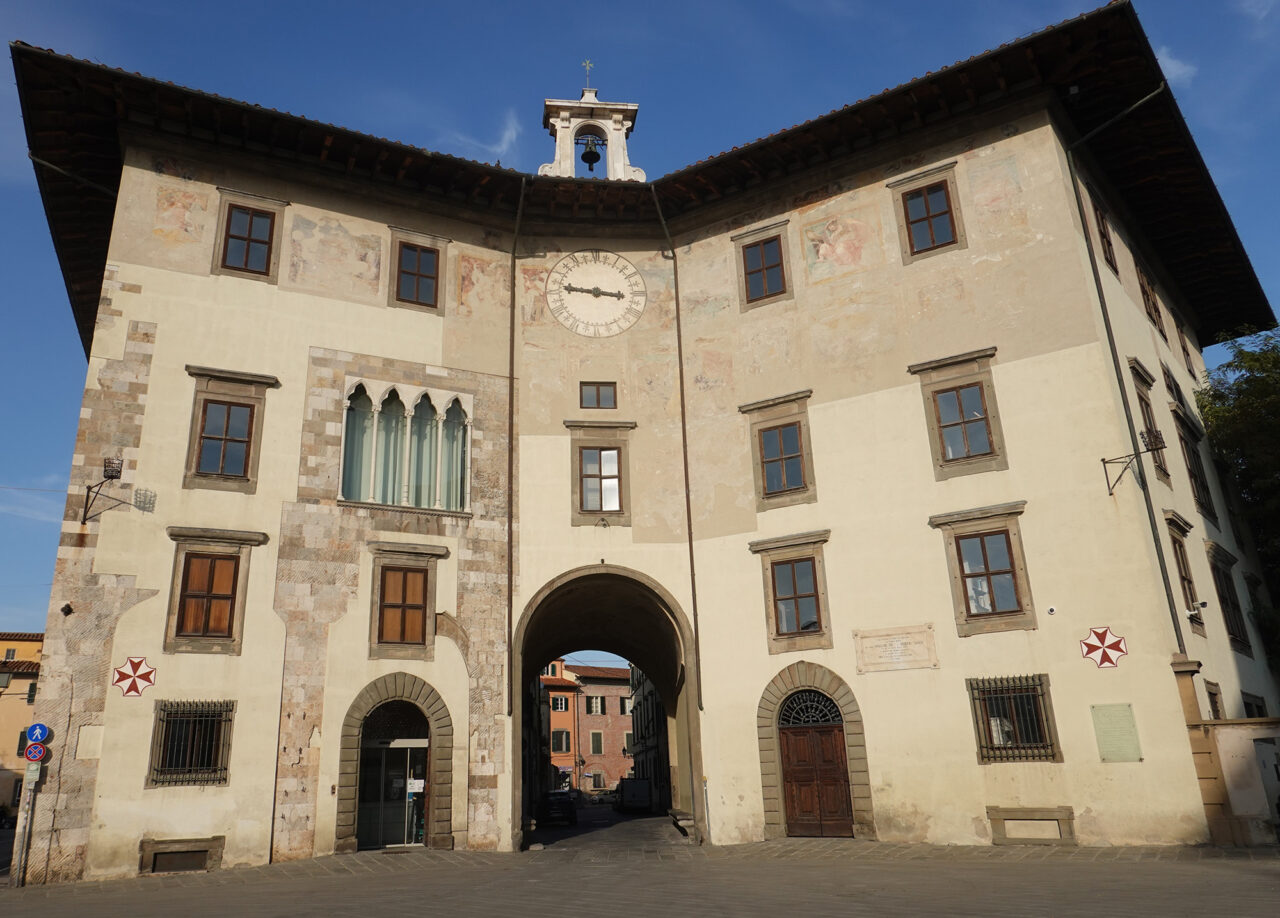
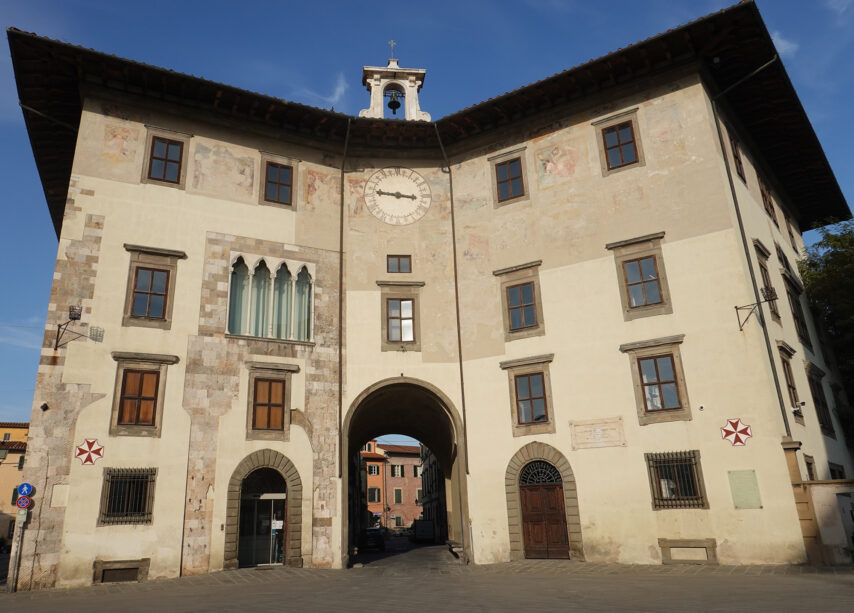
As with Palazzo della Carovana, the façade of Palazzo dell’Orologio incorporates the medieval structures that once stood on the site. The inherent complexity of this stratification is only hinted at on the outer wall by the differing arrangement of windows on the short sides and, at the entrance to the vaulted arch, by the visible corner of the structures belonging to the Tower of Famine.
Originally, before the installation of the clock in 1696, the entire surface of the building was covered with a uniform fresco decoration (1607–1608), organised in panels depicting landscapes and allegorical figures. This decoration is now entirely lost, except for what survives on the upper part of the front and on the right-hand side. Like the sgraffito decorations on Palazzo della Carovana, these frescoes contributed to imparting a sense of unity to the building. Despite their irreversible disappearance, palazzo’s façade nevertheless remains harmonious in its composition, with a straight central section and oblique lateral wings, all enclosed by a unifying roofline. The building thus appears today as an almost symmetrical volume, explicitly designed to close off the north-west side of Piazza dei Cavalieri like a theatrical backdrop.
In its current configuration, the central axis of palazzo is marked by the archway, two windows of differing size, the clock face and the bell turret. This same axis probably also carried the Medici–Stephanian coat of arms commissioned in 1607 from Gino, son of Stoldo Lorenzi—now lost but perhaps originally resting on the cornice above the main opening. The lateral wings have three storeys with pairs of windows, including the striking early twentieth-century insertion of the quadrifora in place of one of the original openings, and at ground level, a window paired with a doorway. On the left side of the building, several medieval pre-existing structures are visible, exposed during the 1919 restoration.
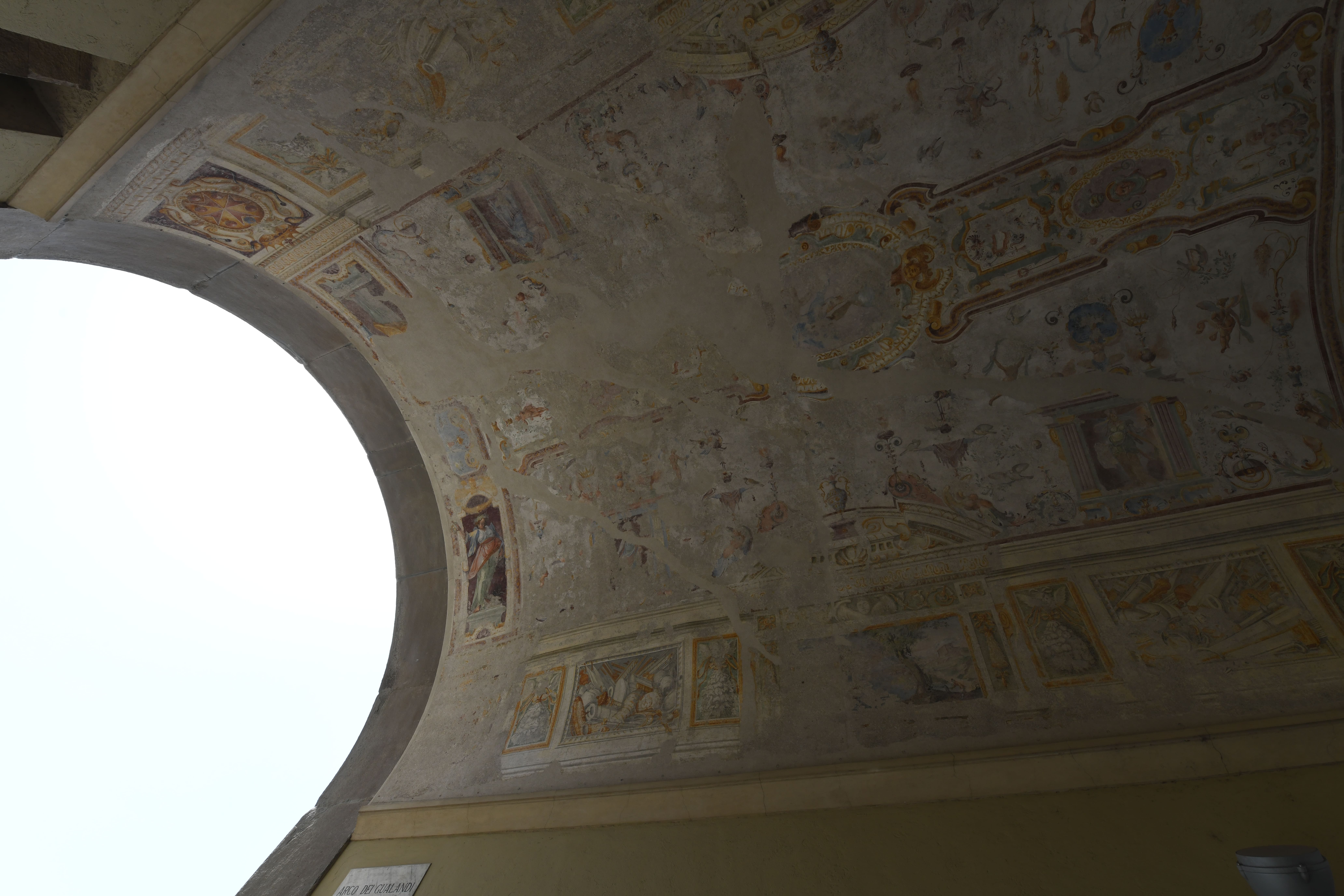
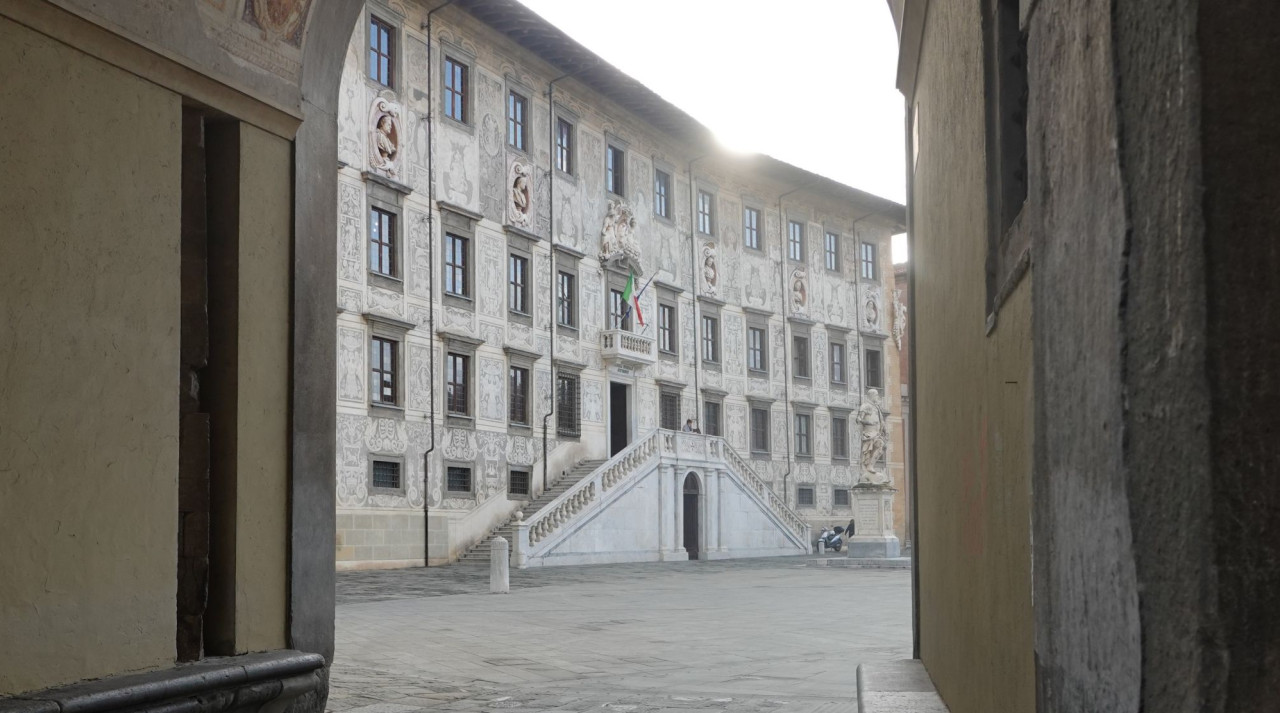
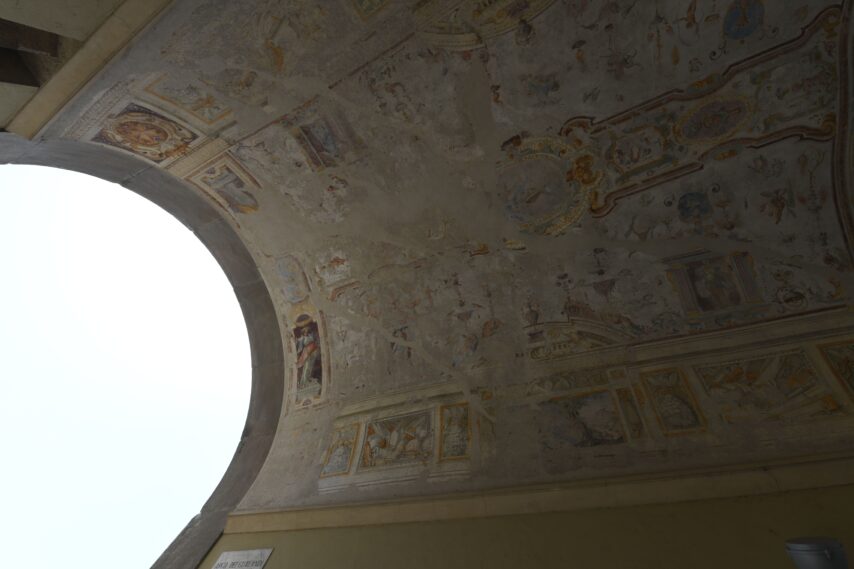
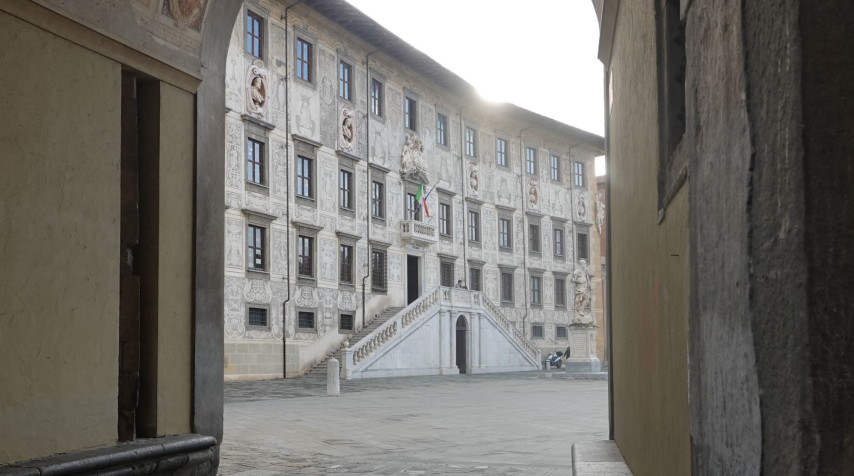
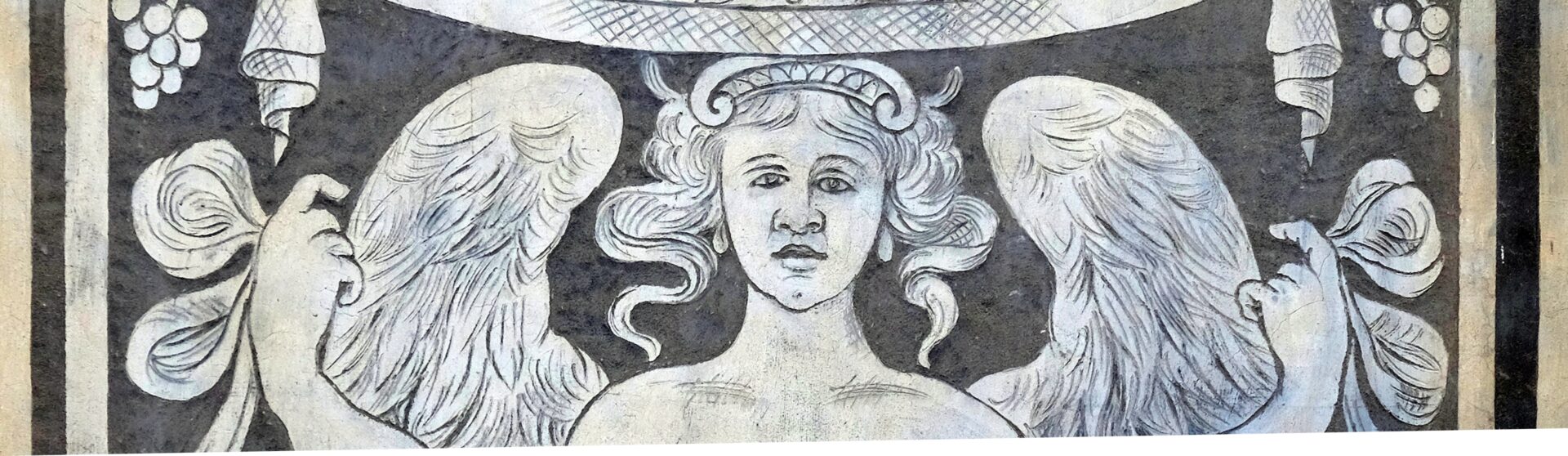
Another section of frescoes, likewise heavily damaged, is found on the intrados of the vault that traverses the structure and gives onto the exterior of the square. It features a grotesque decoration, particularly fashionable between the fifteenth and sixteenth centuries and already employed in some sections of the Carovana sgraffito decorations. As noted by Paul Daniel Fischer, the vault—slightly splayed in shape and thus tapered—serves as an optical telescope for those entering the square from Via Dalmazia, framing the monument to Cosimo I and the fountain below. Its grey Versilia marble seats were repaired in 1971.
Palazzo dell’Orologio
Main EntryMedia gallery
Newsletter
Stay in Touch
Sign up for the Piazza dei Cavalieri newsletter
to receive updates on project progress and news.