
Monument to Ulisse Dini
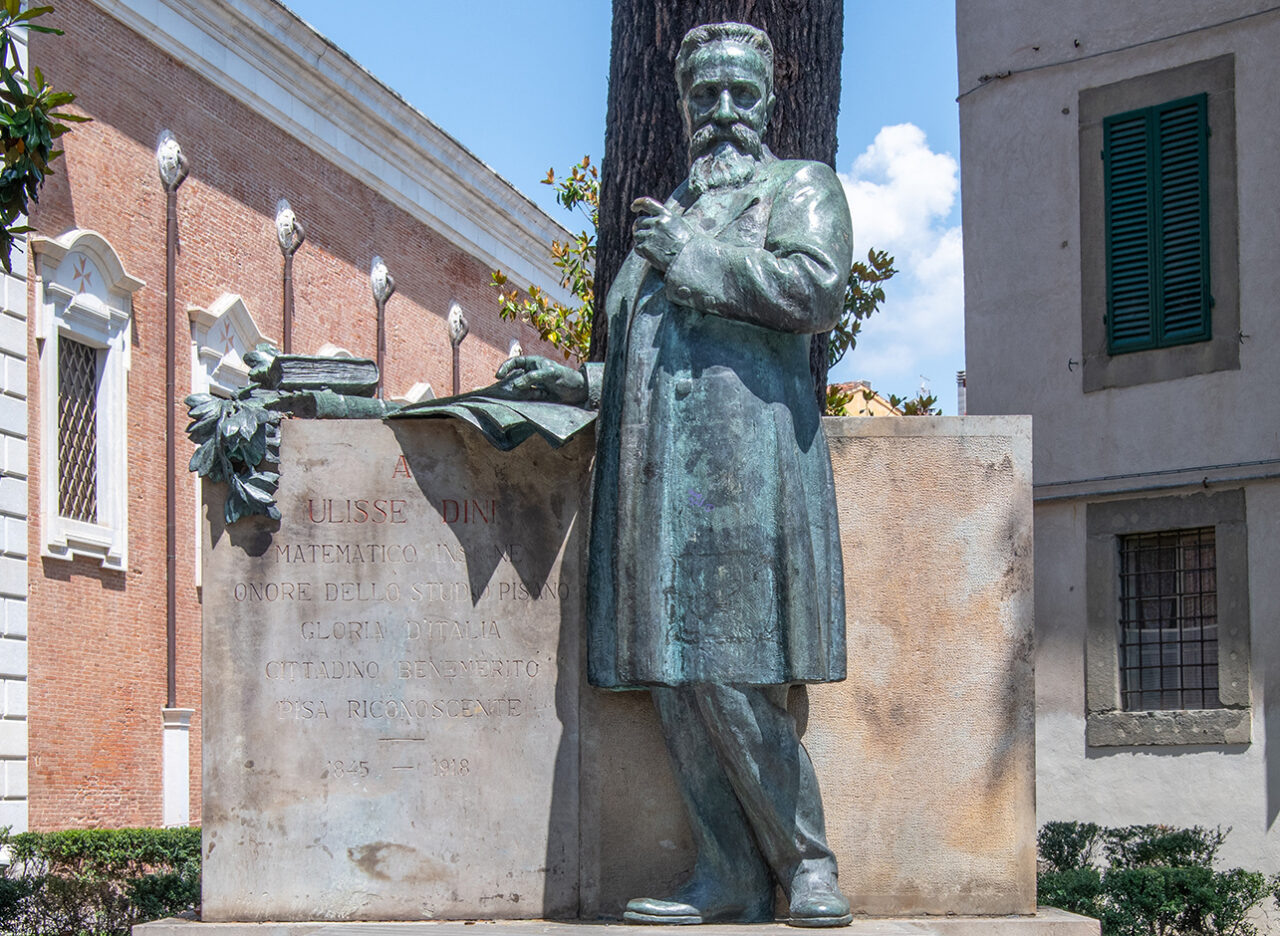
The monument to Ulisse Dini was created between 1923 and 1927 by Leonardo Bistolfi (1859–1933).
The statue portrays the eminent Pisan mathematician and politician Ulisse Dini (1835–1918), who taught at the University of Pisa and, from 1900 until his death, served as director of the Scuola Normale Superiore. His published work includes pioneering studies in differential geometry and infinitesimal calculus.
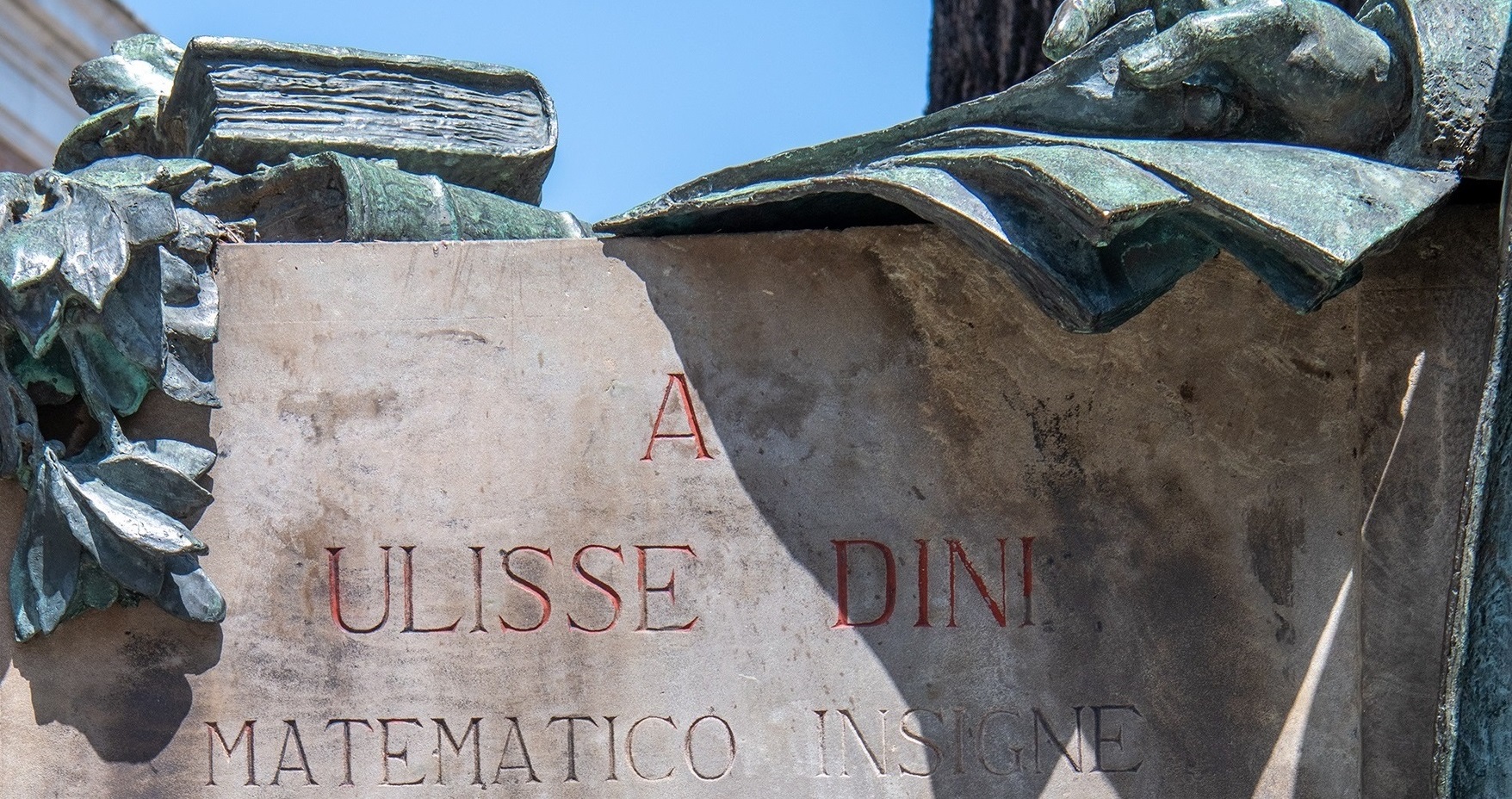
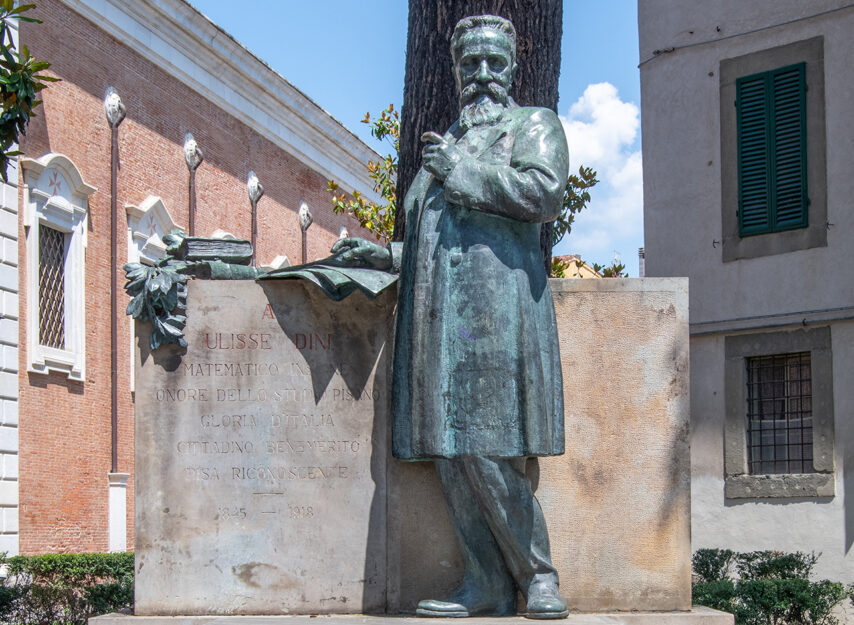
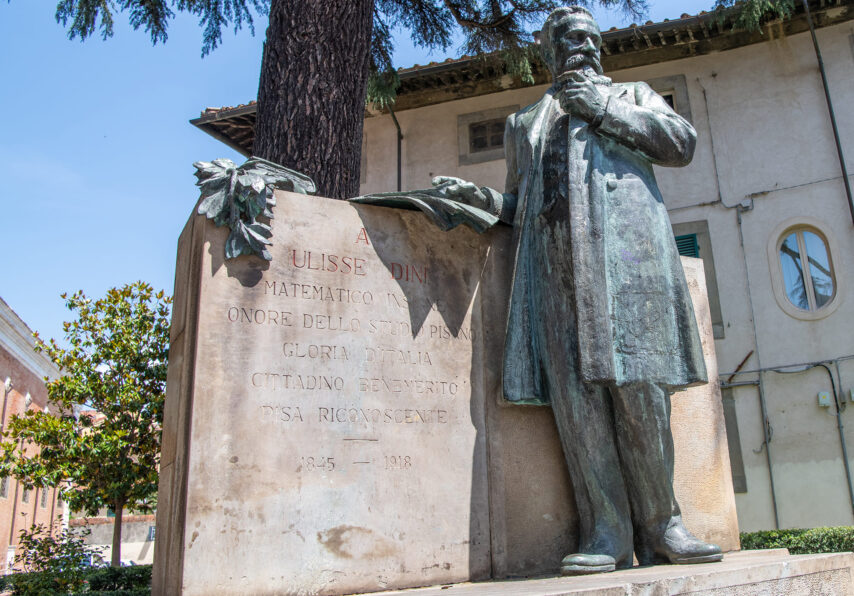
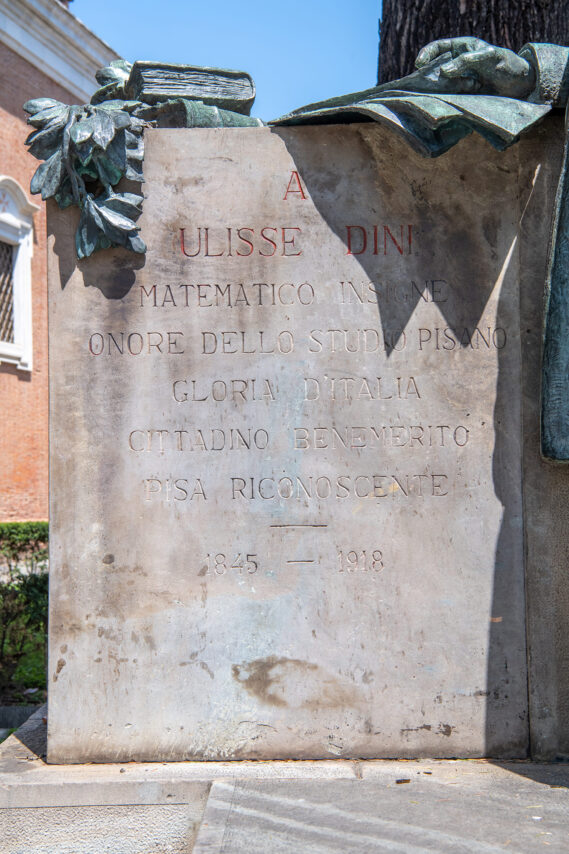
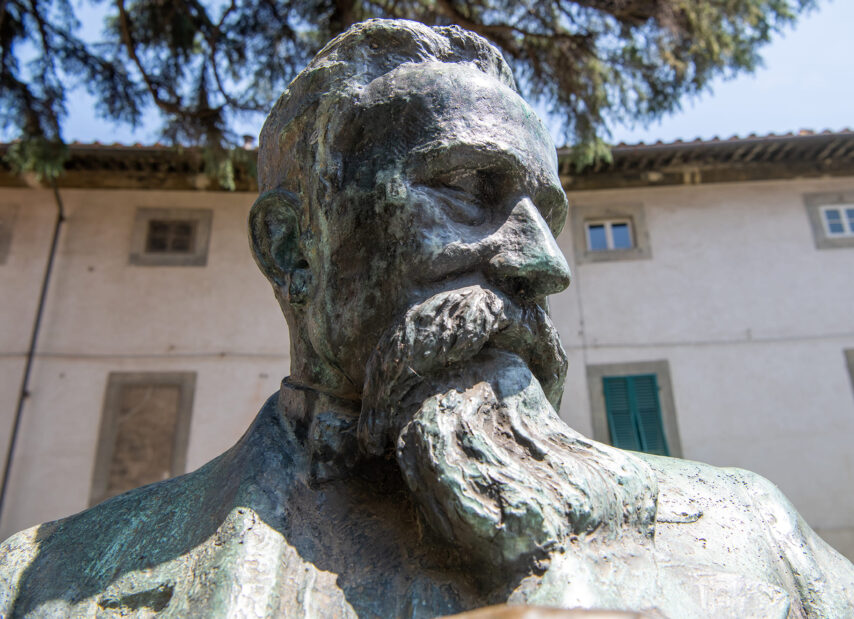
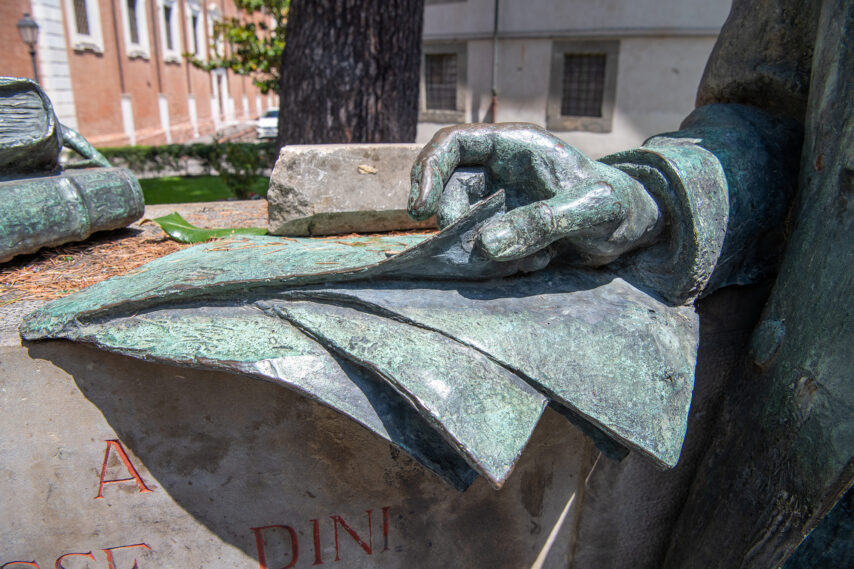
The monument consists of a stepped stone base rising to a parapet, against which stands the bronze statue of the professor. Interrupted in his reading—still turning the pages of his papers with his right hand—Dini pivots toward the passerby with a welcoming smile, his left hand pressed to his chest. Resting along the parapet are two open books entwined with a laurel branch. On the flanking panel appears the inscription:
A ULISSE DINI / MATEMATICO INSIGNE / ONORE DELLO STUDIO PISANO / GLORIA D’ITALIA / CITTADINO BENEMERITO / PISA RICONOSCENTE / 1845–1918
[TO ULISSE DINI / DISTINGUISHED MATHEMATICIAN / PRIDE OF PISAN SCHOLARSHIP / GLORY OF ITALY / WORTHY CITIZEN / GRATEFUL PISA / 1845–1918]
The monument was commissioned by the Comitato popolare per le onoranze al Dini o celebrate an illustrious citizen who had distinguished himself equally in scholarship and in public service. At the national level, he served as vice-president of the Consiglio Superiore della Pubblica Istruzione, as a deputy, and finally as a senator of the Kingdom of Italy. In his will, Dini left a bequest of 25,000 lire to the Scuola di Applicazione per Ingegneri of the University of Pisa.
Founded in 1918 on the initiative of Eugenio Balestri, the Committee had collected 15,000 lire by March 1920—a figure that would rise further following the donation of bronze for the statue’s casting. In 1922, the members resolved to dedicate the entire fund to a full-length statue rather than a simple commemorative plaque, commissioning the celebrated sculptor Leonardo Bistolfi for the work.
The Committee met Bistolfi at the Hotel Nettuno in Pisa in January 1923 to finalise the design. The artist’s ill health delayed completion, and final approval was granted only in the autumn of 1926.
The Nuova Collezione Bistolfi—recently donated by the sculptor’s heirs to the Museo Civico di Casale Monferrato—also preserves the rough draft of an undated letter. Written on the verso of correspondence relating to the commission for the commemorative plaque at Palazzo Briccherasio, it contains Bistolfi’s only known reference to the Dini monument.
He recalls a visit to his Turin studio by the mathematician’s widow, Elisa Vaccani, who examined the clay model and expressed her great satisfaction with the result. The letter is addressed to a sympathetic patron whom Bistolfi had invited to the foundry where the bronze casting was soon to take place—almost certainly the Fumagalli foundry in Turin. Writing to him as intermediary, the sculptor requests that the Committee advance 11,000 lire to cover the expenses already incurred in producing the full-scale model.
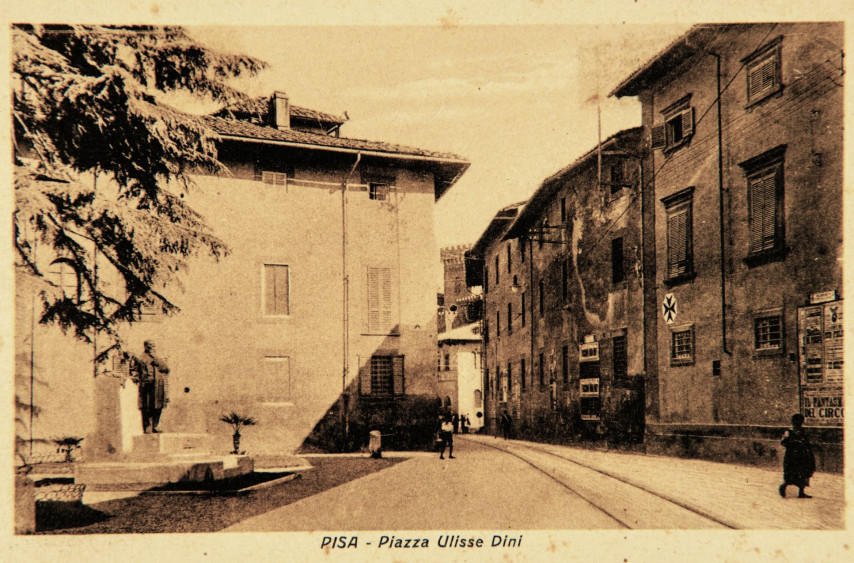
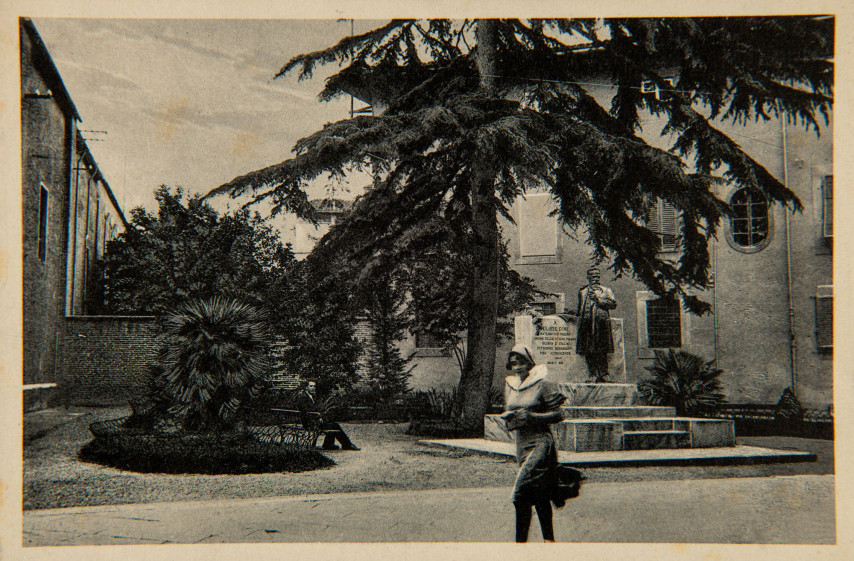
The Pisan weekly periodical Il Ponte di Pisa announced that the unveiling of the monument and the formal commemoration of Dini—at which Luigi Bianchi, then director of the Scuola Normale Superiore and the mathematician’s former pupil, was to deliver the address—had been scheduled for Sunday, 20 November 1927. A contemporary issue of the Bollettino di matematica reports that the ceremony had been postponed indefinitely. Postcards issued at the time testify to the esteem in which the citizens of Pisa held both the statue and its subject.
Within Leonardo Bistolfi’s oeuvre, the Dini monument forms part of a distinctive group of public commissions characterised by a single bronze figure set against a rigorous architectural backdrop of marble or stone blocks. Related works include the Monument to Giuseppe Garibaldi in Sanremo (1905–1908) and the Monument to Cesare Lombroso in Verona (1921).
The sculpted figure of the scholar is marked by vigorous realism and formal solidity, departing from the Symbolist poetics that characterise Bistolfi’s better-known works—of which only a trace remains in the laurel branch wedged between the two heavy study volumes.
Monument to Ulisse Dini
Main EntryMedia gallery

Newsletter
Stay in Touch
Sign up for the Piazza dei Cavalieri newsletter
to receive updates on project progress and news.