
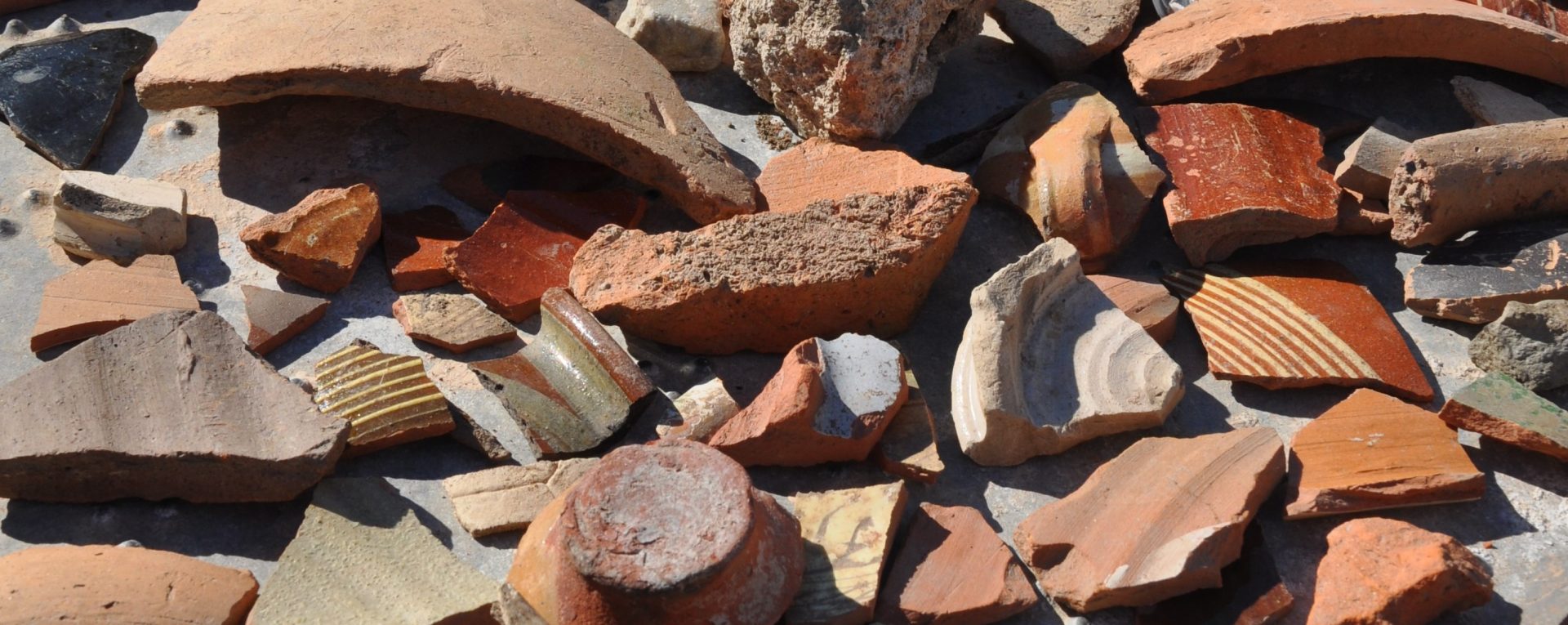
The Area Adjacent to San Sisto
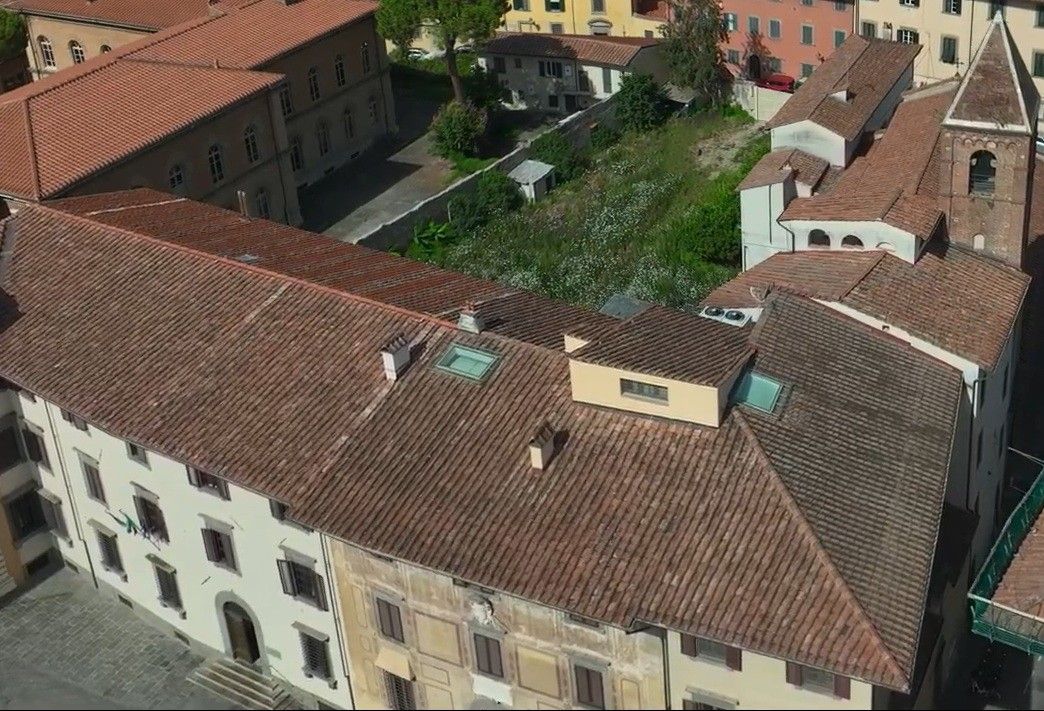
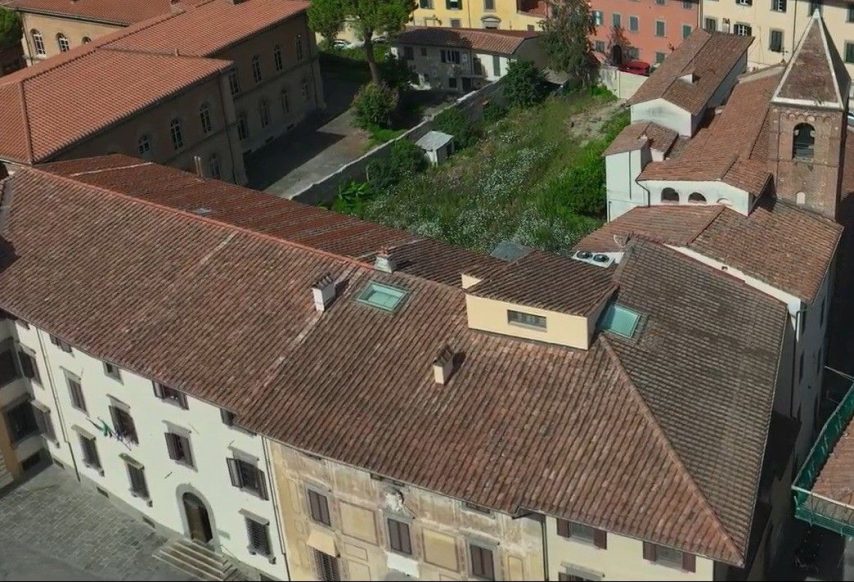
In the immediate vicinity of Piazza dei Cavalieri lies the area of the church of San Sisto, situated behind the oratory of San Rocco along the medieval ‘Via di San Sisto’ (now Via Corsica), which led into Piazza del Popolo. Beyond their physical proximity, the area also shared a symbolic and ideological connection with the piazza, as both had housed the city’s political and administrative heart in the Middle Ages.
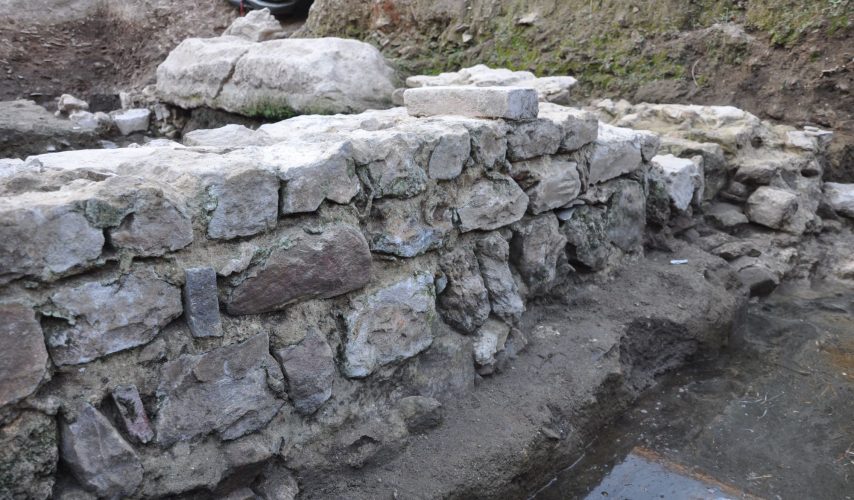
Archaeological investigations conducted between 2020 and 2022 in the garden of the Church of San Sisto, under the scientific direction of Professor Federico Cantini (University of Pisa), have provided substantial evidence on the settlement of the area from the Etruscan period to the modern age.
The earliest material evidence, consisting of ceramics recovered in secondary deposits, indicates continuous human presence between the seventh and second centuries BC. Since the deposits could not be examined in situ, it has not been possible to determine the nature of the settlement. According to Emanuele Taccola, a residential settlement may have existed in the Archaic period. Finds from Piazza dei Cavalieri of the same era suggest areas used for the storage of amphorae, whilst for the Hellenistic period, the evidence points to a monumental sacred building, abandoned in the course of the first century BC.
In the Roman period, between the late first century BC and the late first century AD, a large building with brick pillars bonded with mortar was erected. Investigated only in part, its function and plan remain unknown. It was later stripped of materials between the end of the first and the beginning of the second century AD.
During the second century AD, a porticoed building with an adjoining well was constructed. Substantial in size, it may be interpreted as a domus that remained in use until the first half of the fifth century AD, after which it was stripped of materials in the latter half of the same century. Its rich wall and floor decoration probably accounts for the mosaic tesserae, marble slabs, painted plasters, and architectural terracottas recovered in the layers deposited after the spoliation. The imperial-period building, though partly dismantled, must still have been visible when, in the sixth century, a significant effort was made to renovate the portico by adding a western wing, erecting columns, and re-cutting reused bricks. This new structure remained in use until the century’s end , when it was definitively dismantled.

In the early seventh century, the area underwent a significant change with the establishment of a cemetery. The burials examined, belonging to infants, in some cases contained grave goods characteristic of the Lombard period, including a necklace with glass-paste beads and a small gold cross that was probably sewn onto the shroud of the deceased.
From the second half of the seventh century, the area took on a new function, which appears to have ceased by the late tenth century. The southern perimeter wall of the Roman structure that once supported the portico—later retraced by the foundation of San Sisto’s southern wall—was reused as the base for an elevated masonry structure, though its function and development remain uncertain. In the open area previously occupied by burials, structures of perishable material supported by posts were built, and pits were dug for the storage of agricultural produce. To the south, a ditch separated this zone from an area under cultivation, as shown by traces of ploughing. The recovery of millstones for grinding grain, iron slag, and fragments of haematite attests to productive activities during this period. A fragment of a marble cornice carved with small arches, dated to the 9th century and recovered during excavation, may be tentatively attributed to the nearby church of San Pietro (later transformed into the present-day San Rocco). It may indicate either the church’s construction or a Carolingian rebuilding.
The available data for the period between the Lombard and Carolingian eras seem to shed light on the organisation of the early medieval royal court, which passed from the gastaldi to the counts.
An intriguing hypothesis is that the masonry building, erected on an earlier structure, may be identified with the ‘sala’ mentioned in the sources as the place where judicial disputes were settled. The building was later accompanied by the church of San Pietro—a dedication frequently found in comparable contexts (Salerno, Lucca, Siena, Volterra)—which may have served as a palatine chapel. The presence of areas for milling and storing agricultural produce, and in particular, those devoted to metallurgical activities (traces of which have also emerged in Piazza dei Cavalieri), suggests public control of the main productive activities, a feature that persisted in the area into the late Middle Ages.
From the late tenth century AD, the material record indicates the abandonment of the court and the dismantling of its structures, followed by the accumulation of dark earth deposits. The integration of archaeological evidence with written sources, recently analysed by Alberto Cotza, allows a clearer understanding of the settlement dynamics of the site in the late Middle Ages.
The church of San Pietro (1027), known as ‘Curte Vecla’, survives in the area, its attestation concealing the lived reality of the earlier settlement.. The site did not lose its central role in the city’s political life; indeed, the unbuilt space—probably left open as public property—was reused at the end of the eleventh century. In 1087, the church of San Sisto was founded by a group of citizens who had taken part in the Mahdia expedition. This communal church became the cornerstone of the new settlement in the area, which written sources indicate was only sparsely built up in the eleventh century. Alongside vacant plots and kitchen gardens stood a few houses belonging to individuals closely associated with the public authority. In the first half of the twelfth century, important city families such as the Orlandi—and later the Accatti and the Gualandi—had residences around San Sisto. These were not casual proximities, but rather reflected the desire to display ambition by occupying, both physically and symbolically, an area so central to the city’s social and political life.
From the late eleventh century, an annual fair was held near the church on the feast day of San Sisto (6 August). Its importance grew to the point that in 1154, its duration was extended to a week. In 1142, the church is recorded as the seat of the tribunal of judges elected by the consuls of Pisa, and in 1177 it became the permanent curia of the ‘public arbiters’ [‘publici arbitri’].
In the second half of the twelfth century, the number of buildings around the church of San Sisto increased. Between 1154 and 1185, a canonry was built; during the same period, a school was established (although it is unclear whether this was in a separate building), and a gallery was added. From 1179, the sources attest to the ‘embolo’ of San Sisto, a term used to denote a porticoed structure that contained shops and apothecaries.
A cloister was constructed, first recorded in the Breve del Comune e del Popolo in 1287; however, archaeological evidence suggests it was already in existence by the early twelfth century. Also used as a burial space, the structure had frescoed walls and a roof of schist slabs. Written sources indicate that it was fortified in the early fourteenth century, but no archaeological traces of such an intervention have been identified.
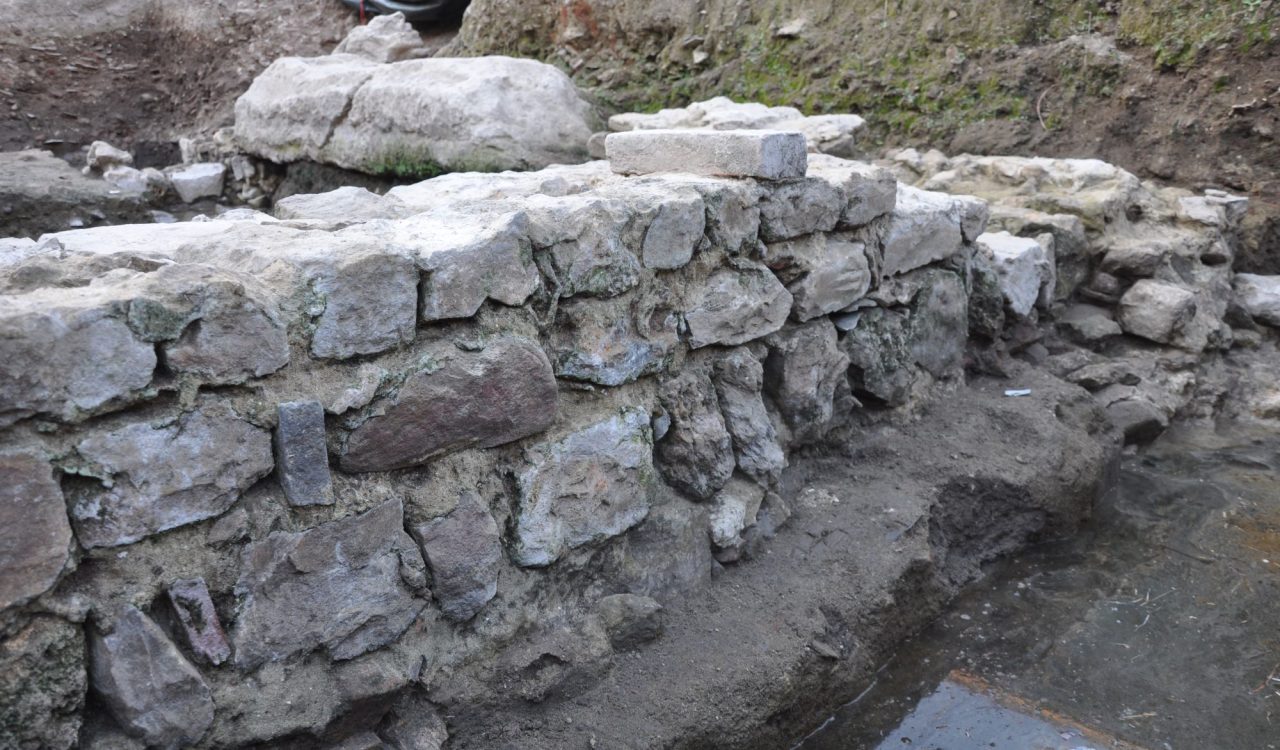
The establishment of communal magistracies around the Piazza —comprising Palazzo del Popolo o degli Anziani, Palazzo del Capitano del Popolo, and Camera nuova del Comune—did not reduce the civic role that the church of San Sisto continued to play throughout the Middle Ages. From the late thirteenth into the fourteenth century, the Anziani, the city’s governing elders, elected the Prior of San Sisto, a clear indication of their commitment to safeguarding the church. In 1266, San Sisto was also chosen as the meeting place of the Universitas Septem Artium, underscoring its centrality in civic life.
The area around the church, known in the sources as the ‘Platea S. Sixti’, was a key site in the city’s topography of power. From the mid-fourteenth century onwards, in times of war, the city’s cavalry mustered here around a well, awaiting the Anziani’s orders to fight. The Florentine conquest of 1406 led, as in other parts of the city, to the destruction of the structures attached to the church, with the cloister still bearing traces of spoliation. The area then became an open space, left unbuilt and used as a vegetable garden and orchard down to the present day.
Media gallery

Newsletter
Stay in Touch
Sign up for the Piazza dei Cavalieri newsletter
to receive updates on project progress and news.